REVIEW · NUSA PENIDA
3-Day Freediving Level 1 Course
Book on Viator →Operated by Freedive Nusa · Bookable on Viator
Silence underwater changes everything. In Nusa Penida, this 3-day Level 1 course teaches you breath control and safe progress in a small max 4-student setup. I like that the coaching stays personal, so you spend less time waiting and more time learning the right habits for your first breaths and first descents. One consideration: the day runs long (roughly 8:30 to 16:30), and lunch isn’t included, so you’ll want to plan your food.
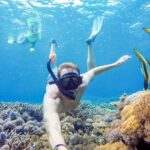
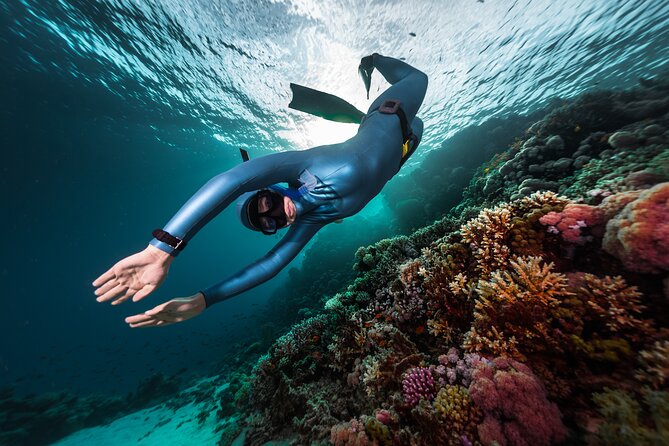
What I really appreciated is how clearly the sessions are structured, from theory to pool practice to open-ocean sessions. I also love that you take home underwater photos of yourself among coral and tropical fish, which turns the training into something you can remember (not just a skill you practiced). If you’re expecting a totally relaxing vacation with zero intensity, this may feel more like focused training than sightseeing.
In This Review
- Key highlights that matter in real life
- Nusa Penida training days run from morning to late afternoon
- Small-group coaching: why max 4 students feels like the right size
- Level 1 goals: breath control and depth you can realistically aim for
- Pool sessions that build comfort before the ocean
- Open ocean days: coral, tropical fish, and photo take-home moments
- Gear, certification, and digital materials: what’s included and what’s not
- Price and value: why $450 feels fair for a full training structure
- Meeting point timing and how to plan your day
- Who should take this Level 1 course—and who should pause
- What to do mentally on day one (so you enjoy it)
- Should you book this Level 1 course in Nusa Penida?
- FAQ
- How long is the Level 1 course?
- Do I need previous freediving experience?
- What’s the minimum requirement to join?
- What training does the course include in the water?
- What depth and breath-hold results can I expect?
- Is equipment included?
- Do I get certification and learning materials?
- What’s not included in the price?
Key highlights that matter in real life
- Max 4 students per instructor keeps feedback fast and safety checks tight
- Pool + open ocean practice means you learn skills in a controlled way, then apply them outside
- Included equipment and fees: no last-minute gear run
- Most people reach 50–65 feet / 15–20 meters and hold breath over 2 minutes by the end (varies by person)
- Underwater photo take-home gives you real proof of progress
- Certification and digital learning materials included so your course doesn’t feel half-finished
Nusa Penida training days run from morning to late afternoon
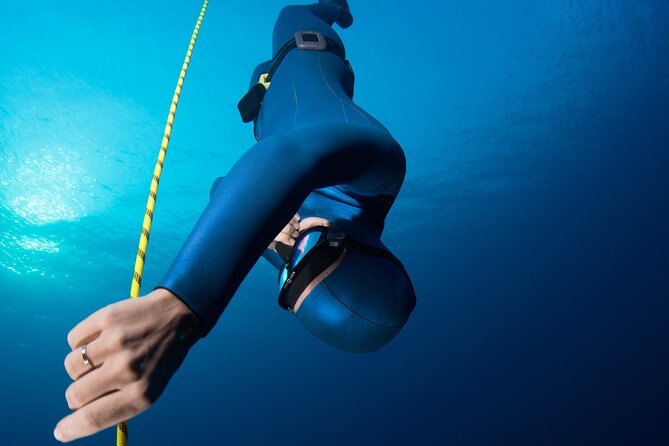
This Level 1 course is built as a full training block across 3 days, running from about 8:30 AM to 4:30 PM. You’ll get a break for lunch during the day, but that meal is on you since lunch isn’t included. The schedule is long enough that you should treat it like a priority—less like a quick class, more like a mini training camp.
You’ll also feel the pacing. The format starts with lessons on land, then moves into water practice in two confined sessions and three open-water sessions. The goal is smooth progression: you learn what to do, practice it safely, then repeat it with real ocean conditions.
That timing matters because freediving skills are not just physical—they’re mental. Breath holds, relaxation, and calm decision-making take reps, and the long daily blocks are designed to give you those reps.
You can also read our reviews of more tours and experiences in Nusa Penida.
- ️Nusa Penida by Private Boat – Snorkeling 4 spots, Swim with Mantas + Land Tour
★ 5.0 · 6,424 reviews
Small-group coaching: why max 4 students feels like the right size
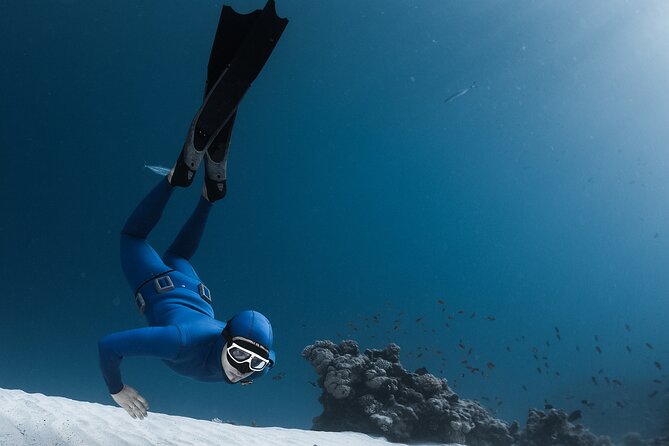
The school limits you to four students per instructor. That’s a huge deal in water training where one person’s technique, comfort level, or pace can affect the whole group. In a bigger class, you tend to watch more than you practice. Here, you’re more likely to stay active and get corrected early.
It also shows up in the teaching style. In past courses at this school, instructors have been praised for being supportive while still pushing you toward the next step. Names that have come up include Sabli, Artem, Roberto, Seva, Hamza, Gaston, Gas, Chiara, and Kirill. You won’t know which one you’ll get until your training assignment, but the consistent theme is the same: clear instruction, patience, and safety-first coaching.
If you’re new, this ratio helps you feel less rushed. If you’re nervous, it helps because you’re not left floating while others take turns.
Level 1 goals: breath control and depth you can realistically aim for
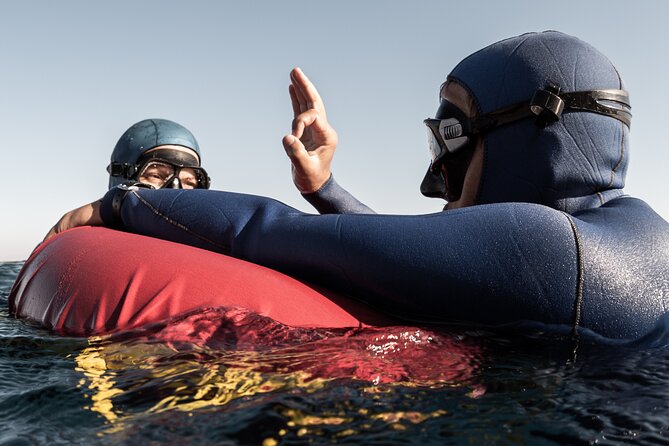
The course is designed as a smooth first entry into the silent underwater world. You don’t need prior freediving experience. The requirement is simple: you only need to be able to swim.
By the end, the course sets a realistic target for many students:
- Breath hold over 2 minutes
- Depth around 15–20 meters (50–65 feet) on a single breath
Important reality check: not everyone will hit the same numbers. Your results depend on comfort in the water, calm breathing patterns, and how quickly you learn the relaxation and technique pieces. But the structure is built to help you progress steadily, not just attempt big numbers on day one.
On the theory side, you’ll learn the basics needed to free yourself from panic. Most of the skills you practice revolve around:
- controlling your breathing on land and before immersion
- staying relaxed and efficient underwater
- understanding how to manage depth and timing safely
That’s why Level 1 isn’t just a thrill course. It’s about building fundamentals you can reuse later—whether you return for advanced training or just want to feel safer and more confident when you’re snorkeling near reefs.
Pool sessions that build comfort before the ocean
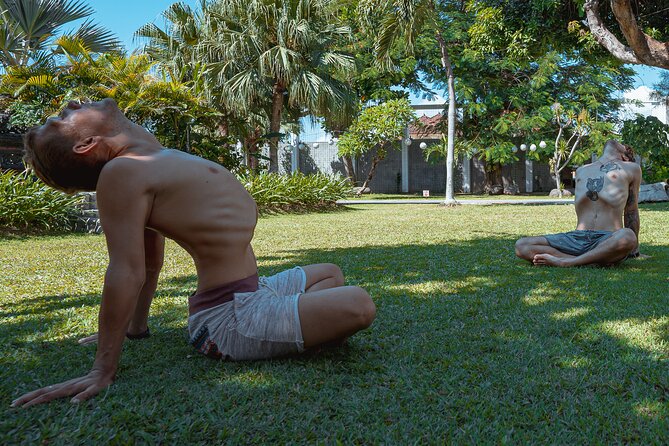
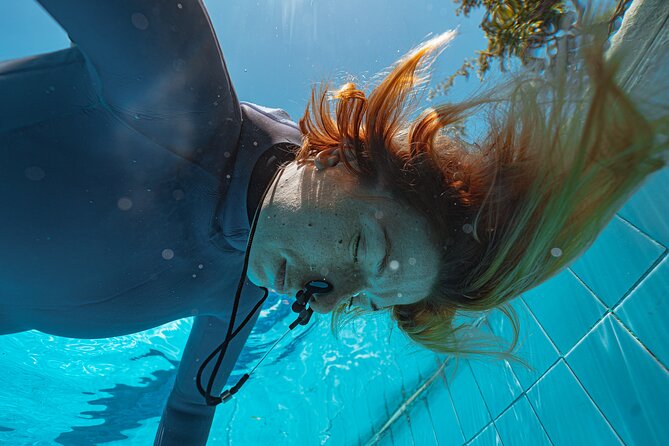
You get two confined water sessions in addition to open ocean days. Even if you’re comfortable in a pool, this is a different kind of work: breath holds, calm body position, and controlled descents all feel unfamiliar at first.
This is where you earn the right to go farther later. The confined sessions help you learn the mechanics of staying calm and making good decisions while oxygen is running low. One common fear for first-timers is the idea of being in the water without breathing. The course pacing is meant to tackle that gradually, so you can adjust your mindset before open-water conditions.
How to think about these pool sessions: they’re not just practice. They’re your confidence foundation. If you rush through them, you’ll likely struggle more later. If you focus on relaxation and technique, your ocean days tend to feel less like a shock and more like a continuation.
Open ocean days: coral, tropical fish, and photo take-home moments
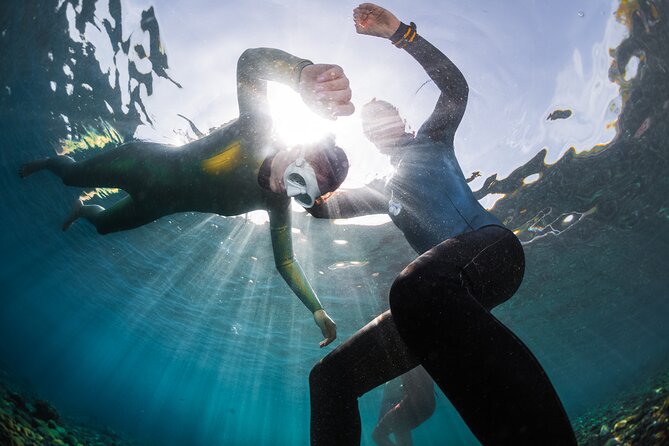
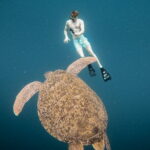
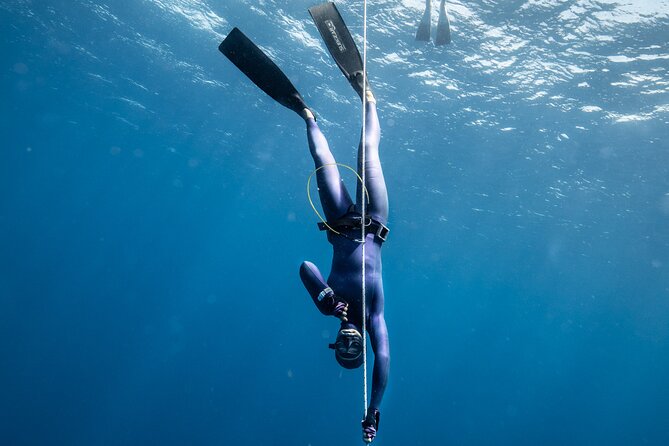
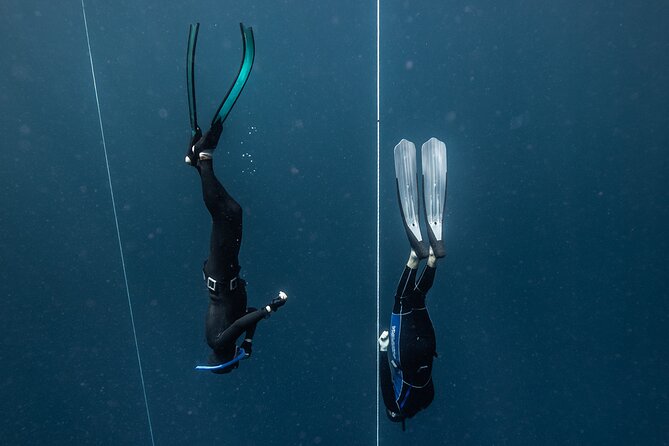
After the confined practice, you’ll do three open-water sessions. This is where Nusa Penida earns its reputation. The training includes underwater time surrounded by coral and tropical fish, and it’s also when you’ll get the best chance for memorable visuals.
A standout included perk is that you take home underwater photos of yourself. That changes the whole experience. You’re not only chasing a skill target—you’re also creating a personal reference point for how you looked, how your body position read underwater, and how your calm or tension may have shown up.
Expect these open-water sessions to feel more variable than the pool. Ocean conditions can bring small changes in buoyancy and comfort. The whole course design is built to prepare you for that variability through repetition across multiple days.
Also, the instructors’ approach matters here. Many course comments emphasize that instructors were supportive yet willing to challenge students in a careful way. That’s a great sign, because ocean practice rewards confidence, and confidence comes from feedback.
Gear, certification, and digital materials: what’s included and what’s not
This course includes the core pieces you’d normally have to hunt down yourself:
- Freediving equipment
- Certification
- Digital learning materials
- All fees and taxes
They also provide a mobile ticket. In practice, that often means fewer printed-paper hassles and a smoother check-in.
The big benefit is you don’t need to buy anything special. For many first-timers, the hardest part is not the water. It’s the shopping list anxiety—do I have the right gear, does it fit right, and will it cause a problem? Here, the equipment is supplied, so you can focus on learning.
What’s not included is also important. The course does not include:
- Private transportation
- Accommodation
- Lunch
So you’ll likely need to sort your own day-to-day logistics around Nusa Penida. If you’re staying on the island, great. If not, build time and budget for getting to the meeting point.
Price and value: why $450 feels fair for a full training structure
The course price is $450 per person. On paper, that’s not a bargain. In value terms, though, it covers a lot of the expensive parts you don’t always notice: equipment, instructor time, and certification. It also includes digital learning materials, which means you can review what you learned after the course ends.
You’re paying for:
- 3 days of structured instruction (theory + 2 confined + 3 open ocean sessions)
- a low group size that supports safety and faster progress
- a complete training package with gear and certification
The biggest cost risk isn’t the course itself—it’s the extras. Since transportation and accommodation aren’t included, your total trip cost depends on how you’re already organizing Bali and Nusa Penida. If you’re already set on where you’re staying and you’re comfortable getting yourself to the meeting point, then the course price tends to feel more straightforward.
One more value indicator: the school shows 100% recommended and a 5/5 rating across 54 reviews. That doesn’t replace your own judgment, but it does suggest consistent satisfaction—especially around coaching style and organization.
Meeting point timing and how to plan your day
You start at Freedive Nusa – Freediving School in Nusa Penida, at Jl. Ped – Buyuk No, Desa, Ped, Kec. Nusa Penida. The activity ends back at the meeting point.
The course operates daily 8:30 AM to 4:30 PM (Monday through Sunday), based on the operating window shown. Since the training is time-blocked, plan to arrive early enough to feel settled before gear up and check-in.
Also keep in mind the course is limited to a maximum of 4 travelers. That matters for you in two ways: it reinforces the small-group coaching, and it also means availability can move based on the schedule.
Who should take this Level 1 course—and who should pause
This experience fits well if:
- you’re a true beginner and want a safe, structured start
- you can swim and you’re comfortable being in the water for training
- you have moderate physical fitness
- you want a course with both instruction and real ocean practice, not just a pool lesson
It may be less ideal if:
- you want a low-effort vacation day
- you get stressed by longer blocks of structured activity
- you’re unsure about swimming confidence
The course message is essentially: freediving is for everyone who can swim and who’s willing to learn breath control in a calm, measured way. That said, training is only as safe as your honesty. If you feel unsteady in the water, tell the instructors right away rather than pushing through.
What to do mentally on day one (so you enjoy it)
If you’re new, you’ll likely feel a mix of excitement and worry when you first practice without breathing. That’s normal. The course structure is designed to help you build comfort gradually. Your best move is to treat the first day as learning, not proving.
A few practical mindsets that match the teaching style highlighted in past experiences:
- listen closely during theory, then apply it immediately in the pool
- take feedback seriously, even if it challenges your old habits
- expect progress to feel uneven at first; breath control improves with repetition
- trust the instructor’s safety cues and pace
And because underwater photos are included, you’ll have a concrete record of how your body and calm level improved across days.
Should you book this Level 1 course in Nusa Penida?
I’d book it if you want a real skill-building course with strong safety structure, a small instructor-to-student setup, and a clear path from pool comfort to open ocean practice. The included equipment, certification, and take-home underwater photos add extra value beyond the training itself.
I’d think twice if you’re mainly looking for scenic snorkeling with minimal structure. This is organized training, and it takes focus across three long days. Also budget for lunch and any transport/accommodation you’ll need around Nusa Penida.
If you want your first freediving education to feel practical, paced, and well supported, this Level 1 option at Freedive Nusa is a strong bet.
FAQ
How long is the Level 1 course?
It runs for 3 days, with sessions scheduled from about 8:30 AM to 4:30 PM each day, including a break for lunch.
Do I need previous freediving experience?
No. The course is made as an introduction for beginners, and you do not need prior experience.
What’s the minimum requirement to join?
You only need to be able to swim.
What training does the course include in the water?
You’ll do 2 confined water sessions and 3 open water sessions.
What depth and breath-hold results can I expect?
The course states that most students can descend to about 15–20 meters (50–65 feet) and hold their breath for more than 2 minutes by the end.
Is equipment included?
Yes. Freediving equipment is included.
Do I get certification and learning materials?
Yes. The course includes freediving certification and digital learning materials.
What’s not included in the price?
The price does not include private transportation, accommodation, or lunch.
You Might Also Enjoy


More Tour Reviews in Nusa Penida
- ️Nusa Penida by Private Boat – Snorkeling 4 spots, Swim with Mantas + Land Tour
★ 5.0 · 6,424 reviews