Ubud in one day, minus the stress. I really like the private driver-guide setup, which keeps the day moving at a sensible pace, and I love the mix of UNESCO-listed Tegallalang rice terraces plus time to cool off at Tegenungan. One thing to consider: lunch isn’t included, and the optional Monkey Forest stop (if you add it) can shift your timing.
This is built for people who want more than a bus tour. You get a professional English-speaking guide, an air-conditioned vehicle, and bottled water, so you can focus on temples, rice fields, and waterfall views instead of figuring out routes.
At $60 per person for an 8–10 hour private outing with entrance tickets included, it’s priced like a solid value day. Just plan for your own meal at the local lunch stop, and wear clothes that work for both temples and humid outdoor stops.
In This Review
- Key things I’d plan around before you go
- How This Ubud Day Mixes Temples, Rice Fields, and Waterfalls
- Pickup From Seminyak: A Private, Air-Conditioned Start
- Tirta Empul (or Goa Gajah): Two Ways to See Sacred Bali
- Tegallalang Rice Terraces: What Makes the UNESCO Stop Worth It
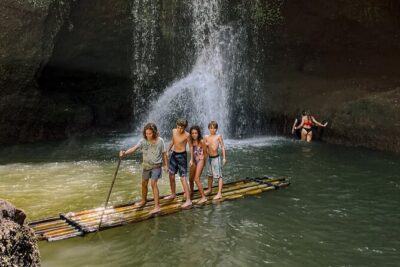
- Tegenungan or Ulun Petanu Waterfall: Cooling Off the Practical Way
- Monkey Forest, Art Village, and Lunch: Where the Day Gets More Human
- Time, Pace, and What You’ll Actually Feel During the 8–10 Hours
- Price and Value: Why $60 Can Make Sense Here
- Who This Tour Suits Best (and Who Might Prefer Something Else)
- What Past Guests Seem to Appreciate Most
- Should You Book Hidden Ubud: Waterfalls and Sacred Temples?
- FAQ
- What’s the duration of this tour?
- Where does the tour start and where do you get picked up?
- Is this tour private?
- Which attractions are included?
- Is lunch included?
- What’s included in the transportation?
- How much does it cost?
- What’s the cancellation policy?
Key things I’d plan around before you go
- Private pickup and drop-off from the Seminyak/Kuta/Sanur/Nusa Dua area means you start with less hassle.
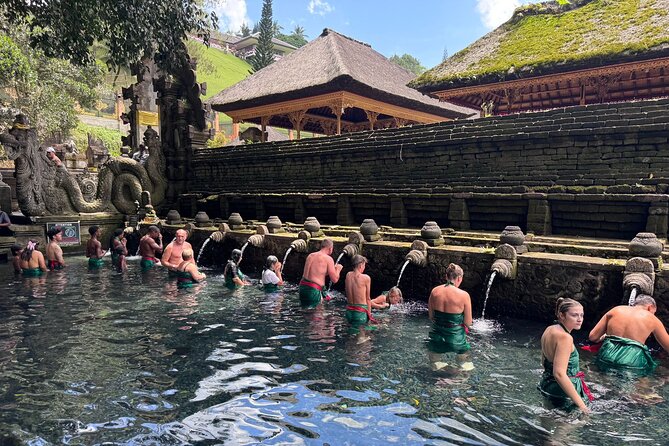
- Tirta Empul Temple (holy spring water) or Goa Gajah (Elephant Cave) gives you either a water-and-ritual focus or a cave-and-spirit focus.
- Tegallalang Rice Terraces are timed so you can actually enjoy them, not just snap and sprint.
- Tegenungan (or Ulun Petanu) waterfall is your main cooling-off break, surrounded by jungle scenery.
- Optional Sacred Monkey Forest Sanctuary adds a fun wildlife + temple vibe if you’re up for it.
- Art village time lets you watch traditional wood carving, painting, and silver work instead of only seeing finished souvenirs.
How This Ubud Day Mixes Temples, Rice Fields, and Waterfalls

This tour works because it balances three different sides of Ubud. You start with spirituality at a major sacred site, then shift into the slow, visual rhythm of the rice terraces, and finish with something physical and refreshing: a jungle waterfall. That arc matters. Temples are about rules and respect. Rice terraces are about patience and views. Waterfalls are about cooling down and moving your body.
What you’re really buying here is flow. With a personal driver-guide, you’re not stuck waiting for a group to negotiate every stop. You still travel with other people’s logistics in mind (it’s a full day), but you’re steering your own pace.
The day’s “hidden Ubud” feel comes from choosing places that most first-timers love, then giving you time to experience them properly. Tirta Empul is famous, yes, but it’s famous for a reason. Tegallalang is iconic, and also a great place to learn how Bali’s farming shapes daily life. And the waterfall stop is a real reset from the heat and car time.
You can also read our reviews of more tours and experiences in Seminyak.


Pickup From Seminyak: A Private, Air-Conditioned Start
Your day begins with pickup from the Seminyak area (the meeting point is Seminyak Square, and the listed start time is 8:00 AM, with hotel pickup noted for around 8:30 AM). The timing difference is normal in Bali-style schedules, but the practical advice is to confirm your exact pickup time after booking.
Once you’re in the car, you’ll appreciate a few included comforts:
- Air-conditioned private vehicle
- Bottled water
- Professional English-speaking driver-guide
- Parking fees and fuel covered
For a day that’s likely to run 8 to 10 hours, the transport details are not small stuff. Ubud traffic can be tricky, and heat drains energy fast. This setup helps you arrive at each stop with enough daylight in your head to enjoy it.
Also, it’s private for your group. That matters if you’re traveling as a couple, family, or small group and you don’t want to feel rushed by other schedules.
Tirta Empul (or Goa Gajah): Two Ways to See Sacred Bali
The first big cultural stop is Tirta Empul Temple, known for its holy spring water used in ritual bathing. You’ll spend about an hour here. Even if you’re not participating in the water rituals yourself, the temple gives you a strong sense of how Balinese spirituality shows up in daily life: not as a museum exhibit, but as an active belief system.
If Tirta Empul isn’t the pick for your day, you may go to Goa Gajah (Elephant Cave) instead. It’s the same theme—sacred space—but the vibe changes. A cave setting tends to feel more atmospheric and grounded, while Tirta Empul has that direct connection to spring-water practice.
One practical consideration for both options: dress and respect rules at temples can be strict, and Bali can be humid even on a “nice” day. Bring something comfortable that covers appropriately and plan to follow local guidance once you’re there. If you want the best experience, treat the site like you’re a visitor in someone’s living tradition, not just a photo location.
Entrance tickets are included, so you’re not scrambling to pay at the door.
Tegallalang Rice Terraces: What Makes the UNESCO Stop Worth It
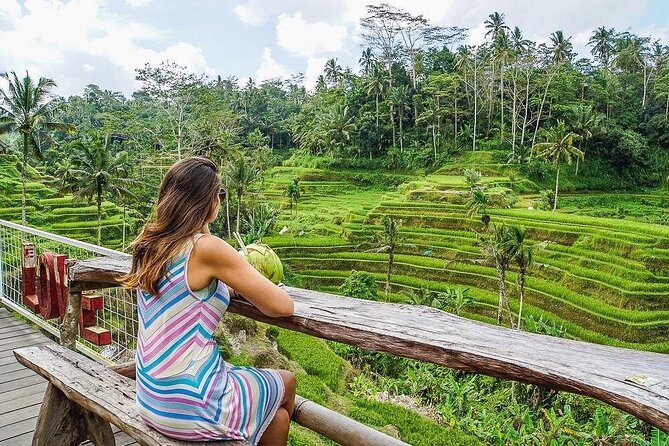
Next comes Tegallalang Rice Terraces, the emerald-green scenery you’ve probably seen on postcards and phone wallpapers. Here’s the key: the terraces are not just pretty. They’re agricultural engineering and a living landscape of work, water control, and generations of planting.
You’ll have about an hour. That’s enough time to:
- pause at viewpoints,
- walk a bit (within what’s comfortable and safe),
- take photos without feeling like you’re on a timer.
Also, the terraces are a good “breathing stop.” After temple rules and before waterfall jungle, it’s the in-between space where you can slow down. If you’re the type who likes to understand what you’re looking at, ask your driver-guide what makes this area famous and how locals treat the fields as part of their daily routine.
A small drawback: popular terrace areas can mean crowds. With a private guide and a set stop time, you can still enjoy it. You just want to manage expectations: this is not an empty hillside.
Tegenungan or Ulun Petanu Waterfall: Cooling Off the Practical Way
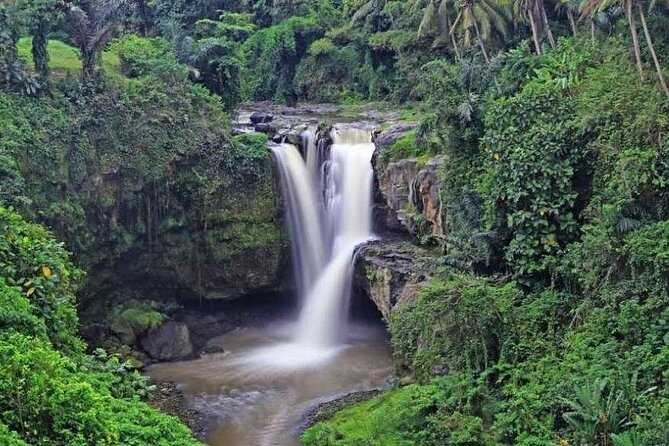
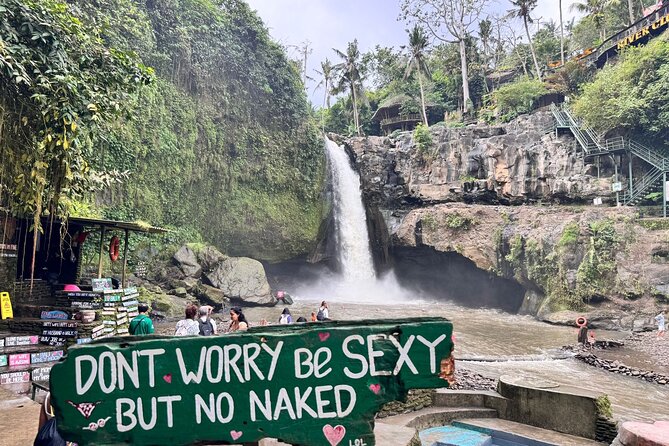
Then you’re onto the waterfall stop: Tegenungan or Ulun Petanu (depending on the day). You’ll get roughly an hour here, plus the point of the stop is simple—cool off and reset.
Waterfalls in Bali tend to be slippery and humid, and the jungle around them can feel thick. So come ready to move carefully. Bring footwear you don’t mind getting wet or muddy, especially if you plan to walk to a viewpoint where you’ll want steady footing.
This is one of the best parts of the day if you’re traveling with kids, or if you’ve been sitting too long during other sightseeing. It breaks up the temple-and-terrace rhythm with a more physical reward.
Entrance tickets are included again, so you can focus on enjoying the water, not tracking costs.

Monkey Forest, Art Village, and Lunch: Where the Day Gets More Human
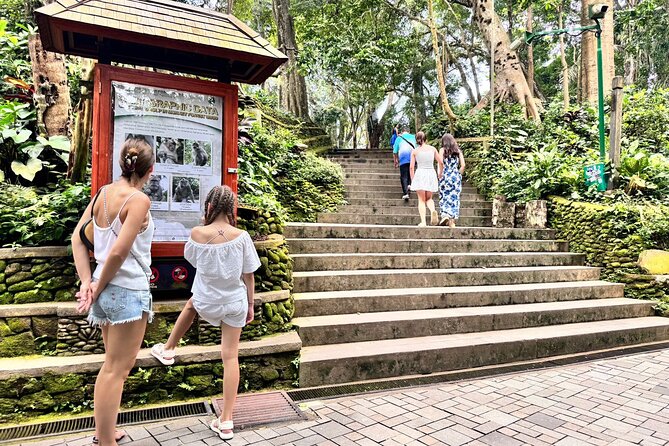
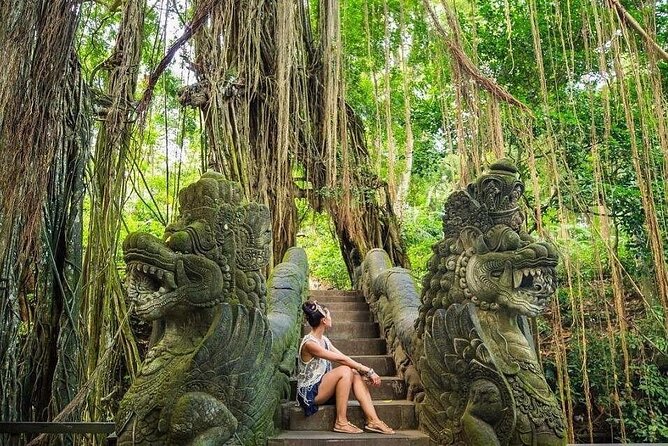
After the waterfall, you have a choice that can change the feel of your afternoon. There’s an optional stop at the Sacred Monkey Forest Sanctuary. You’ll have about an hour if you include it.
If you’re considering it, think about your comfort level. The monkey forest is part temple, part forest, and monkeys mean you should keep an eye on your belongings and be patient. If you want a lively, nature-meets-culture moment, it’s a good add-on. If you’d rather keep things calmer after the heat and walking, you can skip it and gain time for the craft side of Ubud.
Then comes a more grounded cultural experience: a lunch stop and Balinese art village time. The tour includes a lunch stop at D Alas Warung (your meal is an own-expense item), plus time to observe traditional craft techniques. Based on what’s described, you may see:
- wood carving methods by skilled artisans,
- a Balinese painting community and local art styles,
- a traditional silver workshop process.
This part is a great antidote to “photo-only” travel. You get to see how skills get translated into products—something you’ll appreciate more when you buy (or simply admire) crafts later.
One practical note: because the exact lunch cost isn’t included, this is the one part where your $60 can drift upward. Still, it’s usually easier to budget for lunch than to find a restaurant at the wrong time of day.
Time, Pace, and What You’ll Actually Feel During the 8–10 Hours
This tour is designed as a full-day circuit, so you’ll want to treat it like one continuous outing rather than a series of small breaks. With stops clustered around Ubud’s core areas, the schedule runs long enough that you’ll feel the day if you’re underprepared.
Here’s how the pacing tends to feel:
- Morning: temple/holy site focus + rice terraces viewpoints
- Midday: waterfall cooling break
- Afternoon: optional monkey forest, then art village + lunch downtime
Because the duration is listed as about 8 to 10 hours, build your expectations around a long sightseeing day. Plan no big plans afterward. If you’re booking from Seminyak, you’ll likely want a relaxed dinner back at your hotel.
Also, the tour includes bottled water, but you can still help yourself by drinking regularly and not saving water until you’re thirsty.
Price and Value: Why $60 Can Make Sense Here
$60 per person is the headline number, but value comes from what you’re getting folded in.
Included items that matter on a full-day private tour:
- Private air-conditioned vehicle
- Professional English-speaking driver-guide
- Hotel pickup and drop-off in the Seminyak/Kuta/Sanur/Nusa Dua (and Ubud area) zone
- Bottled water
- Parking fees and fuel
- Entrance tickets
That combination is why this price can feel fair. A day with multiple paid attractions gets expensive fast if you’re paying separately and hiring transport piecemeal. Here, the tour packages it into one price and reduces the decision fatigue of what to book and what to pay.
The main cost you should expect is lunch at D Alas Warung and any personal expenses or optional add-ons you choose (like Monkey Forest). If you keep meals modest and don’t go wild on shopping, you can still keep it close to the advertised budget.
Who This Tour Suits Best (and Who Might Prefer Something Else)
This tour is a great fit if you want:
- a private experience without spending hours planning,
- a good mix of culture + nature in one day,
- temple and farming scenes that go beyond quick roadside stops,
- a driver-guide who can explain what you’re seeing and keep you on track.
It’s also a strong option for couples who want romance with a purpose—rice terraces and waterfalls are naturally photogenic, and temples add depth without being boring. Families also tend to like the structure, because you know there’s a main activity at each stop and you’re not stuck searching for your next destination.
If you’re the kind of traveler who hates long days or wants total freedom to linger wherever you feel like it, a flexible private tour may still be fine—but you should be aware the day is designed to hit several fixed highlights.
What Past Guests Seem to Appreciate Most
From the positive feedback I see consistently, the biggest strengths are practical:
- On-time hotel pickup and punctual start
- safe, comfortable driving
- a friendly, polite driver-guide who shares information
- getting everything done in a reasonable time without feeling rushed
Names show up in the feedback too, like Dewa, and another guide mentioned is Made Gama. That’s a hint that the company pays attention to guiding style—not just transporting you from point A to point B.
Should You Book Hidden Ubud: Waterfalls and Sacred Temples?
I’d book it if you want an efficient, comfortable way to experience Ubud’s main themes—temples, rice terraces, and waterfalls—without paying extra for multiple separate tickets and transport. The private vehicle, English-speaking driver-guide, and included entrances are what make it feel worth the money.
I’d skip or adjust if you strongly dislike long days, or if you’d rather spend the afternoon doing only one area at a slower pace. Also factor in that lunch is on you, and the optional Monkey Forest stop can add time.
If your goal is a full Ubud highlight day with a human guide and fewer logistics headaches, this one makes a lot of sense.
FAQ
What’s the duration of this tour?
It runs about 8 to 10 hours.
Where does the tour start and where do you get picked up?
The meeting point is Seminyak Square. Hotel pickup is offered, and the tour notes pickup around 8:30 AM.
Is this tour private?
Yes. It’s a private tour/activity, and only your group participates.
Which attractions are included?
Entrance tickets are included, and the core stops are Tirta Empul Temple (holy spring water) or Goa Gajah, Tegallalang Rice Terraces, and Tegenungan Waterfall (or Ulun Petanu Waterfall). Sacred Monkey Forest Sanctuary is optional.
Is lunch included?
No. Lunch at the local restaurant stop (D Alas Warung) is available at your own expense.
What’s included in the transportation?
You get a private air-conditioned vehicle, hotel pickup and drop-off (in the Seminyak, Kuta, Sanur, Nusa Dua area and Ubud area), and bottled water during the tour.
How much does it cost?
The price is $60.00 per person.
What’s the cancellation policy?
You can cancel for a full refund up to 24 hours before the experience’s start time.