REVIEW · KUTA
Mount Ijen Crater Trekking Tour from Bali
Book on Viator →Operated by PT.WAHYU MANDIRI TOUR · Bookable on Viator
Blue flames at midnight sound unreal, and it is. This overnight Mt Ijen tour from Bali turns a long sea crossing into one of East Java’s most memorable sights, with blue flames at the crater and local sulfur miners along the way. The trek is guided, small-group, and paced for people who can handle a tough night hike.
My favorite part is how early everything starts so you’re near the crater before the viewing window shifts, plus the on-the-ground moments with the miners. One drawback to think through: it’s a long, late-night journey from Bali, and the climb/descent is strenuous, so it’s not for everyone.
In This Review
- Key things to know before you go
- How this Bali-to-Ijen overnight plan really plays out
- The South Bali pickup and the long ferry jump
- Getting ready at the trail start: flashlight, gas mask, briefing
- The 3 km summit hike at night: what the pace feels like
- Sulfur miners on the trail: the human side of Ijen
- Watching blue flames and the acid lake inside Ijen Crater
- Breakfast, viewpoint photos, and how to manage the cold
- Descent and the ferry back to Bali
- What you actually eat (and what you’ll need to bring)
- Price and value: is $153.85 a fair deal?
- Small-group size: the practical upside
- Who should book this Mt Ijen trek (and who should not)
- Rules around the crater: safety isn’t optional here
- Tips to make the blue flames moment worth the grind
- Should you book Mt Ijen from Bali?
- FAQ
- What time does the Mt Ijen trek start from Bali?
- How long is the tour?
- Do I get pickup from my hotel?
- What gear is included for the trek?
- Is breakfast and lunch included?
- What are the age and health limits?
- Is Mt Ijen open every day?
Key things to know before you go
- Blue-fire viewing is weather-dependent: the blue flames you’re chasing depend on conditions at the crater.
- A flashlight and gas mask are provided for the guided trek, plus you get a safety briefing.
- It’s a real stamina test: the 3 km summit route takes about 1 to 2 hours, and the crater descent is demanding.
- You’ll meet sulfur miners up close as they carry heavy sulfur blocks using traditional methods.
- Max 10 people helps keep the experience more personal than big group tours.
- You’re limited near the crater: you must stay within 500 meters and follow strict rules about trash and smoking.
How this Bali-to-Ijen overnight plan really plays out
This is an overnight, early-morning Mt Ijen Crater trekking tour built around one mission: getting you to the crater in time to see the famous blue flames. You start in South Bali, then ferry to East Java late at night, so the hiking happens when the volcano is quiet and dark.
It’s also designed to feel structured. You get pickup, a driver who handles the long transfer, and a local guide who leads you during the crater trek. That matters because Mt Ijen is extreme, and the right pacing + basic safety habits make the difference between tough and miserable.
If you’re the kind of person who likes clear timing and a single-focused itinerary, you’ll likely appreciate how this tour stays on task. If you hate early starts and long travel days, plan carefully.
You can also read our reviews of more hiking tours in Kuta
The South Bali pickup and the long ferry jump
Pickup starts late afternoon, with the tour beginning around 5:00 pm from areas like Kuta, Legian, Seminyak, Jimbaran, Nusa Dua. Your pickup is from selected hotels in South Bali, and you’ll get your exact pickup time after reconfirmation.
From there, you transfer to Gilimanuk Harbor in West Bali and cross by ferry to East Java. You arrive in East Java around midnight, and then you’re driven to the trek starting point. That midnight arrival is part of the experience: it positions you to hike in darkness rather than in midday heat.
One practical thing to keep in mind: there can be a short wait before departure while the group assembles. In real life, that kind of stop can feel random when you’re tired, but it usually keeps the whole group moving together.
Getting ready at the trail start: flashlight, gas mask, briefing
Once you reach the trek starting point, you get a safety briefing and equipment. You’ll receive a flashlight and a gas mask, and you’ll be told what to do (and what not to do) around the crater.
The trek to the summit is roughly 3 km and typically takes about 1 to 2 hours. Expect a mix of uphill and flat sections, and expect it to feel longer at night than it does on paper. The darkness means you’re watching your footing more than you’re enjoying the scenery.
This is also where you’ll feel the tour’s “fitness first” approach. Mt Ijen is labeled extreme, and the tour specifically advises strong physical fitness. If your breathing or stamina tends to struggle on hikes, this is where you’ll notice it.
The 3 km summit hike at night: what the pace feels like
You’re hiking in the dark, with a flashlight, and with a route that’s short in distance but not easy in effort. The climb is active, and night footing makes it mentally tiring too.
This is where you’ll want to dress like you’re prepared for cold-to-cool conditions. The recommended gear list includes long pants, sports shoes, a sweater (or sweatshirt), gloves, and a hat. The goal is simple: warm hands and steady traction, because stopping to adjust clothing can slow you down.
You’ll also hike with a small group (up to 10 people). Small groups can mean more personal guidance, and they also reduce crowding at key moments.
Sulfur miners on the trail: the human side of Ijen
One of the best parts of this tour is meeting the sulfur miners during the trek. These are the people working the mountain before sunrise, carrying heavy sulfur blocks using traditional methods.
The tour highlights that miners transport sulfur blocks weighing about 60–80 kg using bamboo pole baskets across their shoulders. Later, you can see mining activity using traditional methods with iron rods and no safety equipment.
This isn’t just a photo moment. It gives context for what’s happening at Ijen beyond the tourist spectacle. You’ll see how labor-intensive the process is, and it makes the blue flames feel less like a trick of nature and more like a real byproduct of the environment.

Watching blue flames and the acid lake inside Ijen Crater
The main event is arriving near the summit before dawn and taking in Mt Ijen’s blue fire. Depending on weather conditions, you may see the phenomenon at the crater.
Here’s a key reality check: conditions matter. The tour is built around the best timing, but you can’t force the blue flames. If it’s cloudy or visibility is poor, you might get fewer flames than you hoped for, or the view can be muted.
After the main viewing, you’ll stop for a light breakfast on the mountaintop. Then the guide brings you back down for closer photo opportunities and crater views from the viewpoint.
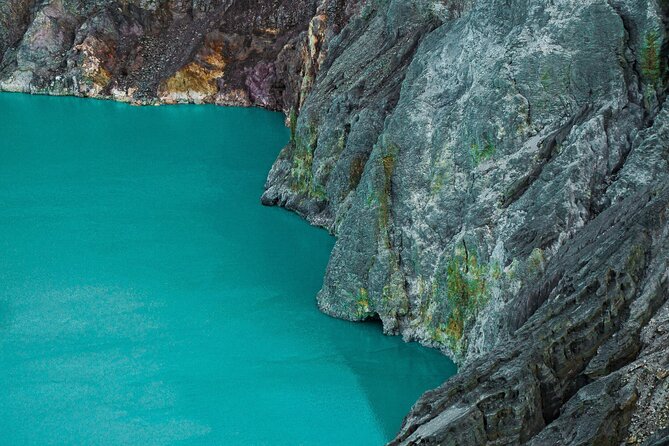
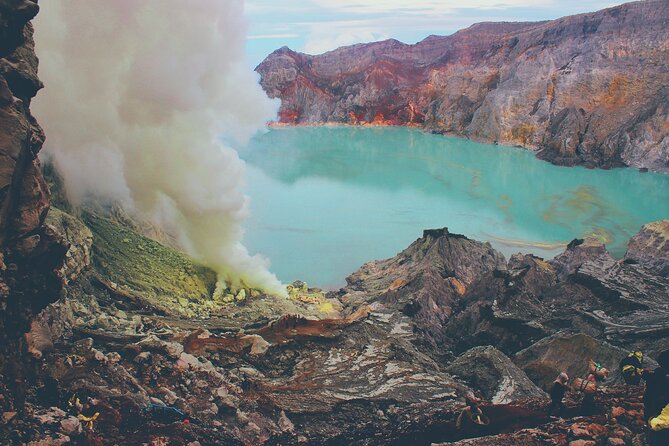
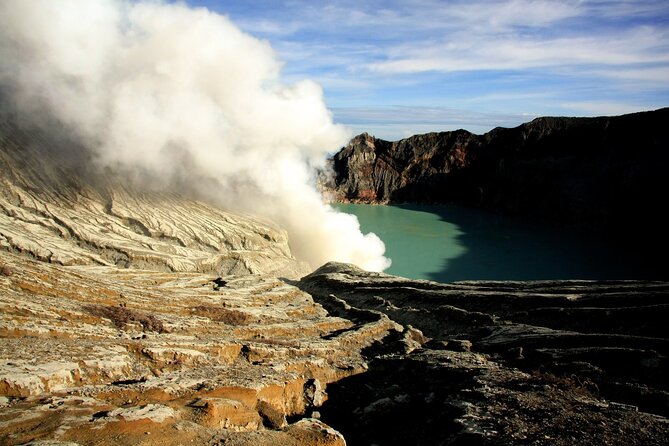
What you’re seeing is Java’s largest acid lake, the famous Ijen crater environment with active sulfur activity. The contrast is striking: the crater is both visual theater and a working industrial landscape for miners.
Breakfast, viewpoint photos, and how to manage the cold
Breakfast is light and happens at altitude, right after the intense hiking portion. This timing helps because you’ve burned energy during the climb, and you’ll likely feel better with something in your system before the descent.
Then comes the crater viewpoint time. This is where your camera gear matters, and where good clothing matters more than people expect. Even when your legs feel “fine,” your hands can get cold. Gloves are not a luxury here.
Also, keep your expectations grounded. The tour includes photo opportunities, but this is a crater area with strict safety practices. It’s not like wandering a viewpoint in daylight where you can wander freely.
Descent and the ferry back to Bali
After breakfast and crater viewing, you hike back down. The descent is not automatically easier. It can be physically hard, and it can feel harder if your legs tighten up after the uphill effort.
Once you finish the descent, you’re transferred to Banyuwangi Harbor for the late morning ferry back to Bali. Your day ends with lunch at a local restaurant and hotel drop-off in the afternoon.
This return part matters more than most people realize. You’ll be tired, and you’ll likely want a slow meal, a warm shower, and an easy evening after. If you’ve got another big plan the same day, I’d skip it or push it to the next evening.
What you actually eat (and what you’ll need to bring)
The tour includes a light breakfast and lunch (listed as Balinese food). Drinks aren’t included, and dinner isn’t included either.
That means you’ll want to plan around hydration and energy. Since drinks aren’t provided, consider bringing your own water (or plan to buy it when appropriate within the tour flow). Also think about a small personal snack in case your stomach prefers something extra beyond a light breakfast.
Lunch comes after the ferry ride, so you won’t be eating a huge meal immediately after the most demanding part of the day. If you know you get hungry fast on hikes, a little extra planning helps.
Price and value: is $153.85 a fair deal?
At $153.85 per person, this is not a budget “hop-on-hop-off” outing. You’re paying for a full overnight package: Bali hotel pickup, ferry transfers, driver handling the long route, a local guide for the crater trek, and the key summit-time timing.
What helps justify the cost is that the tour doesn’t just drive you to a starting point. You’re guided during the trek, provided with flashlight and gas mask, and capped at a small group size (maximum 10). That combination can reduce stress, especially when the environment is demanding.
It also helps that you’re not just seeing a volcano from far away. You’re interacting with miners and experiencing the crater area with structured stops, breakfast, and viewpoint time. If blue flames are on your “must see” list, the early positioning and local guidance are the core value.
If you’re traveling on a tight budget or you’re unsure about your stamina, you might consider whether another East Java plan would be less physically demanding. But for the right person, this is one of the more direct ways to target the blue fire experience from Bali.
Small-group size: the practical upside
The group size is limited to a maximum of 10 travelers. In practice, that usually means fewer bottlenecks and less waiting for your turn at key moments.
One thing to understand: even small groups can have a wait at the beginning. There may be an unexpected hold while the group is assembled so you leave together. It’s not unusual for overnight tours that coordinate pickup times, but it can feel annoying when you’re tired.
Still, small groups can make the guide easier to hear, and they can help with pace control on a narrow trail.
Who should book this Mt Ijen trek (and who should not)
This tour has clear physical and medical boundaries. It’s recommended for people with strong physical fitness. It’s not recommended for participants with heart complaints, asthma, or other serious medical conditions. The tour also isn’t recommended for children aged 15 and under, with a minimum age of 16.
I’d treat this as an “active, capable hiker” outing. The route is short in distance, but it’s overnight, and it includes a demanding environment and crater descent.
It also comes with a practical gear reality. You’ll be in sport wear, hiking shoes, gloves, and layers. If you don’t like dressing for cold mornings and you’re not comfortable moving on uneven ground in the dark, you may find it unpleasant rather than thrilling.
Rules around the crater: safety isn’t optional here
Mt Ijen comes with strict rules, and it’s worth reading them before you go. You’re expected to follow crater guidelines including staying within 500 meters from the crater area. You should not throw out rubbish, and you should not smoke or do any kind of fireplace activity.
The tour’s recommended wear includes sports clothing, hiking shoes, a mask, jacket, and gloves, plus bringing your own medicine. You’ll also likely want to keep any personal medications accessible during the trek.
The tour also mentions Mt Ijen is closed on the first Friday of the month for cleaning. If your dates land on that schedule, you’ll need to avoid it or accept a date change.
Tips to make the blue flames moment worth the grind
If you do this tour, go in thinking about your body more than your phone. The biggest success factor is being ready for effort in cold and darkness.
Pack for hands and feet first. Wear gloves and proper shoes, and don’t rely on a thin layer you wouldn’t mind getting cold in. The sweater and hat recommendation exists for a reason: you’ll likely feel temperature shifts from the night hike and early morning crater time.
Also, keep your expectations flexible. Blue flames depend on weather, so treat them as the goal, not the guarantee. Even without the flames, the crater environment and the miner scenes can still be genuinely unforgettable.
One more practical move: do some exercise the day before if you can. It’s recommended, and it can make your legs feel less shocked by an overnight climb.
Should you book Mt Ijen from Bali?
Book it if you want the real Ijen experience: early-night timing, a guided trek, sulfur miners, and the chance to see blue flames close up. This is best for fit adults who don’t mind long travel and who want one focused itinerary rather than a casual day trip.
Skip or reconsider if you have any heart or breathing issues, if you’re not comfortable with night hiking, or if you’re traveling with the expectation that this will feel easy. Also think about whether you’ll enjoy a long day that stretches from late afternoon until you’re back in Bali in the afternoon the next day.
If you can cancel, you get some breathing room: the tour allows free cancellation up to 24 hours in advance, and if poor weather forces a change, you’ll be offered another date or a full refund.
FAQ
What time does the Mt Ijen trek start from Bali?
The tour has a start time around 5:00 pm for pickup from selected South Bali areas. Your exact pickup time is provided after reconfirmation.
How long is the tour?
The duration is listed as about 23 hours.
Do I get pickup from my hotel?
Yes, hotel pickup and drop-off are offered from selected hotels in South Bali.
What gear is included for the trek?
You receive a flashlight and a gas mask, along with a safety briefing at the trek starting point.
Is breakfast and lunch included?
Yes. You get a light breakfast and a lunch (Balinese food). Dinner is not included.
What are the age and health limits?
Minimum age is 16. The tour is not recommended for children aged 15 and under, and it is not recommended for participants with heart complaints, asthma, or other serious medical conditions.
Is Mt Ijen open every day?
No. Mt Ijen is closed on the first Friday of the month for cleaning, so you should avoid those travel dates.