REVIEW · KUTA
An Evening of Bali Traditional Dance
Book on Viator →Operated by Tour East Indonesia · Bookable on Viator
Three dances. One story-heavy Balinese night.
I like how the Kecak tells the Prince Rama rescue tale with a ring of torch-bearing men. I also like the physical, no-nonsense spectacle of the Fire Dance and the trance-style performance that follows. One thing to keep in mind: timing depends on traffic and hotel pickup logistics, so plan for some waiting.
In This Review
- Key Dances and What They Mean
- What You’re Getting in Kuta (and What You’re Not)
- The 4:00 PM Start: Why Timing Feels Tricky
- Batubulan Amphitheater: Set Your Expectations for the Setting
- Kecak Dance: The Torch Chorus That Runs on Rhythm
- Fire Dance: Dramatic Fire-Control (and What to Mentally Prepare For)
- Sanghyang (Trance): When the Show Turns Spiritual
- A Note on How Long the Show Really Feels
- Price and Value: Is $48.72 a Good Deal?
- Group Size, Comfort, and the Air-Conditioned Ride
- What to Do With Your Time Before and After
- Who This Tour Fits Best (and Who Might Prefer Another Option)
- Should You Book This Bali Traditional Dance Night?
- FAQ
- Is pickup and drop-off included?
- Where does the tour take place?
- What time does the tour start?
- How long is the experience?
- Which dances are included?
- Is a guide included?
- Is food or drinks included?
- How many people are in the group?
- Is cancellation free?
- Additional charges apply for cruise passengers?
Key Dances and What They Mean
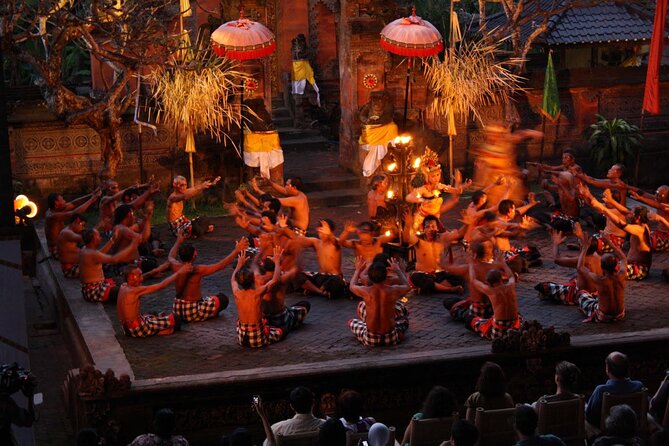
Before you go, know what you’re actually watching. This evening program is built around three hallmark Balinese styles: Kecak, a fire/coals moment, and Sanghyang (trance). The whole point is cultural storytelling, not just costumes and poses.
Here are the best things to watch for during the night.
- A packaged trio of performances: Kecak, Fire Dance, and Sanghyang in one sitting
- Storytelling you can follow: Prince Rama and the kidnapped princess arc is part of the Kecak
- A strong visual rhythm: the Kecak torch circle creates a hypnotic beat you feel in your seat
- The fire and coals moment: the show leans into dramatic danger (and control)
- Sanghyang’s spiritual angle: the trance dance is traditionally tied to exorcism practices
- Small group feel: capped at 15 travelers, plus air-conditioned transport
What You’re Getting in Kuta (and What You’re Not)
This is an evening cultural show with hotel pickup and drop-off in Bali’s south—think Kuta, Seminyak, Sanur, Jimbaran, and Nusa Dua areas. You’re paying for three things: transportation, a guide who can translate what you’re seeing, and admission for a set block of performances at the venue near Batubulan.
What you’re not paying for is dinner. The tour does not include food or drinks, so you’ll want to eat before you go—or have a plan for after you’re returned to your hotel. If you’re the type who needs a full meal built into your activities, this one may feel incomplete.
Also, you should expect an actual group tour vibe. Even with a small cap of 15 people, you’ll still be on the clock for pickup windows and show timing.
You can also read our reviews of more evening experiences in Kuta


The 4:00 PM Start: Why Timing Feels Tricky
The tour starts at 4:00 pm, and it runs about four hours total. In theory, that sounds tidy. In reality, Bali traffic can slow the transfer from Kuta and neighboring districts, and the show schedule may not align perfectly with your hotel’s exact pickup time.
What helps is this: come with patience. If you’re early, it doesn’t mean you did something wrong—it usually means the group needs to gather or the venue needs to open. Some guides also manage the “extra time” with small detours. You might get a short stop connected to local life or a temple-side explanation, depending on how your day unfolds.
Practical tip: bring water for the ride (even though drinks aren’t included). And if mosquitoes are a concern where you’ll wait outside, pack something to handle that. One guide (Oka) even provided mosquito repellent to a guest in his group—so the smart move is to be ready.
Batubulan Amphitheater: Set Your Expectations for the Setting
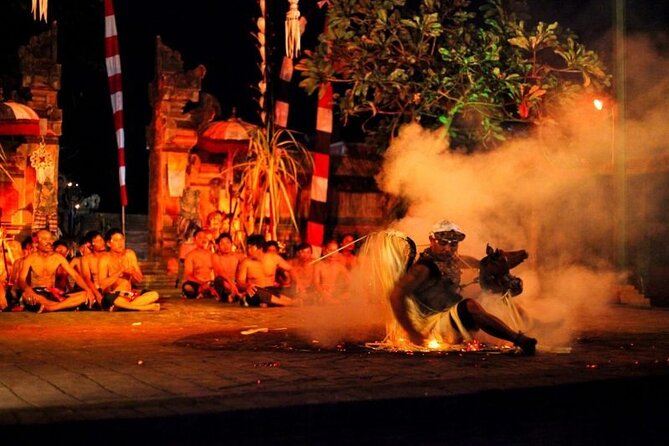
The performances happen at a rustic amphitheater in Batubulan. That matters because it changes what the evening feels like. This is not a glossy indoor theater with perfect sightlines and guaranteed shade. Expect outdoor staging, a crowd environment, and that “event” feeling as people arrive and settle in.
The good news: outdoor venues also make the performances more immersive in a practical way. You’re closer to the action, and the movement and sound travel differently than in a closed room. When the audience hush lands, you’ll feel the shift immediately.
Kecak Dance: The Torch Chorus That Runs on Rhythm
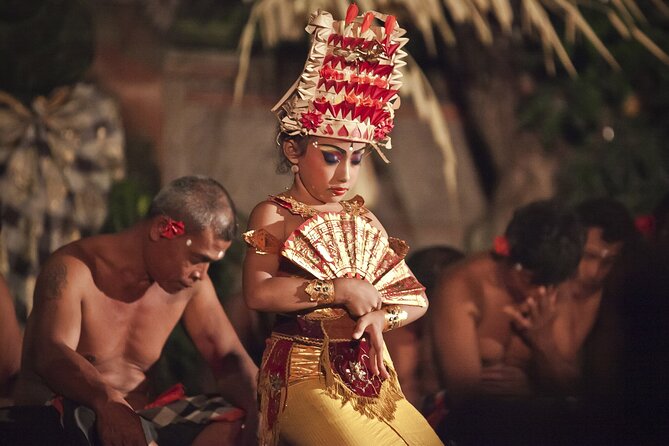
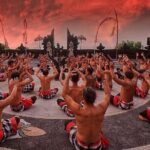
The Kecak (Monkey) Dance is often the part people remember most, and for a reason. In this show format, it’s presented with a large group—about 50 men holding blazing bamboo torches—and it builds toward a storyline based on Prince Rama’s rescue mission.
Here’s what to watch so it doesn’t just look like choreography:
- Follow the rhythm. The chant-like calls and synchronized movement are the engine of the performance.
- Look for the way the torch circle forms a moving ring. It gives the story a visual structure.
- Don’t expect a Western-style narration. The cultural “language” here is gesture, group pattern, and pacing.
This is where a good guide pays off. When your English-speaking guide explains the ancient storyline and the meaning behind key moments, the whole experience becomes easier to track. One guest praised Darta for being proactive about traffic and for giving an insightful explanation of buildings and ceremonies at a temple stop before the show. Even if you don’t have the exact same schedule, the takeaway is clear: ask your guide questions and listen during the pre-show moment.
Fire Dance: Dramatic Fire-Control (and What to Mentally Prepare For)
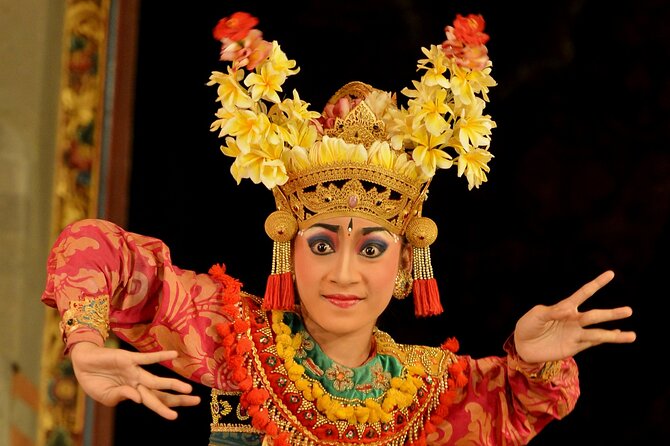
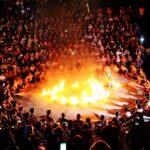
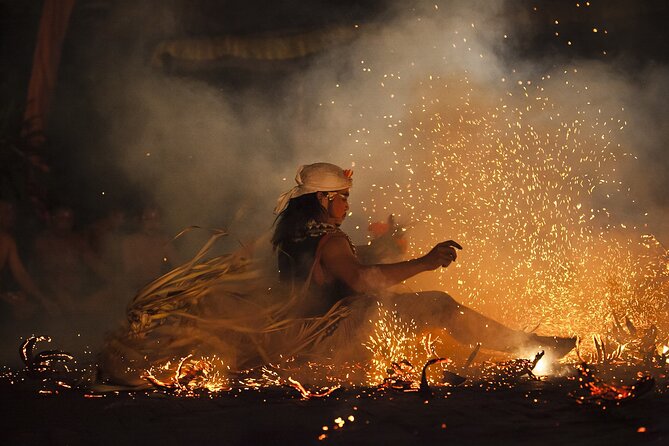
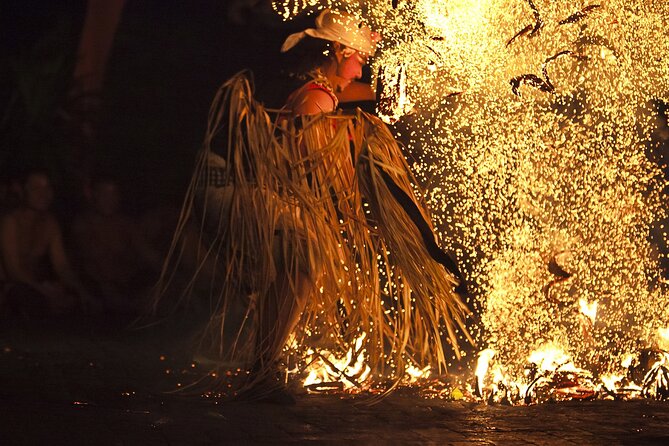
Next comes the Fire Dance segment. This portion leans hard into intensity. Performers appear to become entranced, and the performance includes the high-impact moment of stepping over smoldering coals. The emotional effect is bigger than the reality—because it’s staged—but you’ll still feel the tension when it happens.
A practical mindset helps here. If you watch the coals moment as a single “shock event,” you might miss how the dance builds into it. Look for the lead-up: posture shifts, focus, and the way the performers keep tempo even as the atmosphere heightens.
If you’re the kind of person who worries about safety, you’re not alone. But keep it grounded: the show is designed as performance art rooted in tradition, not random spectacle. Still, if you’re squeamish, know that this is the spookiest-feeling section for some people in the audience.




Sanghyang (Trance): When the Show Turns Spiritual
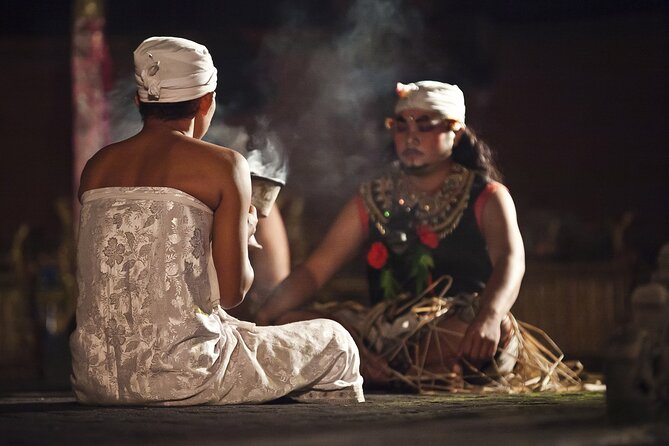
The final highlight is Sanghyang, a trance dance traditionally associated with exorcism practices. In the show, it shows up as convulsive, intense movement—less like “entertainment” and more like a ritual expression.
This section can feel surprising if you came hoping for a lighter, purely theatrical ending. That’s not a flaw—it’s what Sanghyang is. Balinese dance carries spiritual meaning in many forms, and this one leans toward that side.
How to get more from it:
- Watch the shift in energy. The movement style changes compared with Kecak’s group chant rhythm.
- Let the meaning be the focus. The point isn’t “who did the best kick.” The point is what the trance represents within the tradition.
If you’re sensitive to intense performance energy, keep that in mind before you commit to the night.
A Note on How Long the Show Really Feels
The tour duration is listed at about four hours total, and the included dance performance is described as around one hour. But from a practical traveler’s view, the experience time isn’t just the show clock—it’s the pickup window, transfer, and any waiting around the venue.
That’s why the best strategy is to treat this as an evening program, not a tightly timed “sit, watch, leave” event. If you’re easily frustrated by waiting or unclear timing, look for a guide who communicates early.
Some people had a smooth start; others felt the pickup came earlier than expected and the group waited for the venue to open. Still, once the show starts, most viewers say the performances deliver what they came for—especially the Kecak torch segment and the fire/coals moment.
Price and Value: Is $48.72 a Good Deal?
At $48.72 per person, you’re paying for more than a ticket. You’re also paying for:
- hotel pickup and drop-off in major south Bali zones
- an air-conditioned vehicle
- an English-speaking licensed guide service
- the included dance performance admission
Value hinges on whether you use the guide for context. If your guide explains the story and cultural meaning as you watch, the show feels more like a guided cultural lesson. If the experience feels rushed or focused on detours, it can start to feel expensive.
One thing that can affect value is what happens en route. Some guests reported stopovers at places connected to shopping or nearby attractions, while others described a more straightforward transfer. Those additions can be fun if you want them, but they can also tip the experience from educational to sales-driven.
My advice for your money: if you want maximum value, bring a clear expectation into the car. Ask your guide what the plan is between pickup and show time. If you want fewer extra stops, say that upfront.
Group Size, Comfort, and the Air-Conditioned Ride
This tour keeps the group small—maximum 15 travelers. That’s a real benefit. With fewer people, it’s easier for your guide to speak clearly and for logistics to stay manageable.
Transport includes an air-conditioned vehicle, which matters in Bali heat, especially for the ride from Kuta and neighboring areas. Still, comfort can vary depending on the specific vehicle assigned and how full it gets. If you’re sensitive to cramped seating, sit nearer the middle for easier airflow (when possible) and bring a light layer in case the AC is strong.
What to Do With Your Time Before and After
Because food isn’t included, you’ll want to build your evening around the show. If you can, eat a meal before the pickup so you’re not searching for food after a long ride. After the show, you’ll be returned to your hotel, and your guide can recommend nearby local restaurants.
This is where you can turn the evening into a complete Bali night. Don’t leave everything to chance—choose a restaurant close to where you’re dropped, or ask your guide for 1-2 options that match what you’re craving.
Also, if you’re the photo type: expect a crowd around the venue when the show ends. Timing for photos can be part of the experience, but the show itself is the main event.
Who This Tour Fits Best (and Who Might Prefer Another Option)
This tour is a strong match if you:
- want a simple way to see three iconic dance styles in one night
- like having a guide explain story and meaning
- prefer small group logistics with pickup included
- want an evening cultural event close to Bali’s south beach areas
It may not fit as well if you:
- hate waiting around for venues to open
- expect food/drinks included (they’re not)
- feel strongly about avoiding shopping stops or detours on the way
- want a long, multi-stop day rather than a single evening show
If you’re worried about value, focus on the guide quality and the clarity of the plan. The performances are usually the payoff; the transport and “in-between” time are where perceptions can diverge.
Should You Book This Bali Traditional Dance Night?
Yes, if you want a straightforward evening cultural show with pickup from Kuta-area hotels and a guide who can help you follow what you’re seeing. The Kecak torch rhythm, the fire/coals moment, and the Sanghyang trance energy are exactly the kind of Bali experiences that feel hard to replicate on your own—especially when you’re short on time.
Hold off or shop around if you’re very budget-sensitive and you don’t plan to use the guide for context, or if you dislike tours that add extra stops on the way. If you do book, go in with realistic expectations about timing and bring your own food plan.
FAQ
Is pickup and drop-off included?
Yes. Pickup and drop-off service is included from major hotels in Kuta, Seminyak, Sanur, Jimbaran, and the Nusa Dua area.
Where does the tour take place?
The show is at the venue near Batubulan, and the meeting point is based on your hotel pickup in the south Bali areas.
What time does the tour start?
The start time is 4:00 pm.
How long is the experience?
It runs approximately 4 hours.
Which dances are included?
The evening includes the Kecak (Monkey) Dance, the Fire Dance, and the Sanghyang (Trance) Dance.
Is a guide included?
Yes. The tour includes an English-speaking licensed guide.
Is food or drinks included?
No. Food and drinks are not included.
How many people are in the group?
The maximum group size is 15 travelers.
Is cancellation free?
Yes. Free cancellation is available up to 24 hours before the experience start time for a full refund.
Additional charges apply for cruise passengers?
Yes. There are additional charges for cruise passengers.