REVIEW · KUTA
Bali: Silver Jewelry Making Class in Seminyak and Legian
Book on Viator →Operated by Kay Family Bali · Bookable on Viator
Turn silver into your own jewelry fast. This Bali class in Seminyak and Legian is interesting because it’s truly hands-on and guided by patient, friendly silversmiths who help you create a ring, earrings, or a pendant. The silver amount is limited (about 5 grams, sometimes described as 5–7 grams), so it’s best to think of the result as a personal souvenir, not a big, premium jewelry purchase.
I like that the class covers the practical craft steps plus a bit of what makes silver jewelry a Bali specialty, all while you work at a steady pace. You’ll spend roughly 2 hours in the workshop and get to leave with your own finished piece after sanding and polishing, with English local instruction to keep you on track from design to cleanup.
In This Review
- Key highlights worth your time
- Bali silver jewelry class in Seminyak and Legian: what you’re really signing up for
- Where you go in Seminyak and Legian (and how pickup fits in)
- The class flow: from picking a design to finishing your silver piece
- 1) Arrival, setup, and choosing what to make
- 2) Working the silver: melting and rolling
- 3) Shaping your ring or pendant, then finishing
- 4) Wearable souvenir moment
- The silverwork itself: what makes this workshop feel hands-on
- Instructors, safety, and why families enjoy it in real life
- Price and value: why $12.22 can make sense here
- What to expect you’ll leave with (and what to manage your expectations on)
- Logistics basics: timing, group setup, and how the session usually runs
- Who this class is best for (and who might want a different activity)
- Practical tips to get more out of your workshop day
- Should you book this Bali silver jewelry class?
- FAQ
- How long is the Bali silver jewelry making class?
- Where does the class meet in Seminyak and Legian?
- What can I make in the workshop?
- Is English instruction provided?
- How much silver is included?
- Do I get sanding and polishing included?
- Is pickup available?
- Is this activity private?
- What is the cost and is confirmation provided?
- Can I cancel and get a full refund?
- Is service animal access allowed?
Key highlights worth your time
- Design choice before you start: you’ll pick your ring/earring/pendant style from a selection shown ahead of time
- You handle the process: you get included in melting and rolling the silver to the right thickness
- Take-home craftsmanship: your final piece comes with sanding and polishing included
- Safety-minded instruction: clear guidance keeps the experience comfortable for adults and kids
- Family-friendly energy: the shop culture is playful, patient, and focused on you finishing something you can be proud of
Bali silver jewelry class in Seminyak and Legian: what you’re really signing up for
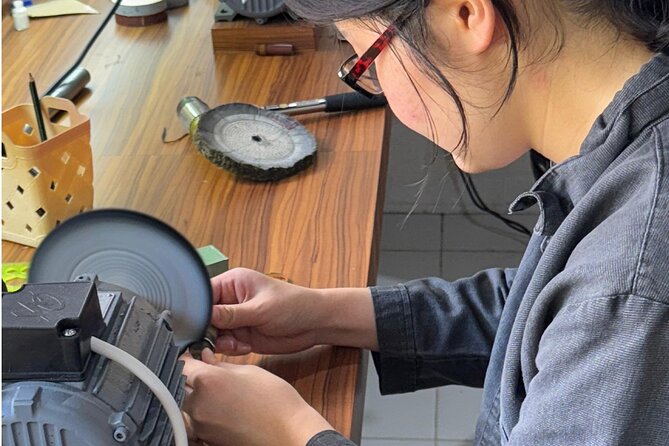
This is one of those Bali activities that sounds simple until you’re in the workshop and realize you’re making something physical with real tools. The goal is straightforward: learn to work with silver, then leave with a ring, earrings, or a pendant you made yourself.
You’ll work with Balinese silversmiths using a small amount of pure Indonesian silver—5 grams is included, and the class description also mentions 5–7 grams as the amount used for creating your piece. That detail matters. You’re not paying for a boutique jewel that would cost hundreds in a store. You’re paying for the lesson, the guidance, the materials, and the chance to walk away wearing proof that you can actually do this.
The other big reason this class works is the teaching style. The feedback you get is consistent: staff are helpful, patient, and they explain things in a way that keeps people calm—especially if it’s your first time working with metal.
You can also read our reviews of more tours and experiences in Kuta



Where you go in Seminyak and Legian (and how pickup fits in)
The start point is listed as:
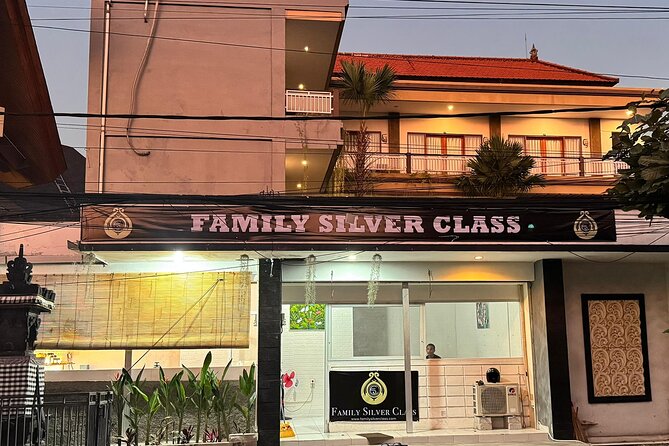
Family Silver Class Legian
Jl. Campuhan II, Seminyak, Kec. Kuta, Kabupaten Badung, Bali 80361, Indonesia
The activity typically ends back at the meeting point.
Two practical notes help you plan: pickup is offered, and the workshop location is described as being adjusted based on where you’re staying. That means you can often keep the trip simple if you choose pickup at booking, rather than trying to time a taxi during traffic.
It’s also described as near public transportation, and it’s intended for most travelers. If you’re traveling with kids, the experience is set up to work for families, not just adults in designer mode.
The class flow: from picking a design to finishing your silver piece
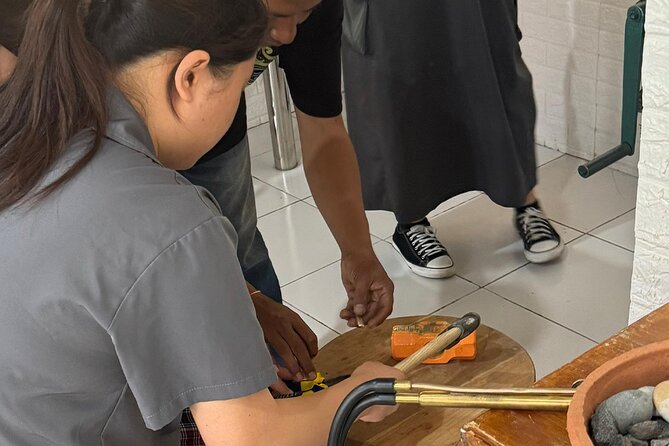
Your 2-hour session is built around a clear sequence: choose what you want to make, then go step-by-step through metalwork, then finish with sanding and polishing so your item looks wearable.
1) Arrival, setup, and choosing what to make
You’ll start at the workshop location, get settled with your instructor, and pick your design. The process isn’t random. There’s a selection of designs you look at before you begin, and you base your choice on what’s available in that moment.
This is one of the best parts of the experience because it gives you ownership from the start. You’re not simply following a fixed pattern. You’re making a decision, then learning the craft to bring it to life.
2) Working the silver: melting and rolling
Once you’re set on your design, you move into the craft steps. One of the most praised aspects is that you’re included in key parts of the process. That often includes the silver melting stage and the rolling step to get the thickness right for your chosen piece.
Rolling silver to the right thickness isn’t just busywork—it affects how the ring or pendant feels and how it holds its shape. The guidance here is where you get value. Without instruction, it would be easy to ruin your piece before it even forms.






3) Shaping your ring or pendant, then finishing
After the silver is prepared, you shape the part into what you chose—ring, earrings, or pendant. This is where patience matters. The silverwork stage can feel fiddly at first, and a good instructor slows you down just enough to keep you from rushing.
Finally, sanding and polishing are included. That finishing step is what turns a rough project into something that looks like jewelry rather than a craft experiment.
4) Wearable souvenir moment
When the class ends, you take your creation home as a holiday souvenir from Bali. Since you’re making the item yourself, it’s usually the kind of gift you actually want to keep.
The silverwork itself: what makes this workshop feel hands-on
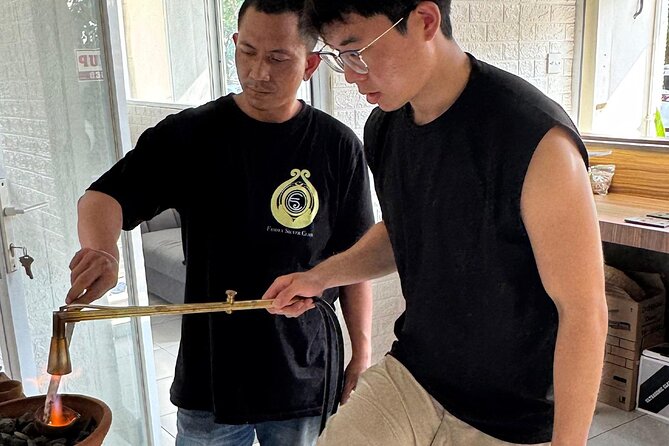
If you’re expecting a lecture, this isn’t that. The workshop is all about action: you’re working with silver as the instructors guide you through the steps.
Two parts tend to leave people happiest. First, you’re not just watching—you’re doing. When your hands touch the process, you understand it fast. Second, you get feedback while you’re still in the middle of the work, so mistakes aren’t last-minute surprises.
The crafting setup also supports different comfort levels. Even if you’re nervous, the instruction is described as patient and safety-minded. That’s a big deal because metalwork involves heat and tools, and feeling safe changes everything about your experience.
Instructors, safety, and why families enjoy it in real life
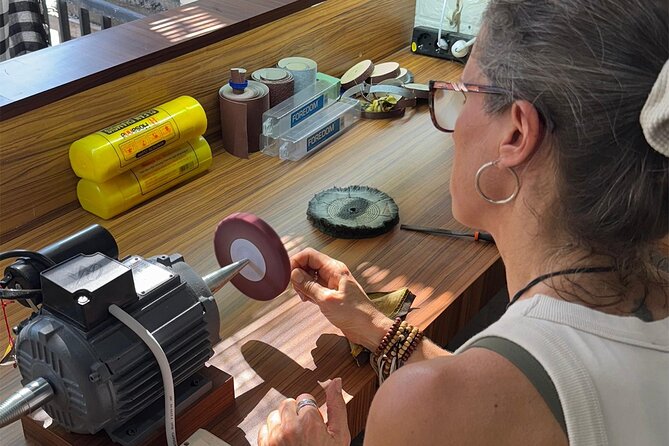
The vibe in this class is friendly and grounded. The strongest theme in the experience feedback is how helpful and patient the staff are—people mention a lot of laughter, but also real attention to safety.
That matters because kids often struggle with two things: sitting still and staying careful around tools. Here, the guidance is described as safety conscious, and the team makes sure participants understand what’s happening. In other words, it’s not just kid-friendly in theory. It’s kid-friendly in the practical way that keeps the session running smoothly.
You’ll likely notice that the silversmiths don’t rush people. They guide you through each stage and help you stay on track so you end up with something finished rather than a half-formed ring you’re too embarrassed to show anyone.
Price and value: why $12.22 can make sense here
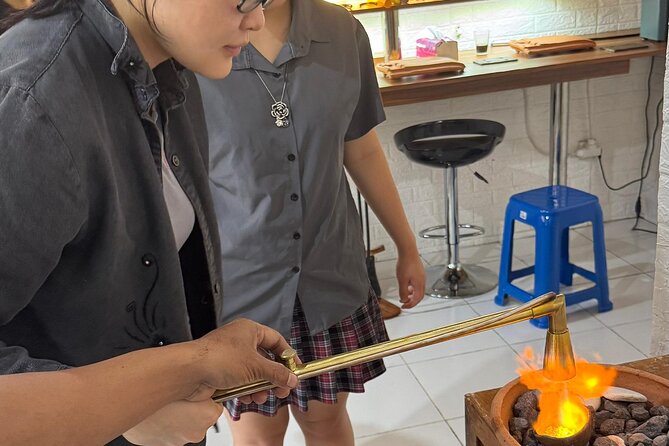
At $12.22 per person, this class is priced like a smart add-on activity—something you can do without blowing your Bali budget.
Here’s the value breakdown:
- Silver is included (listed as 5 grams pure Indonesian silver)
- Instruction is included (English local instructor)
- Finishing is included (sanding and polishing)
- You get a take-home piece that you created yourself
So even though you’re not making a massive or ultra-luxury jewelry item, you are paying for the experience components that usually cost money in a jewelry shop: guided materials, tools/process support, and the finishing time needed to make it look right.
Compared with buying a finished silver ring or pendant in Bali, this feels less like shopping and more like making. You can’t replicate that feeling at a retail counter.
If you do want to buy something afterward, you still can—but you’ll walk into the shops with more awareness. You’ll understand what goes into thickness, shaping, and finishing.
What to expect you’ll leave with (and what to manage your expectations on)
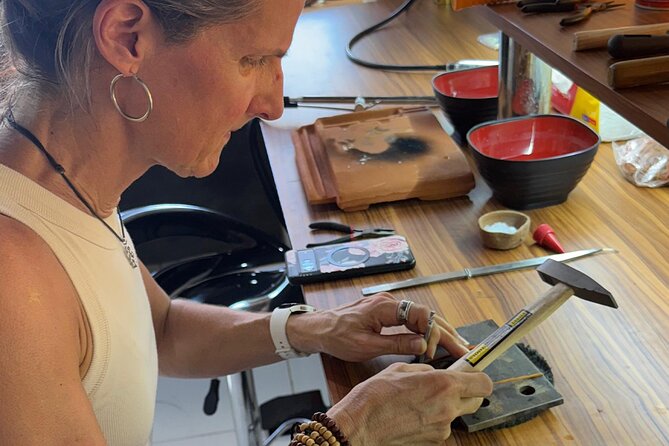
You can make:
- a ring
- earrings
- a pendant
That’s it. The class is built around these core jewelry items, using silver transformed through the workshop process. The pieces are personal and wearable, but you should expect a workshop-size outcome based on the small silver amount.
A practical consideration: since you start with a limited amount of silver, you’ll have less room for big, dramatic designs. If your goal is a bold, heavy statement piece, you might feel a bit restricted by the material quantity and the time.
That said, this is also why the class stays fun. The session is short enough to keep momentum, and the goal is achievable: a finished souvenir you can actually wear.
Logistics basics: timing, group setup, and how the session usually runs
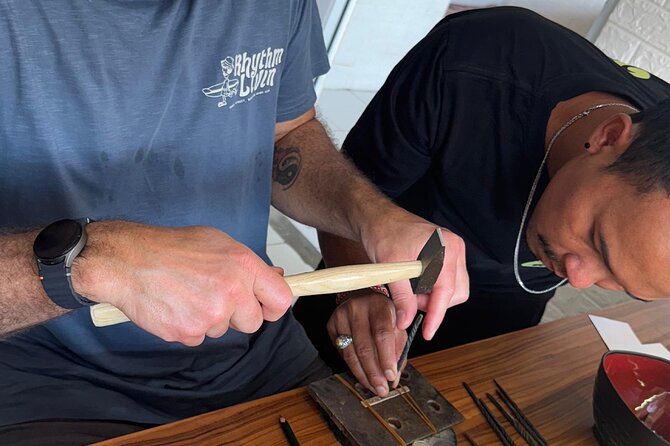
The session is listed as 2 hours (approx.), and it’s described as private for your group. That’s a useful detail because it typically means more attention and less waiting around.
There’s also mention of group discounts and a mobile ticket, which suggests the provider can handle multiple bookings smoothly.
Pickup may be available, and the provider notes the workshop location is adjusted based on where you are. So if you’re bouncing around Bali neighborhoods, confirm pickup at booking so you don’t lose your session to traffic delays.
Who this class is best for (and who might want a different activity)
This Bali silver jewelry class is a strong fit if you:
- want a hands-on souvenir instead of another photo stop
- enjoy crafts and learning by doing
- travel with a partner, friends, or kids
- like the idea of a short, structured workshop with a clear end result
It may not be ideal if you:
- want to make a large silver item with lots of metal (the amount is limited)
- are only interested in a showroom-style experience with zero participation
- expect a long, deep studio session with lots of custom design time beyond the workshop options
Practical tips to get more out of your workshop day
A few simple things will help you enjoy the session more.
- Dress for mess. You’ll be sanding and polishing, and metal dust or residue is possible.
- Wear shoes you can walk in easily. The meeting point is in a busy area, and you’ll want comfortable footwear.
- If you’re with kids, treat this like a short workshop, not a passive activity. Plan for them to focus during the steps.
- Ask about your design choice early. Pick the style you can picture finishing within the session pace.
- Take your time with the shaping steps. The instructor help matters most when you’re in the middle—not after you’ve locked in a shape.
The instructors are described as patient and safety-conscious, so don’t be shy about asking questions as you go. The best outcomes tend to happen when you communicate while you’re still working.
Should you book this Bali silver jewelry class?
I think you should book this if you want a genuine Bali craft experience that ends with something you can wear. The best part is the combination of friendly, patient teaching and real participation—you’re not just observing, and the class is designed so most people finish with a completed piece.
If your budget is tight, this one is especially appealing because the price includes the core materials and finishing. You’ll get a souvenir that feels personal, not purchased off a shelf.
Book it when you want a creative break from the beach and temple schedule. It’s also a great family option because the staff style is described as invested in safety and enjoyment.
If you want an all-day luxury jewelry experience or a huge custom design, you might be happier with a different type of workshop. But for a short, hands-on silver class in Seminyak and Legian, this one is hard to beat.
FAQ
How long is the Bali silver jewelry making class?
It runs for about 2 hours, with the experience described as roughly 2–3 hours depending on the flow.
Where does the class meet in Seminyak and Legian?
The listed start meeting point is Family Silver Class Legian, at Jl. Campuhan II, Seminyak, Kec. Kuta, Kabupaten Badung, Bali 80361, Indonesia.
What can I make in the workshop?
You can create a pair of earrings, a ring, or a pendant, depending on what you choose during the class.
Is English instruction provided?
Yes. The class includes an English local instructor.
How much silver is included?
The included materials list says 5 grams of pure Indonesian silver. The class description also references using 5–7 grams for making your creation.
Do I get sanding and polishing included?
Yes. Sanding and polishing are included as part of the experience.
Is pickup available?
Pickup is offered, and the provider notes the closest location may be adjusted based on where you are.
Is this activity private?
Yes. It’s described as private, meaning only your group participates.
What is the cost and is confirmation provided?
The price is $12.22 per person, and you receive confirmation at the time of booking.
Can I cancel and get a full refund?
Yes. There is free cancellation up to 24 hours in advance for a full refund. If you cancel less than 24 hours before the start time, the amount paid is not refunded.
Is service animal access allowed?
Yes. Service animals are allowed, and the activity is near public transportation.