REVIEW · KUTA
The best surf lessons in Kuta
Book on Viator →Operated by Bali Surf Class · Bookable on Viator
First waves are easier with a plan. This beginner-focused private surf lesson in Kuta pairs surf safety, quick dry-land practice, and two blocks of ocean time so you actually progress in one session. I love that you get real coaching (not just a board handed to you), and I also like the simple value: surfboard, rash vest, and bottled water are included. One thing to keep in mind is beach conditions can change with weather and tides, so your waves may be more or less forgiving on the day.
You can expect a structured rhythm: theory first, then short beach drills, then the ocean for about 45 minutes, a short break, and then another 45 minutes. If you’re a first-timer, this is a smart way to spend a couple of hours in Bali because you’ll leave with a feel for paddling, popping up, and wave timing you can practice later.
In This Review
- Quick reasons this surf lesson in Kuta works so well
- Kuta Beach for first-timers: why this area is often chosen
- The 2-hour game plan: theory, beach practice, then two rounds in the ocean
- Private instruction in Kuta: what you gain beyond a “nice guide”
- A note if you don’t click with your instructor
- What’s included (and what you should plan for yourself)
- Toilets and showers
- Meeting point in Kuta: how to find it fast
- Choosing the right time: tide and wave reality in Kuta
- How hard is this? Fitness level and what your body will do
- Who should book this surf lesson in Kuta (and who might want a different plan)
- Value check: is $25 per person a smart deal?
- Should you book Bali Surf Class in Kuta?
- FAQ
- How long is the surf lesson in Kuta?
- Is this lesson private?
- What’s included in the price?
- Is it suitable for complete beginners?
- Where do I meet for the lesson?
- Are showers and toilets included?
- What happens if weather affects the surf session?
- What is the cancellation deadline for a full refund?
Quick reasons this surf lesson in Kuta works so well

- Private, group-only coaching for a calmer pace and more hands-on attention
- A tight 2-hour structure: safety talk, beach practice, then two ocean sessions with a break
- Beginner conditions in the Kuta area that make it easier to learn without getting overwhelmed
- Staff who stay with you in the water, especially when conditions feel rougher (like at high tide)
- Equipment included (surfboard and rash vest) so you can show up and start
- Extra encouragement and humor, with instructors like Harman, Jerry, Eric, and Robbie mentioned often for clear guidance
Kuta Beach for first-timers: why this area is often chosen
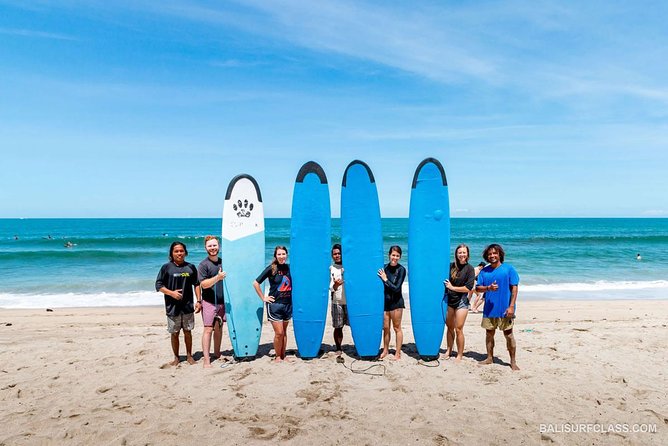
Kuta is one of the easiest places in Bali to start surfing because the learning vibe is built for beginners. In the feedback I saw, people liked that the teaching setup focuses on getting you on your board quickly, and that the conditions around the lesson area are simpler than more advanced reefs or rocky stretches.
There’s a practical benefit here too: when you’re brand new, you don’t just need waves. You need manageable water where you can repeat the basics. Kuta’s reputation for beginner-friendly sessions shows up in comments about learning quickly and feeling confident enough to keep trying after a few wipeouts.
That said, Kuta isn’t always glassy. At certain times of year or with certain tide levels, it can get choppier. The lesson team handles this by matching what you’re trying to your experience level and by guiding you toward the right waves, not just tossing you into the chaos.
You can also read our reviews of more tours and experiences in Kuta



The 2-hour game plan: theory, beach practice, then two rounds in the ocean
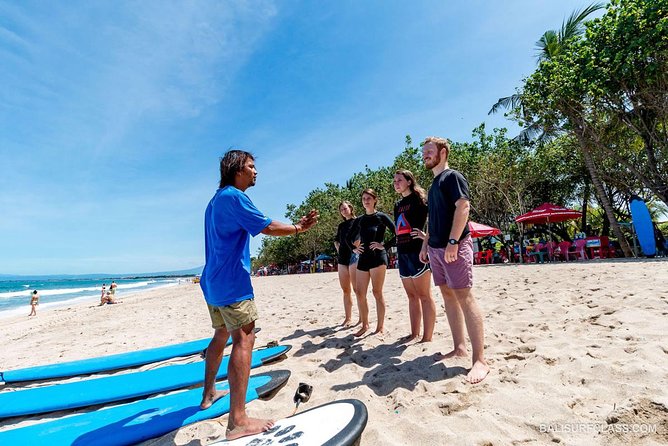
This class runs about 2 hours total, and it’s built like a progression. You’re not stuck listening for long, and you’re not rushed out into the water before you understand what you’re doing.
First 20 minutes: surf safety and theory
You’ll go over core safety rules and basics—how to approach the surf zone, how to think about your board in the water, and what to do to stay safer while learning. This matters because beginners often get hurt from confusion, not from big mistakes. A quick theory setup helps you spend your energy learning instead of guessing.
Next few minutes: beach practicals
After the talk, you’ll do short drills on the sand. This is where the muscle memory gets a starter. You’ll practice movements before you’re dealing with paddling fatigue and wave timing at the same time.
About 45 minutes in the water (Round one)
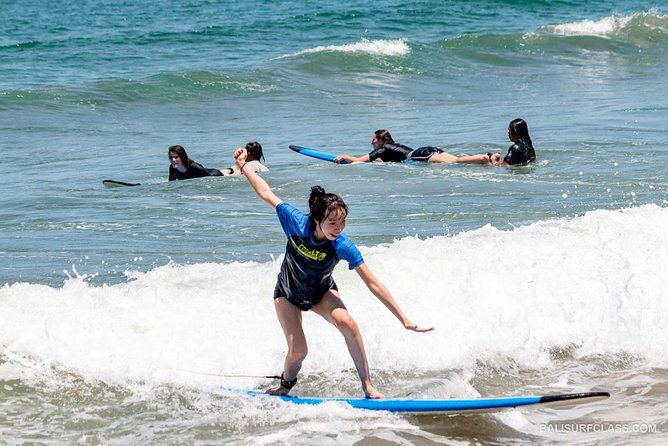
Then you head out. Expect a big chunk of time devoted to paddling, catching waves, and—when it goes right—standing up. For many first-timers, this is also the emotional turning point: early attempts can feel chaotic, and then suddenly you realize you’re doing the right thing.
Short break on the beach
You’ll return for a quick pause to drink water and rest. That break is not a bonus; it’s smart teaching. You’ll be more effective on the second ocean block if your body isn’t running on empty, and if you’ve had a minute to reset your focus.
Second about 45 minutes in the water (Round two)
Round two is where you build. This is the time to keep trying the same fundamentals, but with improved judgment about timing and wave selection. People in the feedback highlighted that instructors stayed with them continuously, including when conditions were rougher due to high tide, so you’re not left alone once you hit open water.
Private instruction in Kuta: what you gain beyond a “nice guide”
This is a private lesson for your group, so you’re not mixing into a big swarm. That matters for beginners. When you’re learning a brand-new skill, small adjustments make a big difference, and it’s easier for an instructor to spot what’s going wrong when the group is small.
The teaching style also comes through in the names repeatedly mentioned in the feedback: Harman is noted for clear instructions and for making sure students are okay; Jerry is praised for patient explanations; Eric and Robbie are mentioned as knowledgeable first-timers got up and rode waves. Even when people didn’t have the same instructor, the theme was consistent: guidance was step-by-step and delivered in a way that kept you calm enough to try again.
There’s also a social side. Several people described instructors as friendly and funny, with a playful vibe that makes the awkward moments less painful. Surfing has a lot of falling built in—humor helps.
A note if you don’t click with your instructor
One low-star story described a rude pairing, and the provider’s response said to report it straight away so they can change instructors. So if anything feels off during the lesson—tone, safety concerns, or how you’re being coached—tell the team immediately. You’re paying for instruction, and you shouldn’t have to just endure it.
What’s included (and what you should plan for yourself)
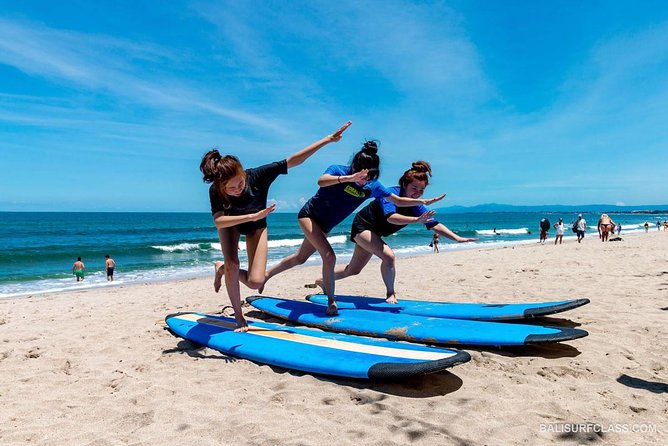
You don’t need to worry about showing up with much gear. The lesson includes:
- Surfboard
- Rash vest
- Bottled water (1 x 500 ml per person)
That’s a real value point at $25 per person. In many surf experiences elsewhere, you end up paying extra for equipment or for basics like water, and you can burn budget fast. Here, the core learning tools are covered.





Toilets and showers
Public showers and toilets are available on the beach but cost extra. So if you want to wash off or refresh, plan for that. It’s not a deal-breaker, but it is one of those details that’s easy to assume is included.
Meeting point in Kuta: how to find it fast
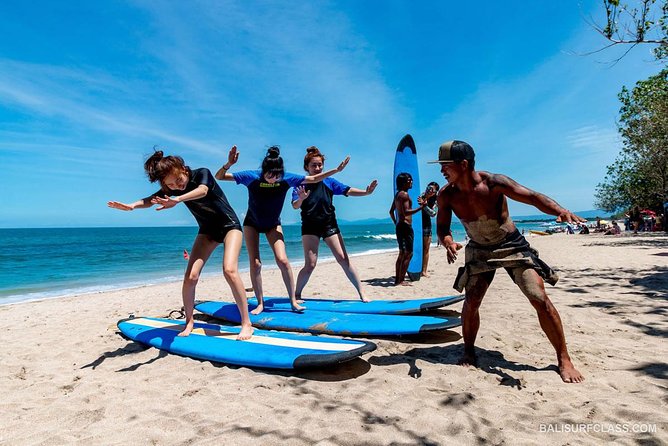
You’ll meet at Bali Surf Class on the beach in front of ROSSO VIVO Italian Restaurant, on Jl. Pantai Kuta in Kuta.
If you’re arriving with limited time, use the restaurant frontage as your anchor. The best move is to arrive a little early so you can get fitted and check in without scrambling once the lesson starts.
The experience is also noted as near public transportation. That’s helpful if you’re not riding in a private car. Still, it’s a beach area—leave yourself extra minutes so you don’t have to sprint in flip-flops.
Choosing the right time: tide and wave reality in Kuta
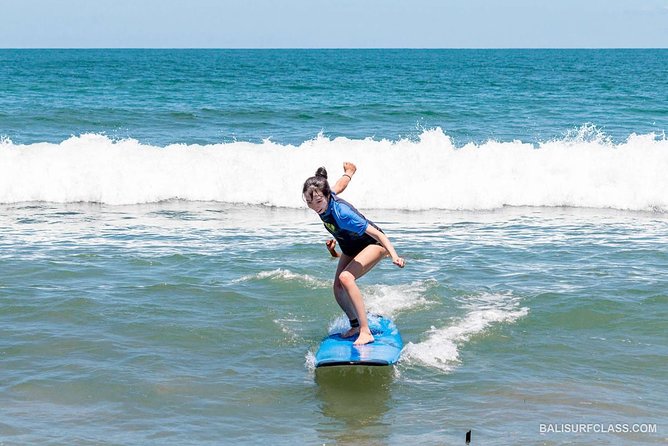
Even the best surf instructors can’t control weather. The good news is the team clearly thinks about conditions. They offer advice on the best times and dates based on tide conditions, because tide can change how the waves break and how “beginner” the learning water feels.
Here’s the practical takeaway for you: if you’re trying to maximize your chances of standing up, ask ahead for what they recommend for that specific day. If you show up without checking, you might still have a great lesson, but you’ll be more dependent on luck.
One of the best signs in the feedback is that instructors adjust even when it’s not perfect. People described lessons during high tide that felt rough, but they still felt safe and supported because the instructors guided them to the right waves for their level.
How hard is this? Fitness level and what your body will do
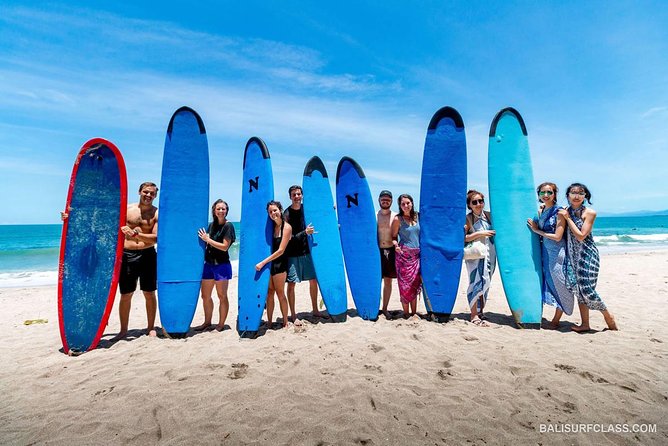
This is listed as suitable for travelers with a moderate physical fitness level. That usually means you should be comfortable with:
- Paddling and using your arms repeatedly
- Getting up from the board position and balancing briefly
- Getting knocked down by waves and starting again
You’re not expected to be an athlete. But you are expected to actively participate for long stretches—about 45 minutes at a time in the water, twice.
If you’re new to any kind of swimming in open surf, take it slowly. The lesson structure helps because beach drills and theory reduce confusion, and the instructors stay close while you’re out there.
Who should book this surf lesson in Kuta (and who might want a different plan)
Book this if:
- You’re a complete beginner who wants structured coaching rather than trial-and-error
- You want a private setup so you can move at your pace
- You want a short, high-impact activity that fits into a busy Bali itinerary
- You like the idea of learning the basics in one morning or afternoon and then practicing later
You might rethink if:
- You want a lesson that guarantees perfect surf no matter the tide or weather. Conditions can be changeable, and it’s outside the team’s control.
- You need everything fully included beyond gear—showers/toilets on the beach aren’t included in the stated package.
Value check: is $25 per person a smart deal?
Yes, especially for first-timers.
Here’s why: you’re paying for coaching time plus equipment plus water, in a lesson that lasts about 2 hours and includes two ocean sessions with a break. For beginners, that’s what you want—you’re not buying a quick photo moment. You’re buying time with instruction while your brain is fresh enough to absorb it.
The best part for value isn’t just the price—it’s the format. A short theory block, quick beach drills, and then ocean time means you get to translate what you learn immediately. That keeps you from wasting energy on wrong habits.
Also, the high recommendation rate and the consistent mention of patient, step-by-step guidance suggest you’re less likely to leave frustrated.
Should you book Bali Surf Class in Kuta?
I think you should book this surf lesson in Kuta if you’re truly starting from zero or close to it and you want a private, structured way to learn. The combination of safety basics, beach practice, and two sessions in the water gives you enough repetition to make real progress in one go.
Just come with realistic expectations: you’ll probably fall. A lot. That’s normal, and the point of good instruction is to make those falls useful. If you’re okay with that learning curve and you want the fastest path to your first successful wave, this is a solid, budget-friendly way to do it in Bali.
FAQ
How long is the surf lesson in Kuta?
The lesson runs for about 2 hours.
Is this lesson private?
Yes. It’s a private activity, so only your group participates.
What’s included in the price?
You get a surfboard and a rash vest, plus one 500 ml bottle of bottled water per person.
Is it suitable for complete beginners?
Yes. It’s ideal for complete beginners and includes surf safety theory and practice on dry land before you go into the ocean.
Where do I meet for the lesson?
Meet at Bali Surf Class on the beach in front of ROSSO VIVO Italian Restaurant, Jl. Pantai Kuta, Kuta, Bali.
Are showers and toilets included?
Public showers and toilets are available nearby, but they cost extra.
What happens if weather affects the surf session?
The experience requires good weather. If it’s canceled due to poor weather, you’ll be offered a different date or a full refund.
What is the cancellation deadline for a full refund?
You can cancel up to 24 hours in advance for a full refund. If you cancel less than 24 hours before the start time, the amount paid is not refunded.