REVIEW · KUTA
Private Tour: Batuan Temple, Tegenungan Waterfall, Elepahant Cave Free transport
Book on Viator →Operated by Upadani Bali Tour · Bookable on Viator
Temple gates and waterfall mist in one day. This private tour strings together Bali’s temple architecture, a well-kept waterfall stop, and the classic Ubud craft-and-culture route, all with hotel pickup and drop-off. I especially loved the Puseh Batuan Temple details—right down to the red-brick Candi Bentar gate—and I also liked having the private AC car with an English-speaking driver who can guide you through the day.
Two more things made it feel worth your time: your entrance tickets are included at every stop, and the pacing stays flexible enough for photos and a real look, not just a drive-by. The main trade-off is that it’s a long 8–10 hour loop with multiple 1-hour blocks, so you’ll want to be ready for a full-day schedule and plan for lunch on your own.
I’ve seen this tour’s human touch in the reviews too: a friendly, responsible driver named Nyoman came through for the temple-waterfall-cave day, and at Tegenungan a guide named Ketut kept the walk lively and entertaining. That kind of calm guidance matters when you’re bouncing between different areas of Gianyar and Ubud.
In This Review
- Key highlights you’ll feel all day
- A Ubud-area day built around real stops, not just checkmarks
- Puseh Batuan Temple: Candi Bentar and gate-guard details you won’t forget
- Tegenungan Waterfall: a safe, cared-for break from city pace
- Goa Gajah (Elephant Cave): the archaeological site where the name tricks you
- Tegalalang Rice Terrace: the classic view stop with time to actually see it
- Ubud Palace, art market, and Mas carving center: culture and shopping with structure
- Puri Saren Agung (Ubud Palace)
- Ubud Traditional Art Market
- Mas Village wood carving center
- Price and logistics: why this $29 format can be good value
- Who should book this tour (and who might not)
- Should you book this private Ubud day?
- FAQ
- What time does the tour start, and how long does it take?
- What’s included in the price?
- Is this a private tour?
- Which attractions are part of the day?
- Are meals included?
- Do I need to pay entrance fees separately?
Key highlights you’ll feel all day
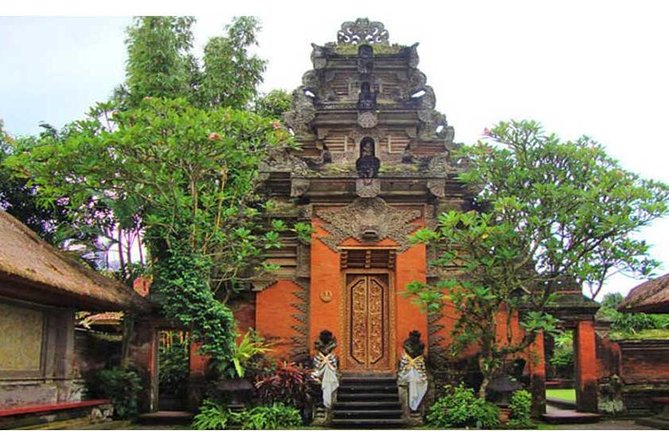
- Candi Bentar at Batuan Temple: a striking red-brick entrance gate tied to Balinese temple layout (Nista Mandala to Madya Mandala)
- Goa Gajah (Elephant Cave): an archaeological site where even the name can mislead you, so it’s worth paying attention on-site
- Tegenungan Waterfall: described as well maintained and safe, with a relaxed, pleasant mood at the water
- Tegalalang Rice Terrace: the big-ticket rice terrace stop when you want more than the views you’d see from the road
- Ubud Palace + art market: a practical way to experience palace arts culture and local shopping in one run
- Mas wood carving center: a focused stop in Bali’s wood carving world without turning it into a shopping ordeal
A Ubud-area day built around real stops, not just checkmarks
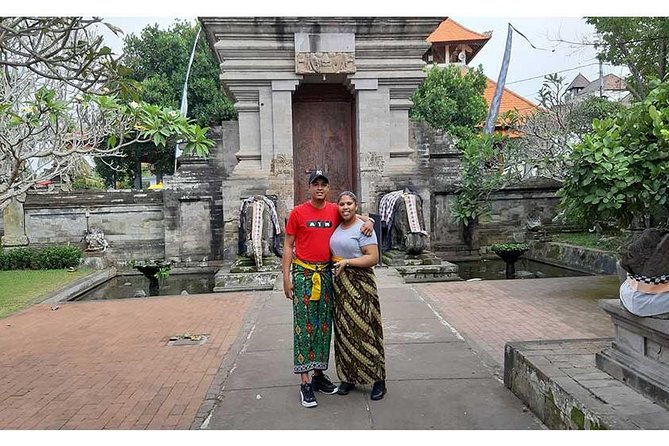
This tour is designed like a classic Bali day: temples early, a nature break mid-morning, then heritage and crafts through the Ubud scene. With a private car and hotel pickup, you’re not trying to assemble transport between scattered locations, which is a big deal if you want the day to feel easy.
You’re also not paying surprise admission fees at each place. Entrance tickets are included for every attraction on the route, which helps you keep the day’s cost predictable—especially at the temples and major Ubud sights where ticketing can add up fast.
The trade-off is distance and time. Expect travel between Batuan/Gianyar, then into Ubud for rice terraces and cultural stops. That’s why you should come with comfortable shoes, water, and a simple lunch plan.
You can also read our reviews of more private tours in Kuta



Puseh Batuan Temple: Candi Bentar and gate-guard details you won’t forget
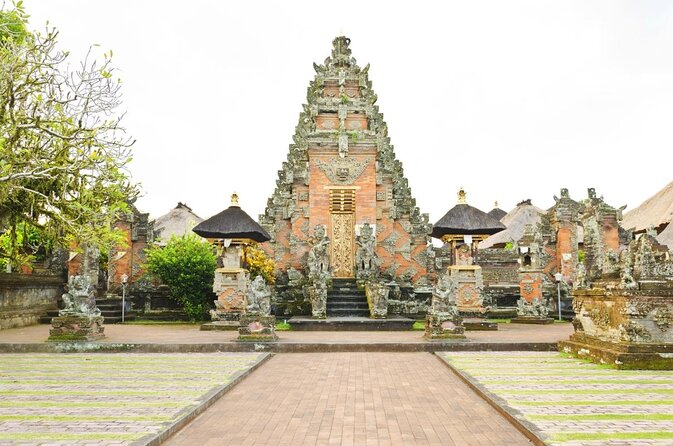
Batuan Temple (Puseh Batuan) is the kind of place that rewards paying attention. Even before you get to the main structures, the Candi Bentar entrance gate makes a strong impression: red bricks, floral ornaments, and curled temple-style decorative elements.
What I like is that this isn’t just pretty architecture. The Candi Bentar gate acts like a boundary between two temple zones: Nista Mandala (the outer area) and Madya Mandala (the central area). That “why” makes the space feel intentional, not random.
Look closely at the gate-guard concept too. Many Balinese temple gateways feature a Dwarapala statue in a more standard pose with a weapon, but here the Dwarapala is standing and does not carry a weapon. Small detail, big payoff—you get a sense that Balinese temple design has variation and meaning, even within familiar patterns.
The stop time is about 40 minutes, so you won’t feel trapped. It’s long enough to take in the main gate and roofline details, and short enough that you don’t end up rushed in sacred space.
Practical tip: dress respectfully (light but covered where possible). You’ll be inside a local religious site, so treat the visit as sightseeing with manners, not a photo shoot you lead.
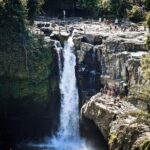
Tegenungan Waterfall: a safe, cared-for break from city pace
Tegenungan Waterfall is the mid-day mood switch. This is a great stop if you want nature without the stress of finding the site, navigating crowds, or guessing access points.
The key detail: the waterfall area is described as well maintained and safe. That matters, because at many waterfalls the big question is whether the paths are steady and the viewing area feels controlled. Here, it sounds like the experience is built for visitors to enjoy the walk and stay near the water without feeling unsafe.
You’ll have about 1 hour, which is the sweet spot for a calm check-in: enough time to walk down, take photos, and even enjoy the water area if conditions suit you. In the reviews, the walk to the waterfall was paced nicely and guided with personality—there’s mention of a guide named Ketut keeping the experience entertaining while walking down.
If you’re planning what to wear: bring water shoes or something with grip. Even with “safe and maintained,” you’re still dealing with wet stone. Also, expect you might want to blot and change out of damp clothes afterward—Bali humidity moves fast.
Goa Gajah (Elephant Cave): the archaeological site where the name tricks you
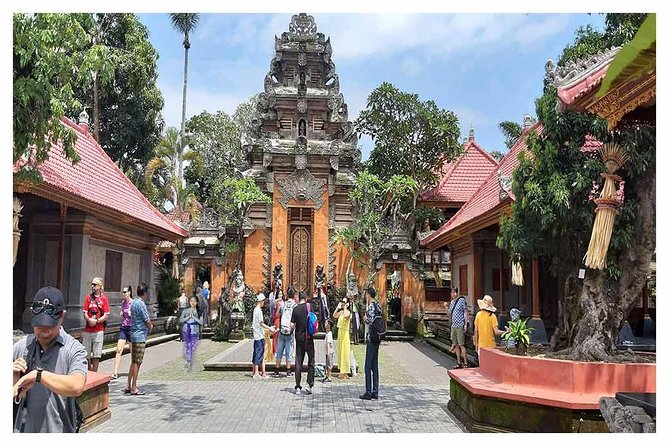
Next up is Goa Gajah, often translated as Elephant Cave. The name can be misleading, and that’s part of what makes this stop interesting. People may assume there’s a huge elephant feature on arrival, but the site is actually an archaeological location tied to the Bedulu Village area.
It’s located about 6 km outside central Ubud, and the tour includes about 1 hour on-site. That time gives you room to look around without feeling pressured to move on after ten minutes.
What makes this stop valuable on an itinerary like this is balance. You’ve just been at a living religious temple and a naturally formed waterfall. Goa Gajah adds a different kind of Bali depth—ancient, historical, and archaeological—so the day feels more rounded than a simple nature-and-market run.
Practical tip: go in with curiosity. If you focus on layout, carvings, and how the site is presented, you’ll get more out of the hour than by just trying to find the “elephant” everyone expects from the name.
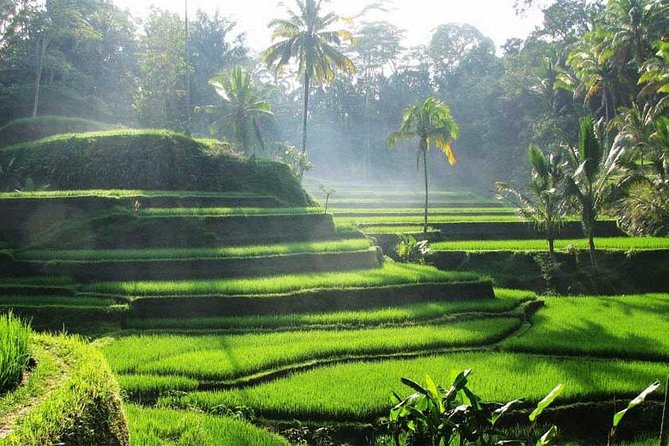
Tegalalang Rice Terrace: the classic view stop with time to actually see it
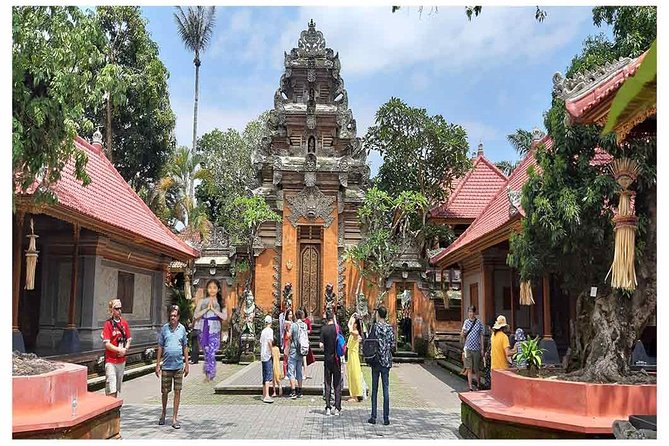
Tegalalang Rice Terrace is the place you’re meant to slow down for. You’ll probably spot rice terraces all over Bali from the road, but Tegalalang is the focused experience—the big-name version when you want to spend real time among the fields.
You’ll get about 1 hour here. That’s enough for a few different viewpoints, short walks, and photo time without turning it into an all-afternoon hike. The tour’s structure helps here: you’re not spending your whole day chasing viewpoints while transport gets later and later.
The practical value is simple: it’s a “best-known terrace” stop that tends to deliver. If you’re short on time, this is where you’d rather invest your one terrace visit.
What to watch for: the sun. Even with Bali’s “good weather” reputation, midday can feel hot. Bring sunscreen and keep water handy. And yes, be mindful that these areas can still involve working land, so don’t treat it like an amusement park.




Ubud Palace, art market, and Mas carving center: culture and shopping with structure
After the countryside scenes, the tour shifts into Ubud’s cultural orbit. You’ll hit three stops that work well together: a royal arts setting, a traditional market vibe, and a dedicated wood carving center.
Puri Saren Agung (Ubud Palace)
Ubud Palace is a landmark tied to the Ubud royal family, and it functions as a cultural center for arts, dance, and literature. You’ll spend about 1 hour here, which is enough time to see why the palace remains a recognizable reference point in Ubud and to catch the atmosphere of a place that hosts performances and events.
Even if you’re not planning to watch a specific show, the value is in the setting: you’re stepping into the cultural “center of gravity” that Ubud is known for.
Ubud Traditional Art Market
Next is the Traditional Art Market. The idea here is straightforward: Bali’s markets feel different from markets in some other countries because they attract both foreign visitors and domestic shoppers. You’ll have about 1 hour, and that time lets you browse without turning it into a marathon.
This is a good stop if you want souvenirs that feel tied to local craft rather than something generic. Go slowly. Look for quality details. Ask questions if a seller explains the item, the materials, or how it’s made.
Mas Village wood carving center
Finally, you’ll visit Mas Village, Bali’s wood carving area. Mas is known across the island as a Bali Wood Carving Center. With about 1 hour, you get a focused introduction without needing to hunt around.
If you like crafts and want to compare styles, Mas can be more satisfying than a random shopping stop because the whole area is centered on the same craft. If you don’t love shopping, you can still enjoy it as a visual culture stop—watching the craft focus and learning what styles are common.
Tip: if you plan to buy, budget extra for it mentally. Even if the tour includes tickets, your personal spending is on you here.
Price and logistics: why this $29 format can be good value
At $29, the big question is what you’re actually getting. Here’s what makes this price make sense for many people:
- Hotel pickup and return: this removes the cost and hassle of transport across Ubud and Gianyar
- Private car with good AC: comfort matters in Bali heat
- English-speaking driver as guide: you get explanation, not just driving
- Entrance tickets included: admission at multiple attractions is the real cost driver, and it’s already handled
The itinerary is built so that you pay for one all-in-day experience rather than buying tickets one by one and figuring out transport yourself.
What’s not included is also clear: meals and personal expenses, plus guide tipping. That means you should plan for lunch (or snacks) and bring some cash or card for water, food, and any souvenirs you spot—especially in the market and carving areas.
Also note the tour starts at 8:00 am and runs around 8 to 10 hours. That’s a long day, but early starts in Bali help you beat some of the heat at outdoor sights.
Who should book this tour (and who might not)
You’ll love this day if you want a one-ticket solution for a classic Bali hit list: temple architecture, waterfall time, Goa Gajah archaeology, rice terraces, and Ubud culture stops. It’s also a good fit if you’d rather spend your energy looking at places than solving logistics.
It’s especially well matched for people who appreciate detailed, local touches—like the unusual standing Dwarapala at Puseh Batuan—and who enjoy having an English-speaking guide-driver (named Nyoman in reviews, and with Ketut mentioned during the waterfall walk).
You might want to skip or shorten your plan if you know you dislike long, packed days. With multiple 1-hour blocks and travel between locations, you’re going to be moving most of the day. If you’re the type who wants only two or three stops and long breaks, you’ll feel the pace.
Should you book this private Ubud day?
I’d book it if your goal is to see a lot of Bali without wasting time on transportation or stacking separate ticket purchases. The included entrance fees, the private AC car, and the driver’s English support make it a solid value format—particularly at this price point.
I’d think twice if you’re sensitive to time pressure. This is a full-day loop with plenty of “see it, enjoy it, move on” moments. If that works for your style, you’ll likely come away feeling like you got real variety: sacred architecture, a safe waterfall break, an archaeological site, then rice terraces and Ubud culture.
FAQ
What time does the tour start, and how long does it take?
The tour starts at 8:00 am and runs about 8 to 10 hours.
What’s included in the price?
Hotel pickup and return, a private AC car, an English-speaking driver, and entrance tickets for each attraction are included.
Is this a private tour?
Yes. It’s private, so only your group participates.
Which attractions are part of the day?
You visit Puseh Batuan Temple, Tegenungan Waterfall, Goa Gajah (Elephant Cave), Tegalalang Rice Terrace, Ubud Palace, Ubud Traditional Art Market, and Mas Carving Center.
Are meals included?
No. Meals and any personal expenses are not included.
Do I need to pay entrance fees separately?
No. Entrance tickets for each attraction are included in the tour.