REVIEW · NUSA PENIDA
Reef Rehabilitation Course and Snorkeling
Book on Viator →Operated by Ecotourism Nusa Penida · Bookable on Viator
Corals grow best when you help them. This Nusa Penida reef rehabilitation course turns snorkeling into hands-on coral restoration, with practical education before you get your hands (and goggles) involved.
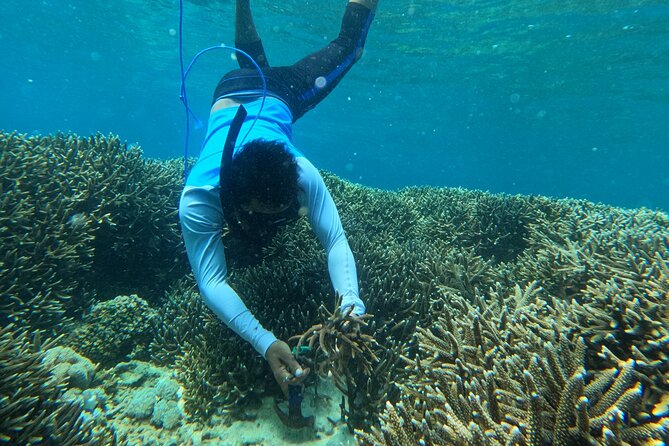
I love the structured plan: you learn how corals work, then you plant 70 corals (about 4 m²) using the site’s rope-and-fragment method.
One consideration: you’ll be in the water for guided snorkeling sessions, so you should be able to swim comfortably and have moderate fitness.
In This Review
- Key things I’d circle on your booking list
- Reef Rehabilitation on Nusa Penida: what you’re really paying for
- The 6-hour flow: from coral lessons to planting 70 corals
- 1) Coral conservation presentation: what corals need to live
- 2) Reef nursery visit: seeing how corals are cultivated
- 3) Harvesting coral fragments: careful, limited, and purposeful
- 4) Lunch break at Coral Cafe: fuel before the water work
- 5) Tight knot underwater: the skill that turns you into a restorer
- 6) Planting 70 corals (about 4 m²): your actual impact
- Snorkeling that actually connects to the work
- Coral Cafe, a local lunch, and a real break from the water
- Saturday special: school time, English lessons, and beach cleanups
- Team instruction and why small groups matter
- Price check: $62.61 and why it feels fair for the impact
- Who this reef rehab course is best for
- A quick note on what’s included (and what isn’t)
- Getting there and what to expect at the start
- Should you book Reef Rehabilitation and Snorkeling?
- FAQ
- FAQ
- How long is the Reef Rehabilitation Course and Snorkeling?
- What is the price per person?
- Where does the tour start and end?
- Is snorkeling equipment included?
- Is lunch included?
- How many corals will I plant?
- How much reef is restored by the planting?
- What fitness level do I need?
- What happens on Saturdays?
- Is there a limit on group size?
- Are service animals allowed?
- When can I cancel for a full refund?
Key things I’d circle on your booking list
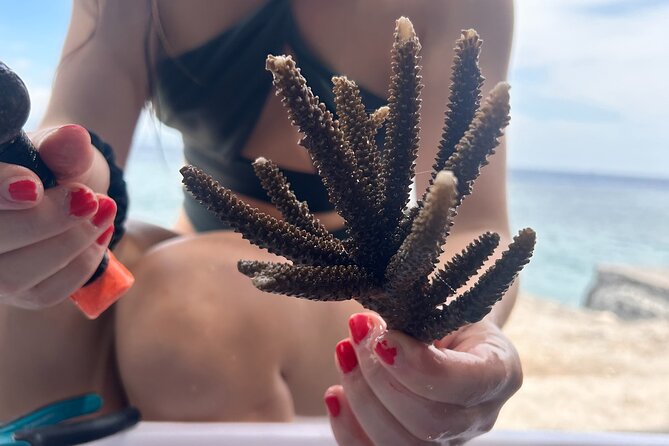
- Plant 70 corals per person while measuring your impact in square meters (about 4 m²)
- Learn underwater knot skills so you’re not just watching the work
- See coral nurseries up close before you harvest fragments for planting
- Get 3 guided snorkeling experiences tied directly to the restoration steps
- Small group size (max 10) keeps attention on safe, careful technique
- Local school support on Saturdays includes teaching English and beach cleanups
Reef Rehabilitation on Nusa Penida: what you’re really paying for
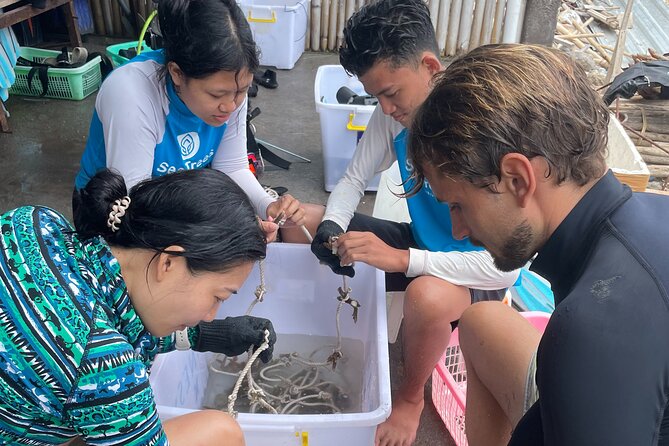
This is not a typical “see corals if you’re lucky” snorkeling trip. You’re paying for instruction plus labor: education, coral handling materials, and the chance to personally plant a set number of coral fragments.
The operator frames the value clearly. Coral restoration done through many NGOs often costs hundreds of dollars for comparable impact. Here, the price is $62.61 per person, and they build the experience around what you actually do: you plant 70 corals by hand, restoring about 4 m² of reef.
That “do the work” part matters. Reef restoration isn’t just about getting a pretty photo. It’s about knowing where corals fit in an ecosystem, and then using the correct method to attach fragments so they have a chance to survive after planting.
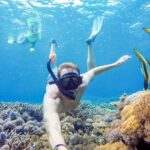
And yes, you’ll still snorkel. But you’ll snorkel with purpose—tied to a nursery, current awareness, and the practical steps of coral planting.
You can also read our reviews of more snorkeling tours in Nusa Penida
- ️Nusa Penida by Private Boat – Snorkeling 4 spots, Swim with Mantas + Land Tour
★ 5.0 · 6,424 reviews
The 6-hour flow: from coral lessons to planting 70 corals
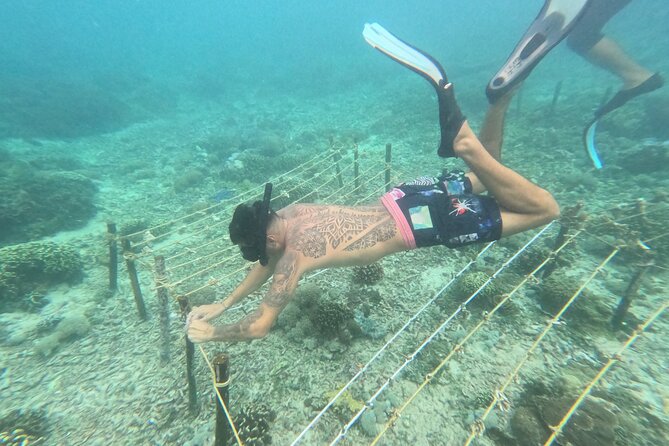
The day runs about 6 hours and ends back at the same meeting point at Ecotourism Nusa Penida Buyuk in Nusa Penida. Expect a schedule that moves in phases: classroom-style context, reef nursery time, then lunch, then the hands-on planting work.
Here’s how the day generally unfolds, in the order you’ll feel it.
1) Coral conservation presentation: what corals need to live
You start with a coral conservation presentation focused on coral biology and ocean conditions, plus what’s happened to damaged ecosystems. This part is useful even if you already snorkel often, because “seeing coral” and “understanding coral survival” are different things.
The key value here is that you learn the basic logic behind restoration: corals aren’t random life you spot underwater. They’re living organisms with needs, and the reef recovers only when conditions and methods support that survival.
It also helps you understand the rest of the day. When you later tie fragments onto ropes and place them on the seabed, the steps stop feeling like a craft project and start feeling like real science.
2) Reef nursery visit: seeing how corals are cultivated
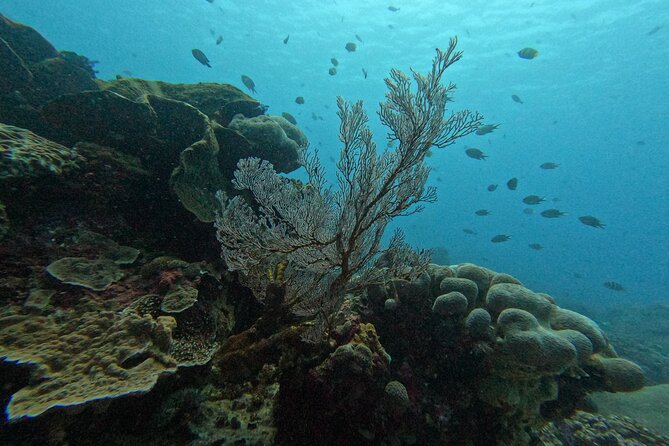
Next you’ll see the coral nursery and how fragments get cultivated before planting. This is where the experience becomes tangible. Instead of coral being something you only find in the wild, you get to understand the “waiting room” stage—where growth happens and where restoration decisions are made.
You also learn why reef nurseries exist. In many areas, reefs have lost the healthy structure that young corals need. Nurseries act like a bridge between damage and future recovery.
3) Harvesting coral fragments: careful, limited, and purposeful
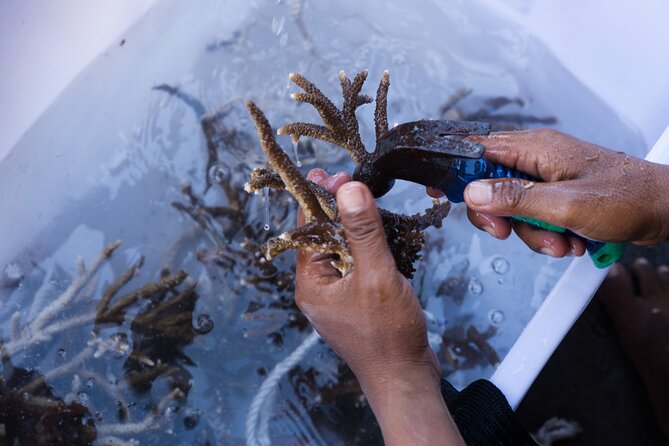
You then “harvest” coral fragments for planting—meaning you take prepared fragments from the nursery system to your own planting work. This is one of the most important moments of the day because it’s where you stop being a spectator.
You’re also being trained, not just doing labor. The goal is to keep fragments secure, handle them correctly, and prepare them to be attached later with the proper knots and rope setup.
This step is also why the maximum group size is 10 travelers. Smaller groups reduce chaos in a hands-on process where timing and technique both matter.
4) Lunch break at Coral Cafe: fuel before the water work
After the nursery work, you take a lunch break at Coral Cafe. Lunch being included is a real plus on a 6-hour day because it keeps the schedule workable and prevents you from cutting the experience short to find food.
In terms of energy, this matters. The afternoon part includes underwater knot practice and final coral placement—stuff that needs calm focus and steady movement.
5) Tight knot underwater: the skill that turns you into a restorer
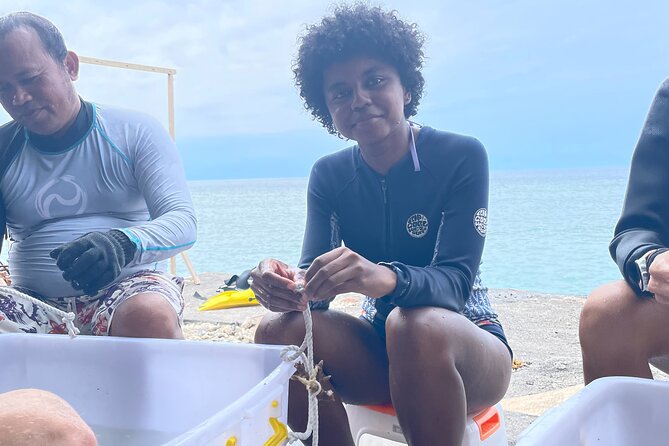
One of the most praised parts of the experience is the knot-tying lesson underwater. You learn how to tie tight knots and prepare the ropes with the coral fragments you collected.
That’s not a throwaway “fun fact” stop. Reef restoration depends on attachment. If the coral fragments aren’t secured correctly, you lose the chance for recovery.
This is the moment where the course earns its reputation for hands-on learning. The instruction is meant to get you from unsure beginner to someone who can confidently tie, position, and prepare for placement.
6) Planting 70 corals (about 4 m²): your actual impact
Finally, you plant 70 corals per person, restoring about 4 square meters of reef by hand. This is the headline activity, and it’s what makes the experience feel measurable.
A lot of conservation experiences talk about impact. This one gives you a unit you can picture: 70 individual coral plantings. And if you’re the type who likes turning abstract goals into concrete effort, this will feel satisfying.
Snorkeling that actually connects to the work
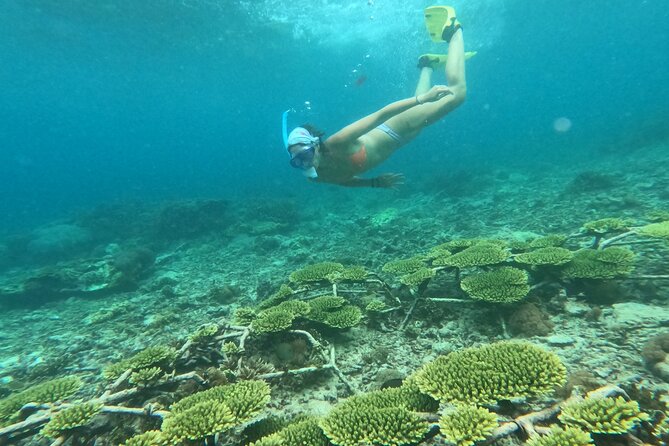
You get 3 guided snorkeling experiences throughout the day. Since you’re also learning and planting, the snorkeling doesn’t feel like dead time between activities.
Instead, it becomes a moving classroom:
- You snorkel to observe reef nursery structures and coral handling setups
- You snorkel as you prepare for planting work
- You snorkel again as you place fragments and complete your coral restoration steps
The “guided” part is important for safety and technique. Reef nursery and planting locations involve careful movement and attention to current and coastline—exactly the kind of context you want if you’re learning a new skill underwater.
You should be able to swim comfortably. The experience also has a moderate fitness level requirement, which makes sense when you’re doing multiple sessions rather than one quick float.
Coral Cafe, a local lunch, and a real break from the water
Lunch at Coral Cafe is included, which is the practical side of a good tour design. The day is hands-on and time-focused. If lunch weren’t handled for you, you’d lose time tracking down food and you’d arrive back underwater less ready.
I also like that Coral Cafe is integrated into the flow instead of being an afterthought. You get a reset between nursery work and the knot-and-plant portion of the day.
And because the course is community-based, the lunch stop feels like part of the local rhythm, not just a drive-by pit stop.
Saturday special: school time, English lessons, and beach cleanups
On Saturdays, the course adds a community component: you visit a local school, teach English, and join conservation activities like beach cleanups with children.
This is a meaningful bonus if you care about conservation beyond the water. It also changes the day’s tone. You’re still doing reef work, but you’re also sharing time and learning alongside the community.
If you’re booking for a specific day of the week, this Saturday add-on is one of the easiest “check the calendar twice” reasons to choose this experience.
Team instruction and why small groups matter
The course is capped at 10 travelers, and that’s not just a comfort detail. Coral planting and underwater knot tying require attention. When the group is small, the instruction can stay specific—how to handle fragments, how to tie securely, and how to position for planting.
In the kind of training you’re getting here, a lot can go wrong if someone has to wait for help. Small groups reduce that risk and increase the chance you finish your 70 corals with confidence.
It also means the experience is better for people who learn best by doing, not by watching from the edge.
Price check: $62.61 and why it feels fair for the impact
At $62.61 per person, this price can look surprising at first—until you map it to what you’re getting:
- Included snorkeling equipment
- Included coral restoration materials
- Lunch
- The chance to plant 70 corals (around 4 m² restored)
- Community support elements, including a gift to local kids and school
The operator also claims that similar impact through typical NGOs would cost hundreds of dollars. Even if you don’t treat that as an absolute comparison, the core idea is clear: you’re not just paying for a boat ride and a story.
You’re paying for the mechanics of restoration plus the education that makes those mechanics make sense.
If you want a cheap snorkeling trip, this isn’t that. But if you want hands-on conservation in a small group with real deliverables, it’s one of the better value categories you can book in Bali’s conservation space.
Who this reef rehab course is best for
This works especially well if you:
- Like structured, practical learning (not just sightseeing)
- Want to snorkel with a purpose
- Feel comfortable swimming and staying engaged in the water
- Appreciate small-group instruction
- Want conservation that includes community involvement (especially Saturdays)
It may be a poor fit if you:
- Prefer snorkeling with minimal exertion
- Don’t feel confident in the water for multiple guided sessions
- Want a relaxed “floating only” pace
A quick note on what’s included (and what isn’t)
Included in your booking:
- Lunch
- Use of snorkeling equipment
- Materials for coral restoration
- A gift to local kids and school
Not included: personal expenses.
Getting there and what to expect at the start
You’ll start and end at Ecotourism Nusa Penida Buyuk at the address listed in the tour details. The tour ends back at that meeting point, so you don’t have to plan a separate return.
A mobile ticket is used, which keeps things simple on arrival.
Should you book Reef Rehabilitation and Snorkeling?
If your goal is conservation you can measure with your own hands, I’d book it. The biggest reasons are the 70 corals per person target and the fact that you learn the skill side—especially the underwater knot-tying that turns coral fragments into planted restoration work.
Choose this tour if you like learning-by-doing and you can swim comfortably. If you’re more of a “just show me the reef” snorkeler, you might find the restoration focus more intense than you planned—but that’s also why the day feels meaningful.
FAQ
FAQ
How long is the Reef Rehabilitation Course and Snorkeling?
It lasts about 6 hours.
What is the price per person?
The price is $62.61 per person.
Where does the tour start and end?
It starts at Ecotourism Nusa Penida Buyuk and ends back at the same meeting point.
Is snorkeling equipment included?
Yes. Snorkeling equipment is included.
Is lunch included?
Yes. Lunch is included, and it’s at Coral Cafe.
How many corals will I plant?
You plant 70 corals per person.
How much reef is restored by the planting?
The planting is described as restoring 4 square meters of reef per person.
What fitness level do I need?
You should have a moderate physical fitness level and be able to swim comfortably.
What happens on Saturdays?
On Saturdays, you visit a local school, teach English, and do conservation activities like beach cleanups with the children.
Is there a limit on group size?
Yes. The tour has a maximum of 10 travelers.
Are service animals allowed?
Yes, service animals are allowed.
When can I cancel for a full refund?
Free cancellation is available up to 24 hours before the experience starts for a full refund.
You Might Also Enjoy
More Snorkeling Tours in Nusa Penida
- ️Nusa Penida by Private Boat – Snorkeling 4 spots, Swim with Mantas + Land Tour
★ 5.0 · 6,424 reviews
More Tour Reviews in Nusa Penida
- ️Nusa Penida by Private Boat – Snorkeling 4 spots, Swim with Mantas + Land Tour
★ 5.0 · 6,424 reviews