REVIEW · SEMINYAK
Taste & Explore Bali: Denpasar Street Food & Historic Sites
Book on Viator →Operated by Intrepid Urban Adventures - Indonesia · Bookable on Viator
One walk can turn street food into real culture. This Denpasar evening blends temples and colonial-era landmarks with serious bites at local markets. I love that the food is tied to place, not packaged for tourists. I also like the small group size, capped at 12, so the guide can actually talk with you. One catch: this is very local eating, so it is not a fit if you avoid pork or need strict dietary accommodations.
You start at a sacred Hindu temple area and then work your way through meaningful spots like Puputan Square and the four-faced god statue. The food portion hits classic Bali—especially Babi Guling—and you also get comfort food like Bakso meatball soup. A possible drawback is that dietary needs are limited, and kids under 6 are not permitted.
In This Review
- Key things I’d bookmark before you go
- Why This Denpasar Night Tour Starts at 4:00 pm
- Pura Agung Jagatnatha: Where Your Food Journey Gets Meaning
- Puputan Square and the 1906 Resistance Story
- Patung Catur Muka: Colonial-Era Landmarks and Photo Stops
- Jalan Gajah Mada: The Part Where You Actually Eat (Babi Guling and Bakso)
- Badung Market and Jaje Bali Snacks: Street Food With a Local Rhythm
- NADHI Heritage Coffee Finish: Hot or Iced Arabica
- Price and Value: Is $45 Worth It for This Denpasar Mix?
- Guides, Group Size, and How the Night Feels
- Practical Tips So You Don’t Trip Over the Details
- Should You Book Taste & Explore Bali in Denpasar?
- FAQ
- What time does the tour start, and how long does it last?
- How much does this tour cost?
- Where do I meet, and where do I end?
- How large is the group?
- What food will I try on this tour?
- Is Babi Guling included, and what is it?
- Can the tour accommodate vegetarian, vegan, or gluten-free needs?
- Are kids allowed?
- Is the tour near public transportation?
- What is the cancellation policy?
Key things I’d bookmark before you go
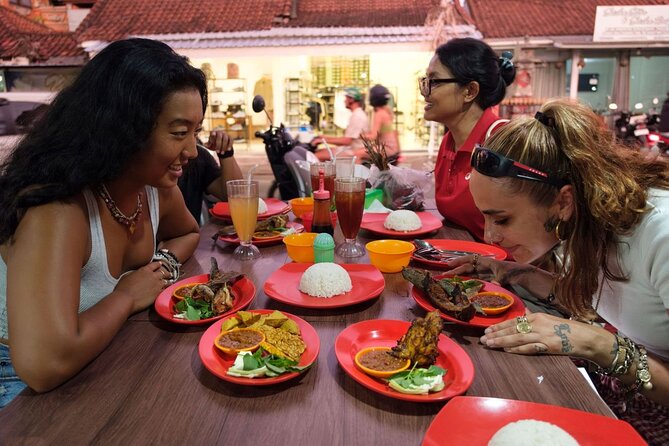
- Pork-forward tasting: Babi Guling is included, and it is traditionally served for ceremonies.
- Culture before snacks: you visit Pura Agung Jagatnatha and Puputan Square before you eat.
- Local vendors, local sourcing: the tour emphasizes that ingredients are grown/bought locally and stalls are run by locals.
- Small group pace: up to 12 people with guide attention, not a long cattle-train tour.
- Practical finish: coffee at NADHI Heritage with a hot or iced choice to wrap the night.
Why This Denpasar Night Tour Starts at 4:00 pm
This tour is built around the moment when Denpasar shifts into evening street-life. It starts at 4:00 pm, which makes sense: you get daylight for the heritage stops, then you’re in position for the market energy. The total time is about 3 hours, so it is long enough to eat well, but short enough that you can still enjoy the rest of your evening in Seminyak.
The meeting point is at Agung Jagatnatha Temple (Jl. Surapati No.7). You end at Nadhi Heritage on Jl. Gajah Mada (Jl. Gajah Mada No.122). That end point is useful because it’s right where the walking route finishes, so you are not stranded across town at the end of your food crawl.
Price-wise, at $45 per person, you are paying for a guided route that layers context on top of eating. If you tried to recreate it on your own, you might save money, but you would probably lose some of the why-behind-the-what that makes this night market style feel personal instead of random.
You can also read our reviews of more food & drink experiences in Seminyak
Pura Agung Jagatnatha: Where Your Food Journey Gets Meaning
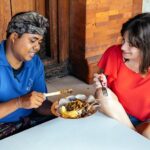
Before you chase snacks, you start at Pura Agung Jagatnatha, Bali’s central Hindu temple. This stop is short—about 15 minutes—but it sets the tone. You’re in a sacred space where local life continues around you, and that matters because the whole tour keeps reminding you that Balinese food is tied to rituals, family, and community.
You do not need to pay entry here, since the temple admission is listed as free. The best part is how the guide frames what you’re seeing: not just architecture and scenery, but the spiritual heartbeat of the area. Even if you’re not the type to chase temples, it makes the later food stops land harder.
One practical note: temples often come with dress expectations. The data does not spell out a specific rule, so use common sense—cover up enough so you feel respectful, and you’ll be fine.
Puputan Square and the 1906 Resistance Story
Next comes a reflective, symbolic stop: Puputan Square. You stand at Bali’s symbolic heart and learn about the 1906 resistance against colonial rule. This isn’t a long museum-style lecture. It is a quick moment to connect a place-name to a real historic struggle.
Why I think this step is worth your time: it keeps the tour from feeling like a checklist of snacks. When you later eat food that is traditionally served for ceremonies, you can actually understand the cultural logic behind it. Bali isn’t just about flavors; it’s about meaning.
This is also one of those photo moments where you can snap a few shots, but the better move is to slow down and listen. If you treat this stop as background, you miss the part that makes the food feel like culture, not just consumption.
Patung Catur Muka: Colonial-Era Landmarks and Photo Stops
After Puputan Square, you pause at Patung Catur Muka, the four-faced god statue. This is another 15-minute stop, and it’s mostly about recognition and context. You get a look at a colonial-era landmark vibe too, including references like the Nederlandsch-Indië Sokkelklok and the Catur Muka monument.
If you like walking tours that give you more than one bland street view, this section helps. You learn what you’re looking at instead of guessing. It’s especially handy if you plan to keep exploring Denpasar after the tour, because suddenly you can spot key features without needing to ask a dozen questions.
This is also a good time to check your phone camera settings. The area is close, and the angles can be good. Just don’t spend so long photographing that you make the group wait.
Jalan Gajah Mada: The Part Where You Actually Eat (Babi Guling and Bakso)
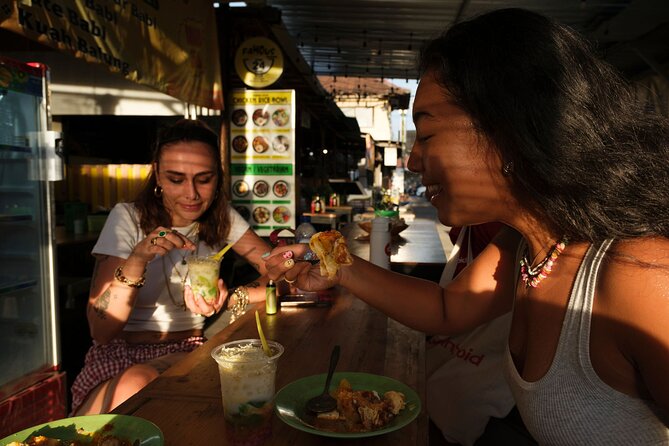
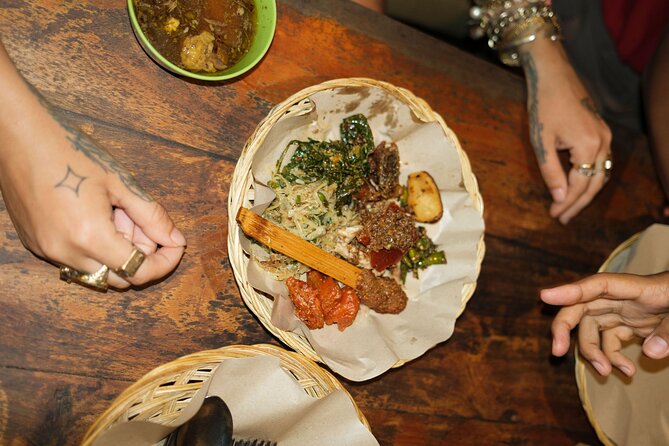
The walk down Jalan Gajah Mada is where the tour turns from “culture lesson” to “I’m hungry now.” This stop is about 30 minutes, and it includes tastings of two big favorites: Babi Guling and Bakso.
Babi Guling is Bali’s signature roasted pork dish, cooked on a rotisserie and packed with flavor. What makes it special here is the tradition: it’s usually served at ceremonies. So tasting it on this night market-style route gives you more than a snack. It’s a look at how Balinese life and ritual food overlap.
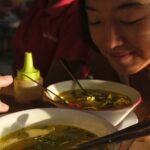
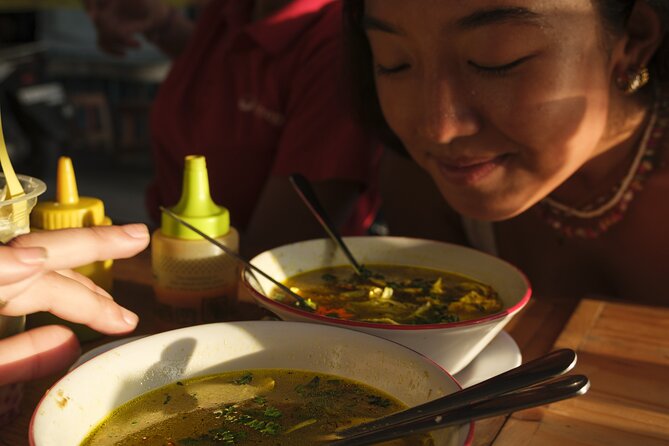
Bakso is the other star: Indonesian meatball soup, comforting and easy to love even if you’re not normally into soups. Together, these two dishes give you contrast—roasted savory richness, then a warm bowl that feels like you’ve sat down for a proper meal.
A note that affects your decision: the tour is not set up for vegetarian or vegan diets. The data also says gluten allergies or intolerances can’t be catered to. If pork is a deal-breaker for you, this tour is likely the wrong fit, since Babi Guling is listed as part of the tasting.
You can also read our reviews of more tours and experiences in Seminyak



Badung Market and Jaje Bali Snacks: Street Food With a Local Rhythm
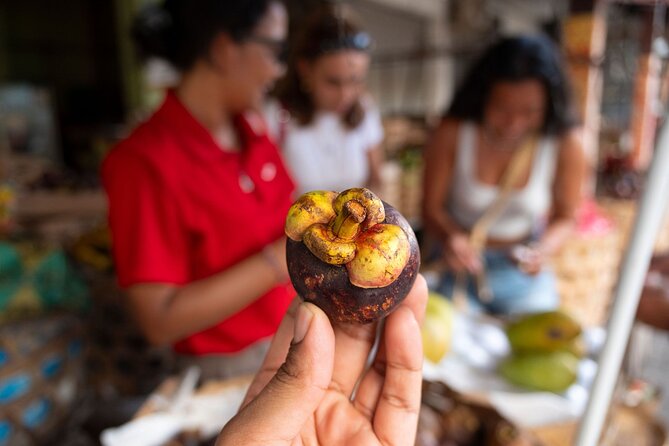
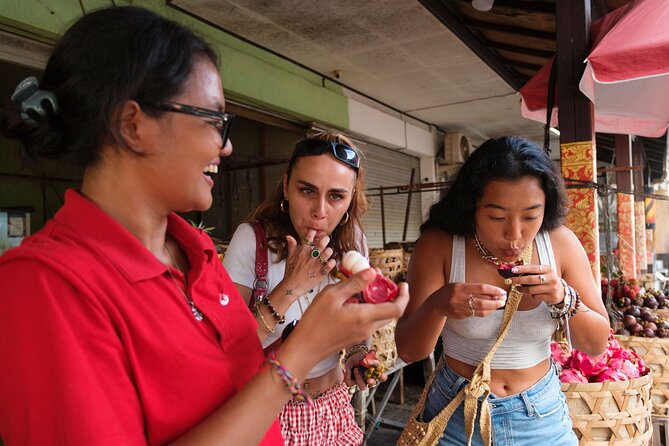
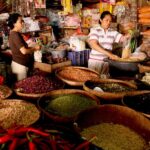
Your next chunk of time is at Badung Market Dempasar Bali, around 30 minutes. This is where the night market mood becomes real: stalls, smells, and that feeling of eating where people actually live.
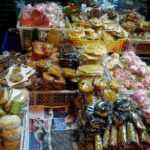
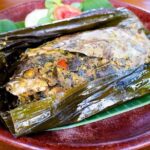
You’ll sample Jaje Bali snacks, which are a traditional Balinese dessert. They’re often made from rice flour and coconut, and you’ll likely see a colorful variety. Even if you’ve never had this type of sweet before, the guide’s job here is to help you choose and understand what you’re tasting, not just hand you a plate and disappear.
This is also the part where the tour’s value becomes clear: the tour specifically supports 4 to 6 local food stalls. That means your money is more directly tied to the vendors selling the food for a living, rather than floating into a chain restaurant somewhere.
If you’re the type who loves street food but hates the stress of figuring out what’s good, this section is a relief. You’re not guessing. You’re tasting a curated set of local staples.
NADHI Heritage Coffee Finish: Hot or Iced Arabica
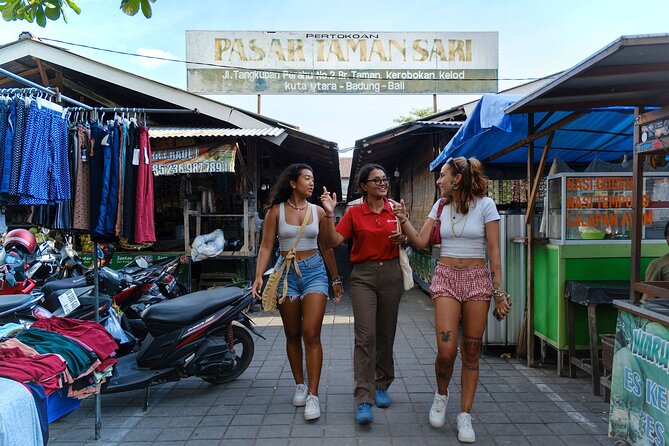
You wrap up at NADHI Heritage with a cup of authentic Indonesian Arabica coffee, hot or iced. This is listed as another 30-minute stop. It’s a smart ending. By the time you reach coffee, you’ve already done the spiritual and historic parts and you’ve eaten enough to feel satisfied.
Coffee also gives you a last chance to chat with your guide without the pressure of constant movement. You can ask questions about what you just tasted, or what to look for if you keep exploring on your own after the tour ends.
This stop is also a practical benefit: you end right there on Jl. Gajah Mada, so you can plan your next move with less guesswork.
Price and Value: Is $45 Worth It for This Denpasar Mix?
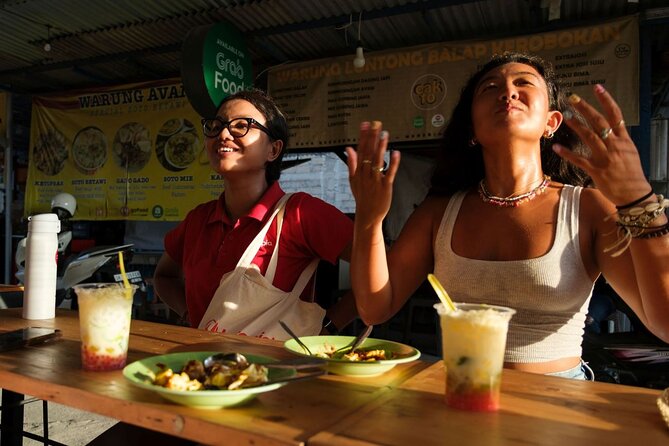
At $45 per person for about 3 hours, you’re paying for three things: guided context, guided eating, and the benefit of small-group pacing.
Eating alone in Bali can be cheap, sure. But if you try to replicate this yourself, you lose a big chunk of the value: the explanation of why the stops matter, plus the ability to navigate markets efficiently. You also don’t get that specific pairing of ceremony-linked Babi Guling with Bakso, plus snack sampling like Jaje Bali, and a coffee finish.
The tour also emphasizes local sourcing and local vendors, including the idea that food is grown and bought locally and that vendors sell the food for a living. That’s not just a feel-good slogan. It’s part of how the tour justifies its price as a community-supporting meal experience, not just a performance of culture.
And the timing helps too. Starting at 4:00 pm gives you a smooth rhythm—temples and landmarks first, market eating after. You are not stuck doing only one side of the experience.
Guides, Group Size, and How the Night Feels
This tour runs with a maximum of 12 people, and it’s designed for personalized attention. That matters more than you might think on a street food route. When groups are too big, the eating pace becomes chaotic. Here, the smaller size helps you stay together and actually talk with the guide.
The tone from guides is often described as friendly and conversational, and they tend to connect food choices to local customs and how to understand what you’re eating. Names that have shown up with strong impressions include Putra, Lena, Srix, and Irfan. Regardless of who you get, the recurring theme is that the guide makes the night feel human, not scripted.
If you like walking tours where you can ask questions and not feel rushed, this is a good match.
Practical Tips So You Don’t Trip Over the Details
Here’s how to make the experience smoother without overthinking it:
- Wear comfortable shoes. You’re walking through central Denpasar street scenes and market areas for about 3 hours.
- Plan to eat what’s included. The core tastings are Babi Guling, Bakso, and Jaje Bali snacks plus coffee. Extra food and drinks are not included.
- Bring cash only if you want it. The included tastings are part of the tour, but the tour data notes that additional food and drinks are not included.
- Consider your diet before booking. Vegetarian/vegan and gluten allergy/intolerance accommodations are not available.
- If you’re traveling with kids, check the age rule first. Children under 6 are not permitted.
Also, you’ll receive a confirmation at booking time, and the tour uses a mobile ticket. Near public transportation, too, which can help if you decide to connect it with other plans in Denpasar.
Should You Book Taste & Explore Bali in Denpasar?
Book this tour if you want a street food night that comes with context. You’ll get a tidy arc: temple and Puputan Square meaning, colonial-era landmark moments like Patung Catur Muka, then real eating at places like Badung Market, ending with NADHI Heritage coffee.
Skip it if pork is a no-go for you, if you need vegetarian/vegan options, or if you have gluten allergies/intolerances. Also skip if you hate walking and want a pure sit-down meal—this one is built as a guided walk.
If you’re doing Bali for flavors and local life, this is a solid use of a few hours. It’s not about being flashy. It’s about eating where the culture actually happens.
FAQ
What time does the tour start, and how long does it last?
It starts at 4:00 pm and runs for about 3 hours.
How much does this tour cost?
The price is $45.00 per person.
Where do I meet, and where do I end?
You start at Agung Jagatnatha Temple (Jl. Surapati No.7) and end at Nadhi Heritage on Jl. Gajah Mada No.122.
How large is the group?
The tour has a maximum of 12 people.
What food will I try on this tour?
You’ll taste Babi Guling and Bakso, plus traditional Jaje Bali snacks and enjoy Indonesian Arabica coffee.
Is Babi Guling included, and what is it?
Yes, Babi Guling is included. It’s Bali’s signature roasted pork dish, cooked on a rotisserie, and it is traditionally served at ceremonies.
Can the tour accommodate vegetarian, vegan, or gluten-free needs?
Unfortunately, it cannot accommodate vegetarian or vegan diets, and it also cannot accommodate gluten allergies/intolerances.
Are kids allowed?
Kids under 6 aren’t permitted. This tour is best suited for adults and older children.
Is the tour near public transportation?
Yes, the tour is listed as being near public transportation.
What is the cancellation policy?
You can cancel for a full refund up to 24 hours before the experience’s start time. If you cancel less than 24 hours in advance, the amount paid is not refunded.