REVIEW · SEMINYAK
Well-Guided Local Textile Tour of Denpasar
Book on Viator →Operated by Ayu and Ngurah · Bookable on Viator
Balinese textiles are everywhere once you know what to notice. This small-group walk in central Denpasar is built around seeing cloth in real shops, not just browsing tourist displays. You’ll get a practical look at batik, ikat, and weaving, plus you’ll hear how locals think about fabric for daily life.
What I like most is the way the stops connect to each other, so you understand what makes one fabric different from the next. I also like the guide flexibility: Ayu can adjust the route if your interest tilts more toward hand-painted batik, weaving, or everyday yardage. One watch-out: it runs best in good weather, since it’s a walking tour through neighborhood streets.
In This Review
- Quick highlights you’ll care about
- Denpasar textile walk: 2 hours of street-level fabric culture
- Meet Ayu and Ngurah on Jalan Gajah Mada
- Stop 1: Kumbasari Market for batik, ikat, and weaving shops
- Stop 2: Jalan Sulawesi, the fabric haven for everyday and modern materials
- What you learn about Indonesian textile styles (and why it changes your shopping)
- Shopping smart in Denpasar: how to get value without getting overwhelmed
- Who this tour fits best (and who might want a different plan)
- Price and logistics: why $25 makes sense for this format
- Weather, timing, and how to plan your afternoon
- Should you book the Denpasar textile walk with Ayu and Ngurah?
- FAQ
- What does the Denpasar textile tour include?
- How long is the tour?
- Where does the tour start and end?
- How much does it cost?
- How large is the group?
- Is it affected by weather?
Quick highlights you’ll care about
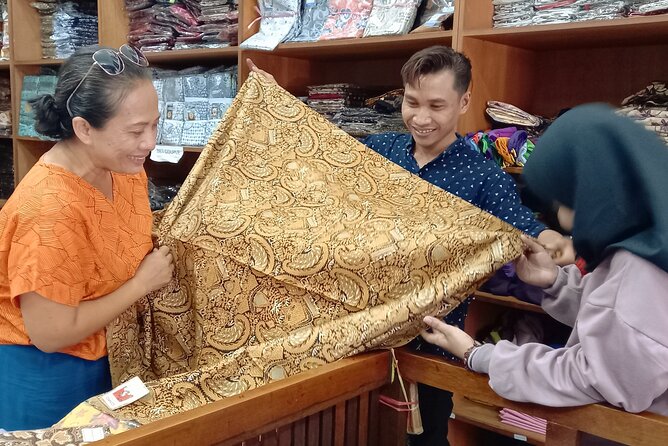
- Two hours, three fabric-focused areas: market browsing, traditional textile shops, then Jalan Sulawesi’s fabric lane
- A real guide team: Ayu and Ngurah lead with English-friendly explanations and local technique context
- Hands-on contrast: you’ll see Javanese-style hand-painted batik, modern batik, ikat, and endek weaving in sequence
- Local shopping angles: you’ll learn how to compare value and look for reasonable local prices
- Small group cap (up to 10): easier questions, more time with fabrics rather than rushing
- Mobile ticket: you don’t need to fuss with printed paperwork
Denpasar textile walk: 2 hours of street-level fabric culture
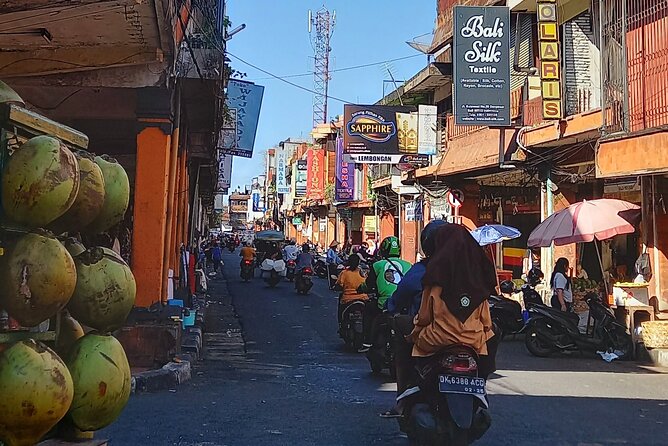
This is a focused walk that fits into an afternoon. The meeting point is Jalan Gajah Mada No.1, and the tour starts at 2:00 pm, returning back to the same meeting area. The whole thing is about 2 hours, so it’s ideal when you want texture, color, and technique without turning your day into a half-day project.
The value here is the order of operations. Instead of sending you straight into a single shopping strip, you move through textile suppliers and fabric neighborhoods in a way that helps you build comparisons. That matters, because different Indonesian textile styles look similar at first glance—until someone points out the details.
You’ll be walking in an area that’s close to public transportation, which helps if you’re staying around Seminyak and want a smoother plan for getting there and back. Also, the group stays small (up to 10), which means your guide can actually slow down when you spot a fabric you’re curious about.
One more practical note: this activity is weather-dependent. If conditions are poor, you’ll be offered another date or a full refund, so don’t book it as your only plan for that particular afternoon.
You can also read our reviews of more guided tours in Seminyak
Meet Ayu and Ngurah on Jalan Gajah Mada
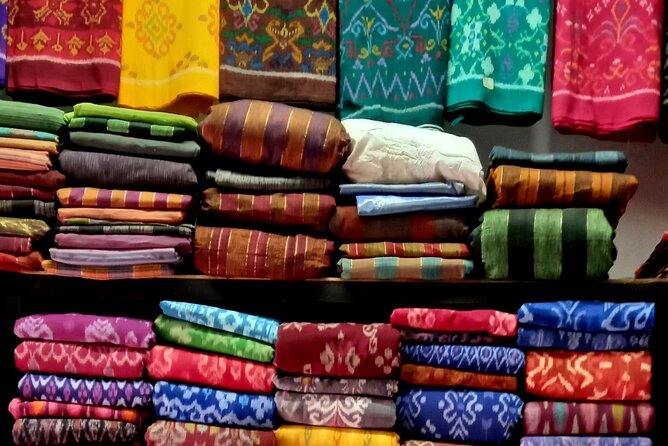
The tour begins on Jalan Gajah Mada, at the starting address near Dauh Puri Kangin. From there, you meet Pak Rayyis, who shares context about textile collections. This first segment sets the tone: you’re not just seeing cloth—you’re learning how people source and value it.
What makes this start work is that it frames what you’ll see later. You get the idea that textile in Bali and across Indonesia isn’t only for special outfits. It’s part of how communities think about patterns, materials, and purpose.
I also appreciate the local-guide style here. Ayu and Ngurah aren’t just speaking at you from the curb. The reviews highlight how Ayu is genuinely happy to tailor the stops to individual interests, and that’s the difference between a generic shopping walk and one where you leave knowing what to look for next.
Stop 1: Kumbasari Market for batik, ikat, and weaving shops
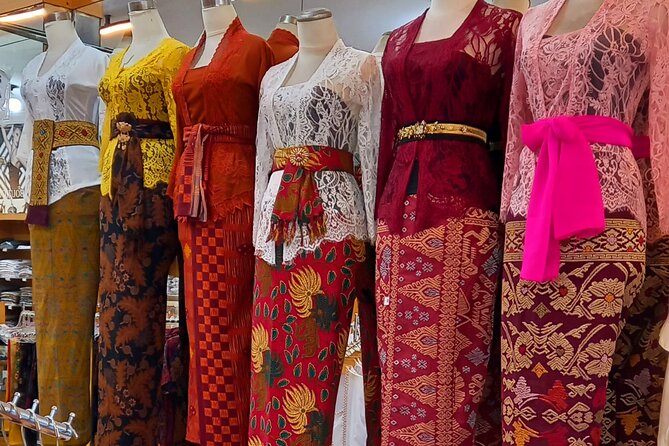
After the first meeting point, you head toward Kumbasari Market. This is where the tour turns from introductions into hands-on textile viewing in shops focused on batik, ikat, and weaving.
Markets like this are valuable because you’re more likely to see what locals actually use, not only what’s designed for tourist browsing. You’ll also get a stronger sense of variety. Even within batik or within ikat, fabrics can differ a lot in look, weight, and pattern style. Being able to compare items side by side is what makes this stop worth your time.
A possible drawback: market shopping can be visually intense. You may find yourself distracted by color first, technique second. If that’s your tendency, go slowly and ask your guide what to check—things like material type and what makes a particular fabric style distinct.
The good news is that Ayu’s English-friendly explanations (and overall technique knowledge) make it easier to ask questions and get answers you can use when you’re deciding what to buy.
Stop 2: Jalan Sulawesi, the fabric haven for everyday and modern materials
Next comes Jalan Sulawesi, a well-known fabric area where prices tend to feel more “shop-per-yard” than boutique. This is the stretch for browsing and shopping in a way that’s practical: you’ll find print affordable everyday use batik, plus modern fabric options such as linen, brocade, cotton, lace, quilting materials, dressmaking fabrics, interiors, silk, rayon, and more.
This variety is the payoff if you don’t just want one kind of textile. If you’re the sort of person who likes having options—shirts, table linens, dressmaking projects, or interior pieces—Jalan Sulawesi gives you room to compare textures and finishes.
What to watch for here is the difference between “looks nice” and “works for your plan.” The tour approach helps because you’ve already seen batik/ikat/weaving styles earlier. Now you can ask more pointed questions based on what you liked most at the market stop.
Also, this is a smart place to learn buying confidence. The tour includes tips for shopping well and finding reasonable local price. That doesn’t mean you’ll automatically get the lowest possible number, but it does mean you’re less likely to get swept up in the first offer you hear.
What you learn about Indonesian textile styles (and why it changes your shopping)
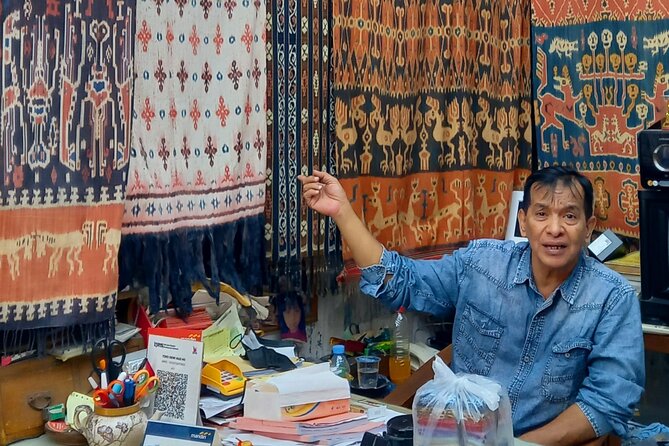
This tour is built around the idea that textile styles have recognizable signatures. By seeing different categories in one walk, you start spotting patterns faster—without needing a textile degree.
Here’s what you’re likely to encounter across the stops:
- Javanese traditional hand-painted batik: you’re often looking at more intentional, detailed pattern work
- Modern batik: still batik-inspired, but with a fresher look or different production approach
- Ikat: a different style altogether, often tied to how patterns are formed before dyeing
- Endek weaving: woven texture that feels more structural than printed designs
Even if your goal is simply to buy something pretty, the learning helps. Once you can tell the difference between printed yardage and more involved processes, it becomes easier to judge value.
I like that this tour keeps the learning grounded in what’s in front of you. You’re not stuck with broad lecture points. You’re watching how textiles differ and asking practical questions that match the fabrics you’re holding.
And because the group is small, you’re more likely to get clear explanations instead of rushed answers. The reviews calling out Ayu’s knowledge of local techniques makes sense here: technique talk matters because it helps you shop with your eyes open.

Shopping smart in Denpasar: how to get value without getting overwhelmed
The tour is definitely friendly to shopping, but it’s not just a buyers-only sprint. The approach is more useful than that: you’ll learn how to compare options and how to keep things reasonable.
A few smart habits to use during the walk:
- Treat each stop as a different type of shopping mission. Market = variety and technique, Jalan Sulawesi = everyday and modern material options.
- Ask your guide what separates the fabrics you like from the similar-looking alternatives. That’s where value hides.
- If you’re unsure what you want to make, focus on fabric you can imagine using right away. Jalan Sulawesi has options for everyday use and dressmaking, so you can match fabric to a realistic plan.
The tour’s promise of local prices and shopping tips is the practical part. When you understand what a fabric style is meant for, your decisions get easier. You’ll also avoid the common mistake of buying something beautiful but hard to use later.
Who this tour fits best (and who might want a different plan)
This walk is for you if you enjoy fabric as an experience, not just as a souvenir. It’s also a good fit if you like learning while you shop, especially if you care about differences between batik styles, ikat, and woven textiles like endek.
It’s particularly strong for:
- Anyone planning to bring textiles home for use, not only for display
- People who want a local-guided shopping route rather than wandering into random stores
- Travelers who appreciate small groups and conversation-friendly explanations
If you only want a quick photo stop or you dislike markets and busy shop streets, you might prefer a lighter, single-location textile experience. But if you’re curious and want to compare fabrics with a guide, this is a solid choice.
Price and logistics: why $25 makes sense for this format
At $25 per person for about 2 hours, this is priced like a small, guide-led neighborhood experience rather than a full-day excursion. For many travelers, the real question isn’t the number—it’s what you get for the time.
You get three distinct textile zones: a market area focused on traditional fabric styles, plus Jalan Sulawesi’s wider range of everyday and modern materials. That combination is what makes the price feel fair. You’re paying for the guidance that helps you interpret what you’re seeing, and for the ability to shop with reasonable local-price context.
It also helps that the tour maxes at 10 travelers. Less time spent waiting, more time spent asking questions and comparing textiles in person.
Practical comfort points from the tour info:
- It’s a walking route, so plan for street-level browsing
- It’s near public transportation
- Confirmation is received at booking time unless you book very close to departure
Weather, timing, and how to plan your afternoon
The tour starts at 2:00 pm, which can work well if you’re staying in Seminyak and want a mid-afternoon cultural-shopping break. It’s also easier to pair with other nearby activities because it’s only around 2 hours.
Because it requires good weather, I suggest you keep this as a flexible plan. If the forecast looks rainy or rough, you might still be offered a different date or a full refund, but it’s better not to build your entire schedule around it.
Should you book the Denpasar textile walk with Ayu and Ngurah?
I’d book it if you want a textile-focused walk that mixes local technique learning with real-world shopping. The strongest reasons to choose this one are the guide quality—Ayu and Ngurah lead with clear, English-friendly explanations—and the way the route supports comparison across batik, ikat, and weaving.
It’s also a good value move. For a relatively low price, you’re getting guided access to multiple fabric areas rather than one quick stop.
I’d hesitate only if you hate walking through shop streets or you’re looking for a purely museum-style cultural experience. This is a practical textile outing. You’ll get the most from it if you show up ready to look closely and ask questions.
If that sounds like you, this is one of those Denpasar experiences that makes your next fabric purchase smarter.
FAQ
What does the Denpasar textile tour include?
You’ll walk through central Denpasar to see different Indonesian textiles and visit textile-focused shops, including a market stop and the Jalan Sulawesi fabric area.
How long is the tour?
The tour lasts about 2 hours.
Where does the tour start and end?
It starts at Jalan Gajah Mada No.1, Dauh Puri Kangin, Kec. Denpasar Utara, Kota Denpasar, Bali 80232, Indonesia and ends back at the same meeting point.
How much does it cost?
The price is $25.00 per person.
How large is the group?
The tour has a maximum of 10 travelers.
Is it affected by weather?
Yes. It requires good weather, and if it’s canceled due to poor weather you’ll be offered a different date or a full refund.