REVIEW · NUSA DUA
Ubud Pottery Ceramic Class in Bali
Book on Viator →Operated by Bali Tourist Information · Bookable on Viator
Clay beats souvenir shopping.
If you like hands-on culture, this Ubud-area pottery class is a smart choice. You spend about 3 hours making your own ceramics with 2kg of clay, guided by local artisans in a calm setting outside central Ubud. I like that the class covers both hand building and wheel work, so it feels more than a single demo. I also like the small group size (max 10), which usually means you’re not just watching from a distance. One possible drawback: it’s in Singapadu/Sukawati, roughly a 30-minute drive from central Ubud (often longer with traffic), and if you want to take your piece home you’ll need enough time left in Bali (see the 4-day note).
In This Review
- Key things to know before you go
- Where you’ll go: Tana ampo Pottery Studio (near Ubud)
- The 2kg clay experience: what you’re actually making
- Hand building and wheel throwing, side by side
- The mentors and the small group setup
- The studio setting in Singapadu: calm, garden-like, and practical
- What’s included—and what you’ll pay for separately
- Price and value: is $31.31 a fair deal?
- Timing tips: how to plan around the 4-day take-home rule
- A realistic itinerary flow (what the 3 hours feels like)
- Who this class is perfect for (and who should think twice)
- Practical advice to get better results
- Should you book this Ubud pottery ceramic class in Bali?
- FAQ
- How long is the pottery class?
- Where does the class start?
- Is the activity in the Ubud area?
- How much clay do I use?
- What’s included in the price?
- Do I get to make more than one piece?
- What if I want to take my pottery home?
- What’s the group size?
- How do I get the ticket?
- What’s the cancellation policy?
Key things to know before you go
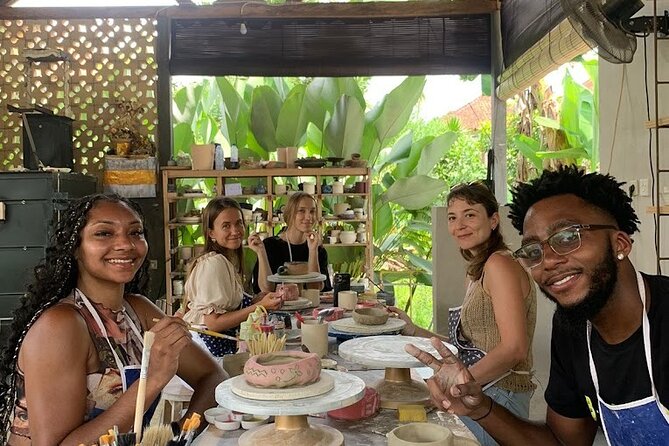
- 2kg of clay, not a token amount: You work with a full chunk of clay to shape real pieces.
- Hand building plus wheel throwing: You get time for both methods, even if you’re a first-timer.
- Small class size (up to 10 people): Easier questions, quicker help, less waiting.
- Made in Singapadu/Sukawati: Expect a short ride out of central Ubud to reach the studio.
- Garden-style studio setting: The vibe is calm and outdoorsy rather than cramped.
- Plan for the take-home timing: If you want your work returned, you need at least 4 days remaining.
Where you’ll go: Tana ampo Pottery Studio (near Ubud)
The class starts at Tana ampo Pottery Studio in Central Singapadu, Sukawati (Gianyar Regency). The exact meeting point is listed as C793+8PH, Central Singapadu, Sukawati, Gianyar Regency, Bali 80582. The activity ends back at the same meeting point.
This matters because central Ubud can get slow and crowded. From Ubud, expect about 30 minutes of driving, but it can stretch longer depending on traffic. If your plan is tight—temples, massage, airport, a dinner reservation—you’ll want to schedule this early in the day or build in buffer time.
Also, the experience is described as “most travelers can participate.” That’s a good sign for beginners. The class is set up with guidance from the basics, so you’re not expected to show up already knowing how pottery works.
You can also read our reviews of more tours and experiences in Nusa Dua

The 2kg clay experience: what you’re actually making
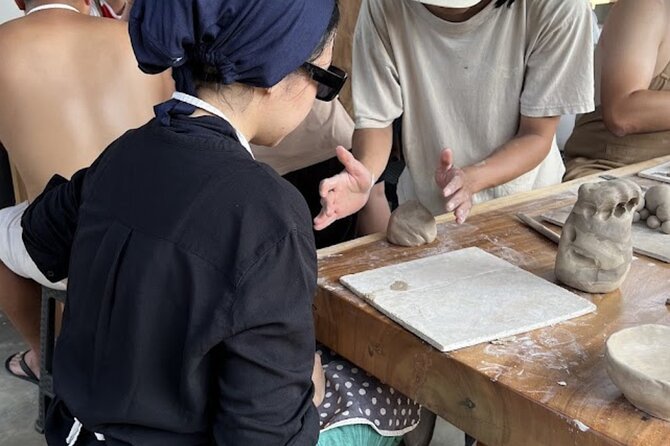
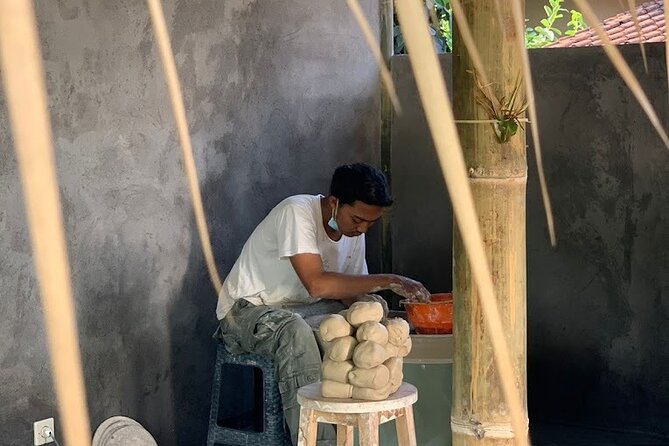
The heart of the activity is working with 2kg of clay during the session. The way it’s framed is practical: you shape, mold, and add your own touches, guided by an artisan team who knows how to teach step-by-step.
You’re not just making one small thing. The class is set up so you’ll create at least two pieces in the typical flow—one made by hand and another made with wheel work. Wheel work is often the part people worry about, but the structure is meant to make it approachable. You’ll get instruction on the basics, so you’re not stuck guessing while the clay dries out.
Here’s what you’ll likely learn as you work:
- Different approaches to shaping (hand building vs. wheel throwing)
- Basic wheel technique for centering and forming
- Simple molding and detailing for your own style
- A clearer understanding that ceramics aren’t one-size-fits-all (different clay types exist, and not every soil is suitable)
From the way the lesson is described, the goal is not perfection. It’s learning how the process feels, then walking away with pieces you shaped yourself.
Hand building and wheel throwing, side by side
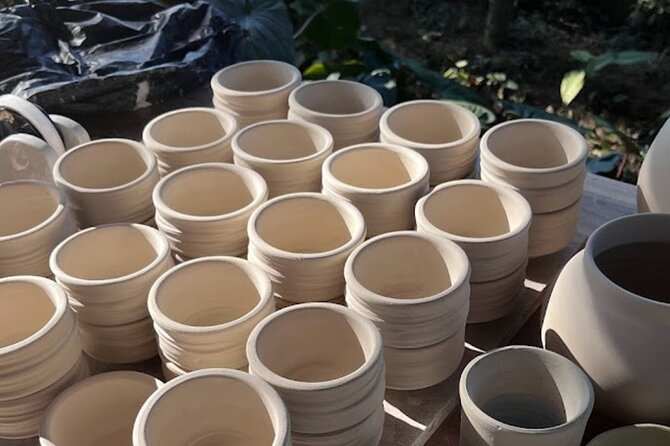
A lot of pottery classes teach one method. This one gives you a mix. That’s a big deal if you’re choosing based on interest level, not just price.
Hand building tends to be more forgiving. You control the shape directly with your hands, and you can move faster once you get the technique down. It also helps you understand clay texture and how it responds when you press, smooth, or build layers.
Then you shift to the wheel. Wheel throwing can look magical from the outside, but in a good class it becomes just a set of steps: prepare the clay, center it, then open and shape. One helpful thing here is that the mentors teach from the basics, which makes the wheel feel less intimidating.
If you’ve never touched clay before, this combo is the best of both worlds: you’ll get confidence through hand building, then add the wow factor of wheel work.
The mentors and the small group setup
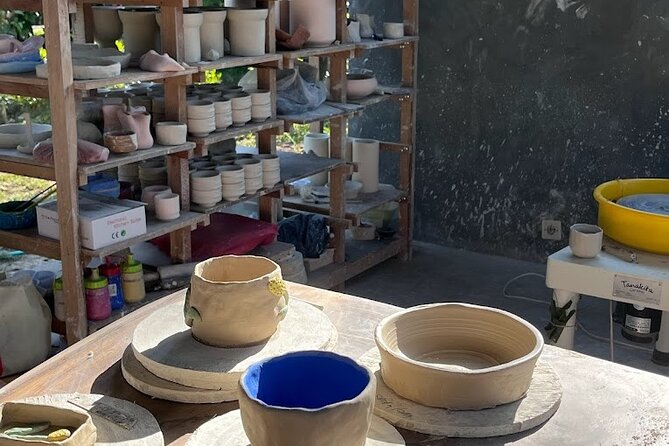
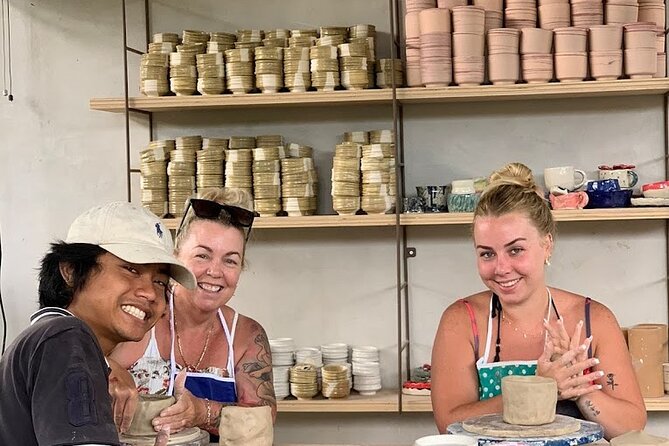
You’ll be working with local artisans who guide the process, and the group is capped at 10 travelers (small enough that you’ll likely get direct attention). In a class this hands-on, that size difference changes everything. You can ask a question before it turns into a full mistake.
The instruction style seems geared to clarity. People mention that the mentors teach from fundamentals in a way that makes the steps easier to understand. Another recurring theme is how helpful and friendly the team is, including a younger mentor and his crew working with the group.
You should expect to be doing most of the work yourself—shaping the clay, adjusting the form, and learning how to handle the tools safely. The mentors are there to steer you when the process gets tricky, not to take over.
The studio setting in Singapadu: calm, garden-like, and practical
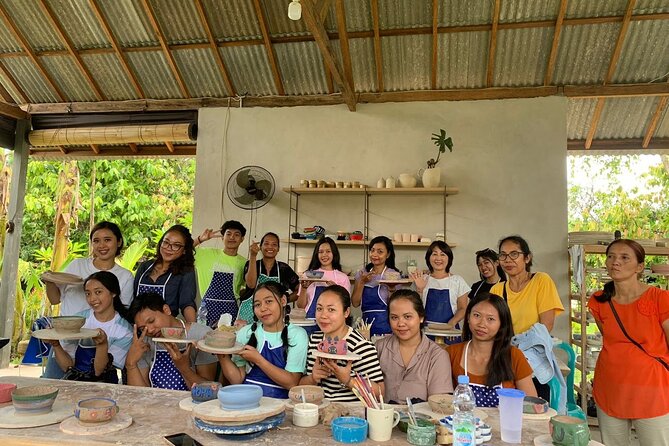
The meeting point is in the countryside near Ubud, and the studio setting is described like a beautiful garden environment. That matters more than it sounds. When you’re working with clay, you don’t want a rushed, loud space. You want time to think, fix small issues, and enjoy the process.
Also, this kind of studio setting often makes the lesson feel more like a day activity with locals than a warehouse-style “make-and-leave” session. If you’re the kind of person who likes to slow down for craft work (instead of stacking temples all day), this location style is a plus.
Still, keep in mind: it’s not in the center of Ubud. You’re going for the craft atmosphere, not convenience.





What’s included—and what you’ll pay for separately
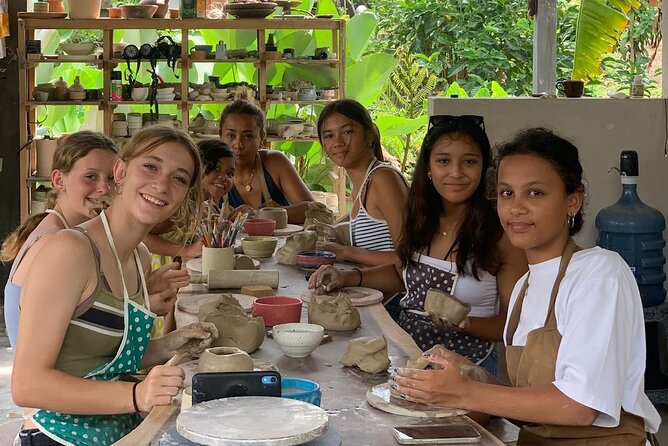
This experience includes:
- Guided pottery class
- 2kg clay
Personal expenses are not included. That’s the only “extra” category listed, so there’s no confusing list of add-ons. In a practical sense, you mainly need to budget for any personal items you bring (snacks, drinks, extra souvenirs you might want after the class).
One value clue: the clay amount is clearly stated. A lot of similar activities sell pottery as if you’re making art from nothing. Here you get a meaningful quantity (2kg), which supports that you’ll actually complete pieces instead of doing a tiny sample.
Price and value: is $31.31 a fair deal?
At $31.31 per person, this sits in the “reasonable and doable” zone for Bali. The value comes from three things that are clearly defined:
- Time: about 3 hours means you’re not rushed through the process.
- Material: you work with 2kg of clay, not just a small test lump.
- Teaching format: you get both hand building and wheel work with guided help.
If your goal is to make one souvenir-like item, many cheaper classes can feel thin. Here, the session is built for learning and finishing pieces you shape yourself.
So yes, I’d call it good value—especially if you’re choosing between a pottery class and another “one and done” activity. Craft days often leave you with something tangible, plus a skill you understand better than before you started.
Timing tips: how to plan around the 4-day take-home rule
There’s one note you should treat like a checklist item:
If you want to take your work home, make sure you have minimum 4 remaining days left.
The class itself is around 3 hours, but finishing pottery takes time after shaping. The safest approach is to plan this so you’re not leaving Bali right after the class. If you’re on a tight schedule—like a short stopover with flights soon—you may need to accept that your pieces may not be ready to take with you immediately.
Practical move: schedule the class with at least a few days before your final departure day, so you don’t end up making an awkward decision last-minute.
A realistic itinerary flow (what the 3 hours feels like)
You’ll start at Tana ampo Pottery Studio. From there, the class is hands-on and guided. While the exact minute-by-minute schedule isn’t listed, the typical flow you can expect from how the lesson is described goes something like this:
- Intro and basics: learning how to handle the clay and tools, with guidance from the start.
- Hand building portion: shaping and forming one piece using direct hand technique.
- Wheel portion: moving to wheel work for another piece, with help to get you through the fundamentals.
- Personal touches: adding details so your work looks like yours.
- Finishing steps: setting your pieces aside as needed for the process after the session.
Because your session is small-group and teacher-led, you’ll likely spend time actually working at the clay stations, not just listening. If you like active learning, this format fits.
Who this class is perfect for (and who should think twice)
This pottery class is a great match if you:
- Want a hands-on Bali activity that doesn’t rely on sitting still
- Like learning a process (not just taking photos)
- Enjoy craft work and want to leave with something you made
- Are curious about how different ceramic methods work, including wheel throwing
You might think twice if:
- You’re staying in central Ubud and hate commuting (you’ll likely drive out about 30 minutes or more)
- You have a very short trip and can’t spare the minimum 4 days needed to take your pieces home
Practical advice to get better results
A few smart moves can make your pottery day smoother:
- Wear clothes you don’t mind getting clay on. Even when the studio is tidy, clay is clay.
- Give yourself buffer time for the ride. Traffic can change your arrival window fast.
- Ask early if you want a specific style. Since the mentors teach basics, they can help shape your idea before you get too far.
- Treat it as learning, not a test. The value is in understanding hand work and wheel work, and producing pieces you’ll be proud of even if they’re not perfect.
If you’re hoping to make something super detailed, start with simple forms you can execute confidently. Your mentor help will likely be strongest when your base form is solid.
Should you book this Ubud pottery ceramic class in Bali?
If you want a real craft experience with structured teaching, yes, book it—especially at $31.31 for a 3-hour small-group lesson that uses 2kg of clay and includes both hand building and wheel work.
I’d recommend it most for first-timers who want to learn the basics in a friendly setting and still walk away with meaningful, made-by-you ceramics. The main reasons not to book are schedule-related (the 4-day take-home note) and location-related (plan for the drive from central Ubud).
If you’re building a Bali trip around memorable experiences, this is the kind of activity that gives you both a skill and a keepsake—without feeling like a rushed tourist stop.
FAQ
How long is the pottery class?
The class lasts about 3 hours (approx.).
Where does the class start?
The meeting point is Tana ampo Pottery Studio, listed at C793+8PH, Central Singapadu, Sukawati, Gianyar Regency, Bali 80582, Indonesia.
Is the activity in the Ubud area?
It’s described as an Ubud pottery experience, and the meeting point is in Singapadu/Sukawati, which is about 30 minutes by drive from central Ubud depending on traffic.
How much clay do I use?
You work with 2kg of clay during the guided class.
What’s included in the price?
It includes the guided pottery class and 2kg clay.
Do I get to make more than one piece?
The experience is set up so you can make multiple pieces during the session, including both hand building and wheel work in the class format.
What if I want to take my pottery home?
There’s a note to ensure you have at least 4 remaining days in Bali if you want to take your work home.
What’s the group size?
The class has a maximum of 10 participants.
How do I get the ticket?
You receive a mobile ticket.
What’s the cancellation policy?
You can cancel for a full refund if you cancel up to 24 hours in advance of the experience’s start time.