REVIEW · JIMBARAN
Authentic Balinese Cooking Classes
Book on Viator →Operated by Bakas Cooking Class · Bookable on Viator
Knife work begins with bargaining. In Jimbaran, this Balinese cooking class makes the day feel simple and real: you shop for ingredients on a market tour and then cook them yourself at a shared chef-led station. With start times from morning through afternoon, it’s built for travelers who want food culture without a full-day headache.
What I like most is the hands-on setup. You’re not watching from the sidelines—you chop, grind, cook, and then eat what you make, with instruction delivered in English at a small max of 10 participants. For me, that small group size is the difference between a fun class and a genuinely useful one.
One thing to consider is timing. On at least one instance I’ve seen, the pickup didn’t match the earlier expectation (7am planned, pickup later), and the market stop ended up being limited due to closure. If you’re tight on schedule, build in a little buffer.
In This Review
- Key highlights before you go
- How the Balinese market tour sets up your cooking
- Bargaining and picking ingredients like a local (without stress)
- The hands-on class: what you actually cook
- The Bakas setting in Klungkung: views and a calm pace
- Transfers and timing: how to make the day fit your Bali plan
- English instruction and small-group attention (why it’s worth it)
- Price and value: does $65 make sense for 6 hours?
- What to expect day-of: a realistic flow
- Who should book this class
- Should you book Bakas Balinese Cooking Class?
- FAQ
- FAQ
- What dishes will I cook in this Balinese cooking class?
- Is the class hands-on, or do I just watch?
- Does the class include a market tour?
- Is instruction available in English?
- How many people are in the class?
- Where is the cooking class located?
- What’s the duration of the experience?
- Do you offer pickup and drop-off?
- What time options are available?
- Can I cancel for a full refund?
Key highlights before you go
- Market tour + bargaining practice to learn how Balinese cooks choose ingredients
- Small-group class (max 10) for more time with the chef and less waiting around
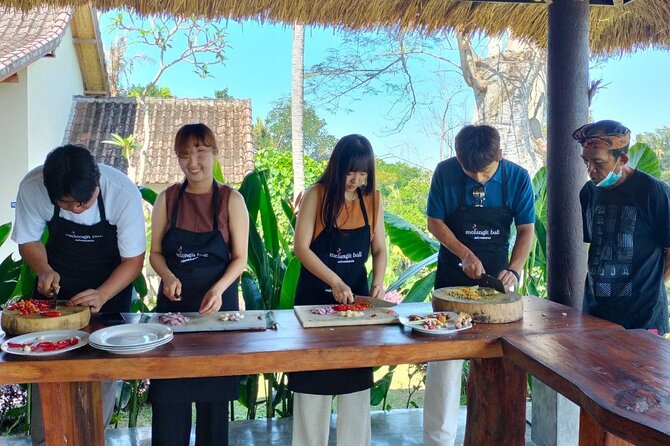
- Cook-it-yourself stations with utensils provided, so you’re actively making the dishes
- Menu includes satay, nasi goreng, and black rice pudding (plus other Balinese treats)
- Round-trip transfers from many south Bali hubs so you’re not scrambling for a scooter or driver
How the Balinese market tour sets up your cooking
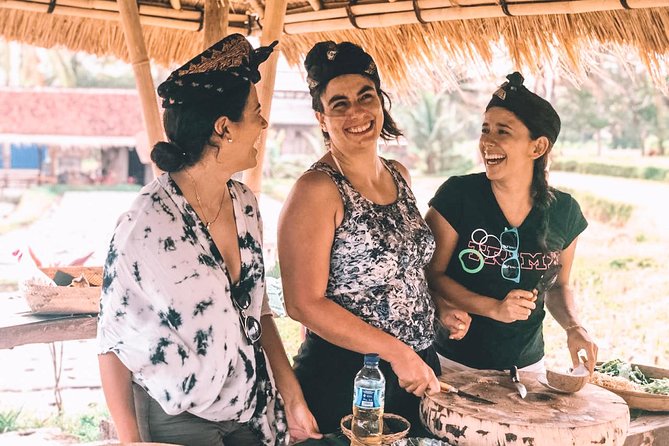
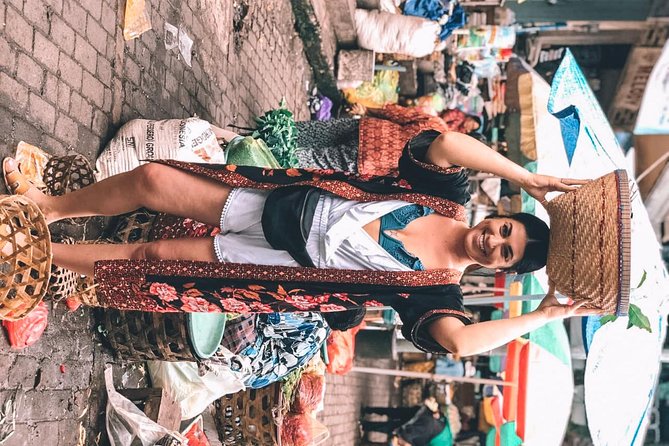
This experience starts with a morning market visit when you choose the morning slot. Bali markets typically run early, and that matters because you’re learning how locals actually buy food—before the day gets crowded and before produce loses its peak.
You’ll get a chef’s perspective on Balinese tastes and customs, including what to look for in local meat, fish, and produce. The practical part is that you’re not just told what to buy—you’re guided on what to select and what to reject. That’s a skill you can take home, even if you can’t find the exact same herbs at your local store.
The bargaining element is also real. You’ll practice the back-and-forth mindset that goes with choosing ingredients in Bali. For many first-timers, that’s the moment where the class stops feeling like a cooking demo and starts feeling like travel.
You can also read our reviews of more tours and experiences in Jimbaran.


Bargaining and picking ingredients like a local (without stress)
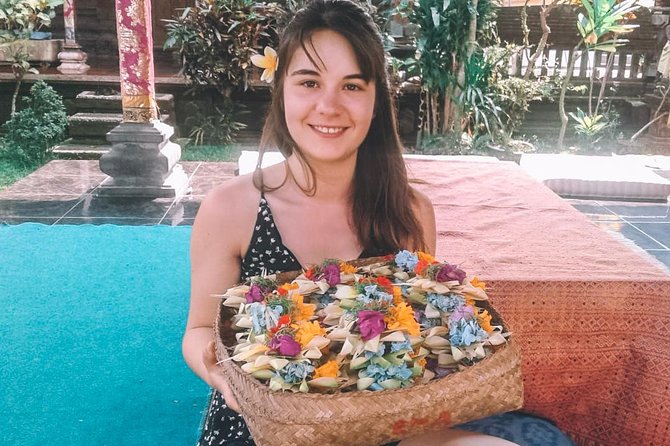
Balinese cooking is built on flavor balance—so the quality of your ingredients shows up fast in the final dishes. During the market portion, you’re shown how to assess freshness, and the chef explains what makes a difference for local cooking.
Here’s what you can do to make this part go smoothly:
- Be ready to ask questions about spices, aromatics, and how ingredients are used
- Pay attention to the rejection lessons (the produce that looks good but isn’t right for the dish)
- Treat bargaining as practice, not a test of your negotiation skills
Even if you’re not a confident shopper, the structure helps. You’re with a guide and a small group, so you’re not stuck guessing what anything is or panicking in front of a stall. And because this class is designed to be taught in English, you can follow along without piecing together information from gestures.
The hands-on class: what you actually cook
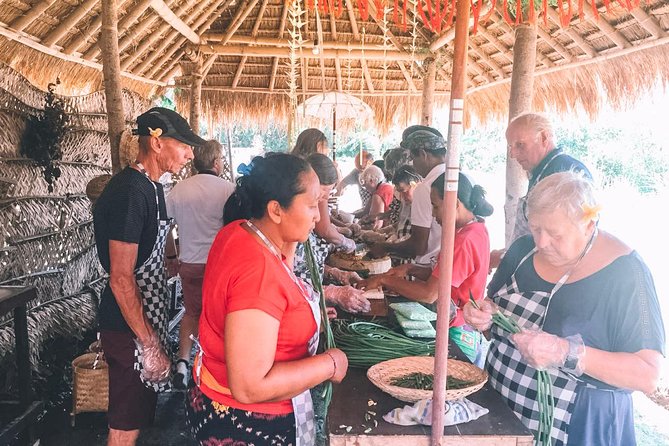
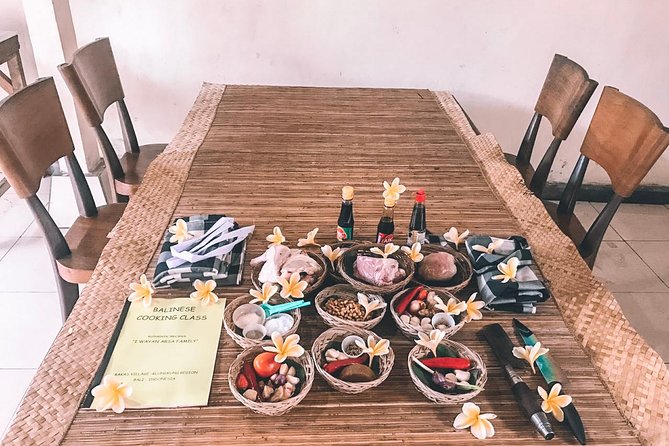
After the market, you move into a hands-on cooking session in Bakas, Klungkung Bali. The format is straightforward: you get your own cooking station and utensils, and you prepare and cook each dish yourself while the chef explains the key steps.
The menu you can expect includes classic Balinese comfort foods and sweets, such as:
- Satay
- Nasi goreng
- Black rice pudding
You’ll also do the active prep tasks described in the class: chopping, grinding, and cooking. That matters because Balinese cooking isn’t just about following recipes—it’s about learning how the textures and flavors are built. When you grind spices yourself and then cook with them, you understand what changes when the mixture is too coarse, too watery, or under-seasoned.
The class is conducted in English, and with a maximum group size of 10, you’re more likely to get real feedback—like the chef correcting how you handle ingredients or adjust seasoning.
If you like learning by doing, this part will feel like the highlight. If you mainly want a quick taste without work, you might feel the day is more active than you expected.
The Bakas setting in Klungkung: views and a calm pace
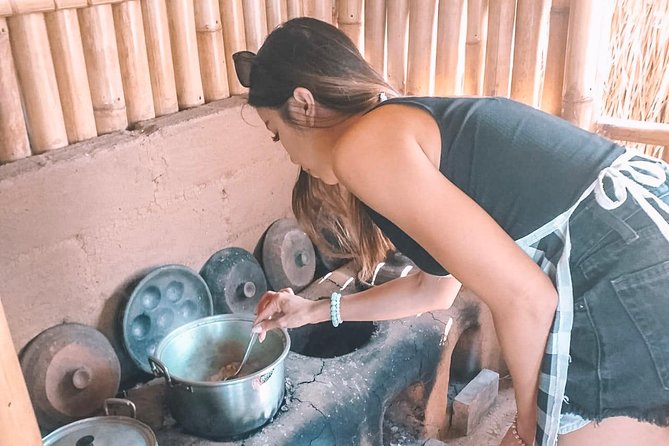
The cooking happens in Bakas in Klungkung, and the atmosphere is often part of the appeal. In a past visit, the setting included rice field visits near the location, and some guests even noted the kind of outdoor views you’d expect from more rural Bali—like seeing a rainforest-style backdrop while you cook.
Even without assuming the exact view will match every booking, the point is consistent: this isn’t a boxed-in urban class. You get a break from traffic noise and you spend several hours in a more countryside-feeling setting, which helps the cooking lessons stick. When the day feels slower, you tend to pay attention to details—scent, texture, timing—rather than rushing through steps.
One small practical tip: wear clothes you’re okay getting food-stained. With active prep and cooking, you’ll be happier if you don’t treat the day like a museum visit.
Transfers and timing: how to make the day fit your Bali plan
This is where the experience becomes easier for most people. The package includes round-trip transfers from a wide set of places in south Bali, which removes the biggest friction point of cooking classes: getting there.
Pickup is offered from areas including:
Seminyak, Legian, Kuta, Nusa Dua, Jimbaran, Sanur, Ubud, Denpasar, and Benoa Harbor.
You also choose your start time that works for you, from morning through afternoon. The provider’s operating window runs 7:00 AM to 3:00 PM, Monday through Sunday.
A real-world consideration: drive time can vary. From Ubud, it can take about 1.5 hours to reach the cooking area, so plan your morning accordingly if you’re combining this with other activities.
If you’re booking the earliest option, don’t schedule a “must be on time” appointment immediately afterward. Even when everything goes right, Bali timing can be flexible, and you want your class to stay fun—not stressful.
You can also read our reviews of more tours and experiences in Jimbaran


English instruction and small-group attention (why it’s worth it)
Many Bali cooking classes sound similar on paper. What usually separates the best ones is whether you get attention during the steps, not just at the beginning.
Here, the class is limited to 10 participants, and you work at your own station with utensils provided. That combination helps in two ways:
1) You’re cooking, not waiting for equipment.
2) The chef can actually notice what you’re doing.
Instruction is in English, so you can understand what’s happening and why. That means you’re more likely to repeat the recipes at home, instead of just remembering a list of dishes.
Also, this is positioned as an authentic cooking class atmosphere, not a performance. It’s a fun day, but the goal is learning how Balinese ingredients and flavors come together.
Price and value: does $65 make sense for 6 hours?
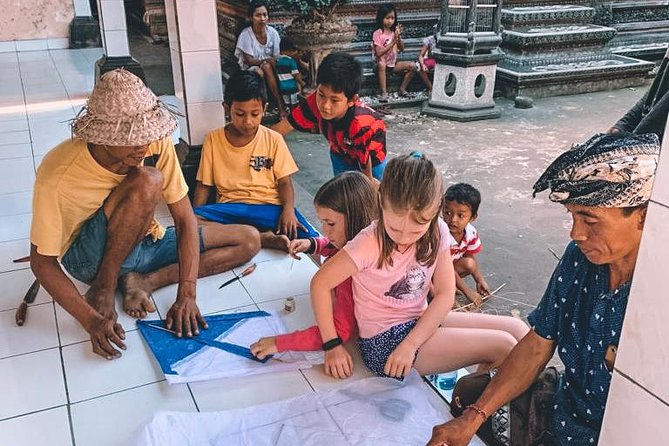
For about $65 and roughly 6 hours, you’re paying for more than just food. You’re paying for:
- a hands-on cooking session
- ingredient prep work (chopping/grinding)
- market learning (especially for morning bookings)
- and round-trip transfers from major areas across south Bali
Most travelers underestimate how expensive “getting to the class” can be once you add transport. Here, the transfer is part of the package across many hubs, which makes the cost feel more reasonable—especially if you’d otherwise need a private car for the day.
Is it the cheapest cooking class option in Bali? Probably not. But if you care about learning techniques (not just eating a meal) and you want the market portion, the price starts to look fair—particularly with the small-group limit.
What to expect day-of: a realistic flow
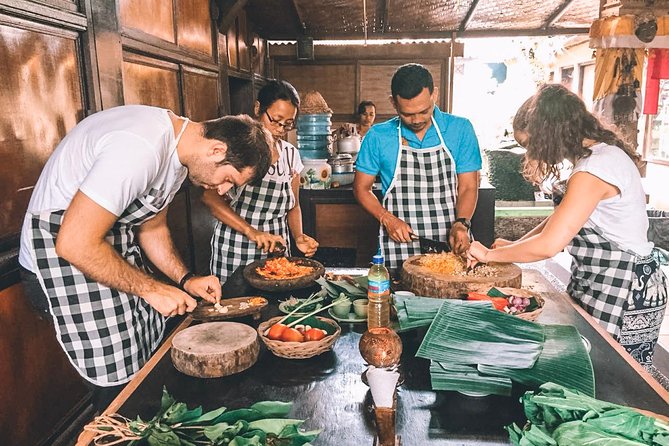
Your day generally follows this pattern:
1) Pickup from your area (based on the starting point you choose)
2) Market visit if you start in the morning—learn ingredient selection and bargaining
3) Cooking in Bakas (Klungkung)—your own station, utensils provided, English instruction
4) Cook and eat what you make
Because class start times run up to mid-afternoon, the overall rhythm can feel different depending on when you choose to go. A morning start gives you the full market learning arc, while an afternoon start may focus more on the cooking portion.
Either way, the tone is hands-on and friendly. In one example, the host was Gede, and guests mentioned being picked up along with his wife—part of the warm, personal feel that can make the experience memorable.
Who should book this class
This is a great fit if:
- you want Balinese cooking you can repeat at home
- you love food markets and want to learn how ingredients are chosen
- you prefer small groups and direct instruction
- you’d rather have a planned day with transfers than arrange transport yourself
It’s less ideal if:
- you hate any uncertainty around pickup timing
- you want a class that feels relaxed and passive (this is active cooking work)
- you have a very tight schedule with no buffer at all
If you’re visiting Bali for your first time, this is an excellent way to understand the island through food—without needing to be a hardcore foodie or a professional cook.
Should you book Bakas Balinese Cooking Class?
I think you should book if you want a practical, hands-on Balinese food experience and the market lesson sounds fun rather than overwhelming. The combination of market tour learning, cooking at your station, English instruction, and included transfers is what makes this class good value for most travelers.
But book with one mindset: give yourself a little time flexibility, especially if you’re planning around an early pickup. If your schedule is unforgiving, add buffer and avoid back-to-back appointments.
If you want to bring home recipes and not just memories of a nice meal, this is the kind of day that pays off when you cook again later.
FAQ
FAQ
What dishes will I cook in this Balinese cooking class?
You’ll cook and eat Balinese dishes such as satay, nasi goreng, and black rice pudding.
Is the class hands-on, or do I just watch?
It’s hands-on. You’ll have your own cooking station and utensils and prepare and cook the dishes yourself.
Does the class include a market tour?
Morning bookings start with a trip to a local market, where you learn about ingredient selection and bargaining.
Is instruction available in English?
Yes, the cooking class is conducted in English.
How many people are in the class?
The class is limited to a maximum of 10 participants.
Where is the cooking class located?
The cooking class takes place in Bakas, Klungkung Bali.
What’s the duration of the experience?
It’s listed as about 6 hours.
Do you offer pickup and drop-off?
Yes, it includes round-trip transfers from many areas, including Ubud and much of south Bali.
What time options are available?
Start times run from morning through afternoon, and the operating hours are 7:00 AM to 3:00 PM.
Can I cancel for a full refund?
You can cancel for a full refund up to 24 hours in advance of the experience’s start time.