REVIEW · SEMINYAK
Canggu: Surfing lesson with ISA certified instructor
Book on Viator →Operated by Yahya Zakaria · Bookable on Viator
Surfing in Bali is easier with the right coach. This 2-hour session in the Canggu/Seminyak area gives you that starter toolkit fast: wave basics, on-land warm-ups, then hands-on practice in the surf with an ISA-certified instructor (you’re told upfront if it’s Yahya or Ari). For the price point, you’re not just paying for board time—you’re paying for guided reps.
What I like most is how patient the coaching feels, especially for first-timers: they teach you how to read waves, how to paddle, and how to get into a surf stance without turning it into a bootcamp. The second big win is the structure: you start on land, you move into the water only when you’re ready, and the instructor keeps adjusting as you go. One possible drawback: if you’re hoping for lots of stopping/pausing on demand, plan for a more continuous coaching flow, and if conditions are strong, you may need to power through more than you’d like for a first session.
In This Review
- Key reasons people book this surf lesson in Canggu
- First stop: Batu Bolong Beach and how the lesson gets set up
- The land warm-up: where you learn faster than you think
- Into the surf: paddling, wave reading, and getting your first real attempts
- Pickup, timing, and why your wave slot matters in Canggu
- The teaching style: patient coaching, clear instruction, and one-on-one guidance
- Gear, photos, and the extras that can make or break your memory
- What you should bring (and what you can ignore)
- Price and value: why $25 can be a good deal in Bali (if you use it right)
- Comfort and realism: what to expect your first time surfing
- Should you book this Canggu surf lesson?
- FAQ
- How long is the surfing lesson?
- Where does the lesson start?
- Do I need to bring a surfboard or equipment?
- Is pickup available in Canggu?
- Who is the instructor?
- Is this lesson private or shared?
- Do I need to know how to swim?
- What if weather is bad?
Key reasons people book this surf lesson in Canggu
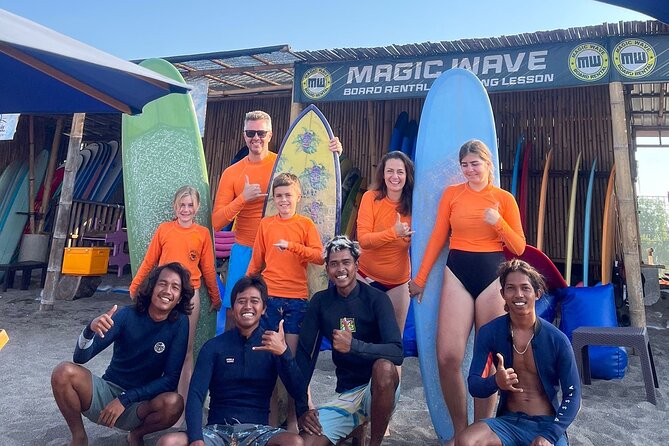
- ISA-certified coaching with a named instructor (often Yahya or Ari) and clear instruction from the start
- 2 hours that actually teach: land basics, warm-up, then guided paddling and standing attempts
- Beginner-friendly wave selection meant for your skill level, not random chaos
- Pickup option and easy meeting point at Batu Bolong Beach
- Video/photo add-ons so you can remember what your stance looked like mid-attempt
First stop: Batu Bolong Beach and how the lesson gets set up
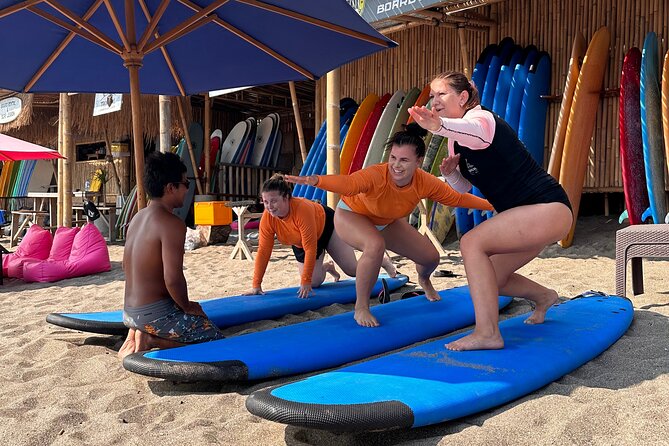
Your session starts at Batu Bolong Beach (Pantai Batu Bolong). Some bookings include pickup from Canggu by scooter, but you can also meet directly at the beach. Either way, the goal is the same: get you to the shoreline without stress, then get you moving quickly.
This is one of those lessons where the first 10 minutes matter. When the instructors lay out what you’ll do—how the session works, what safety rules you’ll follow, and what to watch for in the water—you stop guessing. You’re not just hoping you’ll figure it out once you’re wet. That matters on Bali days when the ocean looks fun from shore but can feel intense when you’re out there.
You’ll also get a real explanation of health and safety points before you splash. This isn’t just lip service. You’re being coached on where to be, how to move around the board, and what to do when something goes wrong (because something always goes wrong at first—usually your timing, sometimes your balance).
You can also read our reviews of more tours and experiences in Seminyak


The land warm-up: where you learn faster than you think
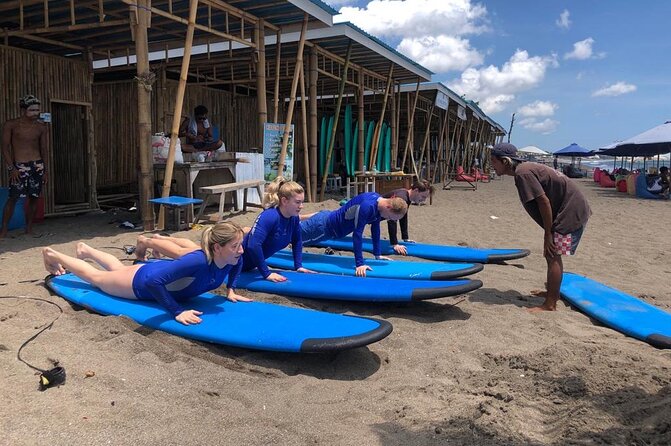
Before you hit the water, you’ll do warm-up exercises on land. Plan for about 30 minutes of drills on the beach in a typical beginner flow. For first-timers, this is the part that feels a little silly—until you’re actually paddling with ocean motion pulling your attention everywhere.
Here’s what the land time is designed to do:
- Teach how to move on the board without fighting the board
- Practice the basics so you can focus in the water on timing and wave choice
- Build comfort with paddling and the sequence for standing
I love this approach because it removes the biggest beginner problem: getting into the ocean already exhausted. If you go straight from “I’ve never done this” to “go stand up,” your arms burn out and your brain freezes. With drills first, you spend your energy learning, not panic-swimming between attempts.
If you’re a nervous swimmer or you’re not sure you’ll handle deep water, this pre-water coaching is also where you’ll likely get clarity. One review highlighted that the water can be deep and waves rough, so having a coach explain what to expect helps you decide mentally before you’re in it.
Into the surf: paddling, wave reading, and getting your first real attempts
Once you’re warmed up, you head into the waves that match your level. The lesson is built around progression: paddling first, then controlled attempts to stand up. The best part is that you get close instructor guidance while you’re practicing.
For beginners, the big coaching topics are typically:
- How to read the waves (not just watch them like a movie)
- When to paddle and when to stop
- How to line up so you’re facing the right direction when it’s time
- How to get into the stance without overthinking it
You’ll usually get a rhythm from the coach: brief instructions, quick resets, then more reps. That’s exactly what your body needs. Surfing isn’t one perfect moment—it’s a chain of small timing wins. Getting those small wins early makes you feel like, okay, I’m actually doing this.
For intermediate and advanced surfers, there’s a chance to visit other surf spots around the island where your instructor provides feedback on your style. If you’re in that group, this can be worth it because you’re not only learning a skill—you’re getting real coaching cues for your technique.
Pickup, timing, and why your wave slot matters in Canggu
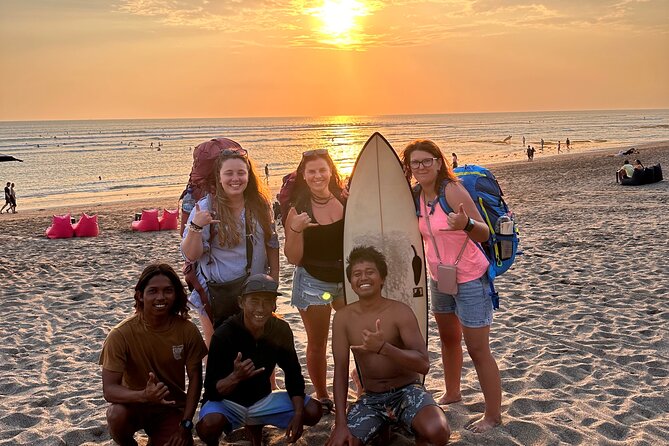
You can choose time slots to fit your schedule, and your session is about 2 hours. In practice, time of day changes the experience. An evening slot is often a smart choice because you can catch the sunset on the way in and still have energy for dinner afterward. One booking specifically mentioned a 4pm–6pm window, and the sunset factor is easy to see why people like it.
That said, the ocean doesn’t care about your dinner plans. Conditions drive what happens. The experience requires good weather, and if it’s canceled due to poor weather you’ll be offered a different date or a full refund.
So what should you do with this info?
- If you’re flexible, choose a slot where you can roll with minor changes.
- If you’re on a tight schedule, confirm you’re not skipping other key plans in case they shift the start time.
The teaching style: patient coaching, clear instruction, and one-on-one guidance
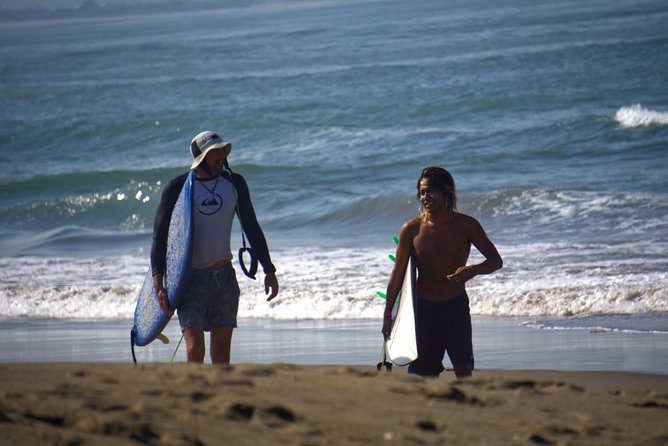
The coaching is the heart of this lesson. From the instructor’s approach, you can tell they’re focused on safety and progress at a speed that makes sense for you. Many first-timers come out feeling like they understood more than they expected—especially wave reading and the stance sequence.
You’ll be coached through the basics on land, then supported in the water with close attention. People repeatedly mention how encouraging and patient the instructors are, and how the lesson stays friendly rather than stressful. That’s a big deal when you’re learning something physical in a moving environment.
One small caution from a less-star review: the instructor didn’t allow breaks and stop once you felt you needed one, even though the lesson was paid for the full time. That doesn’t mean they’re unsafe or careless. It does mean you should assume the session is planned as one continuous coaching block. If you know you get worn out fast, it’s worth being upfront about your limits before you go out.




Gear, photos, and the extras that can make or break your memory
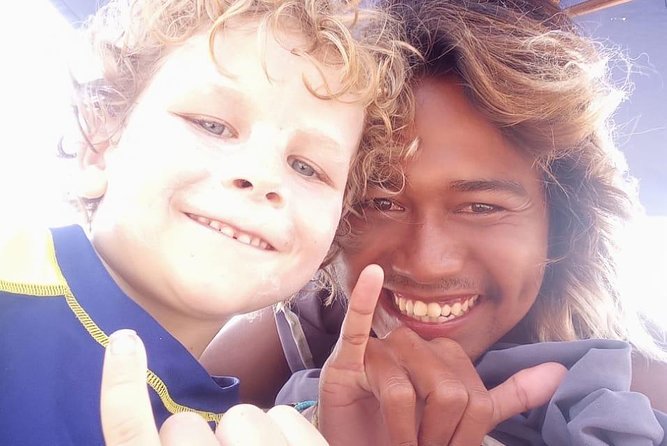
All surfing equipment and instruction are provided. That saves you from Bali shopping before you’ve even tried to stand. You won’t need to bring a board, and that’s part of the real value of this package.
Some sessions also include water, and there are mentions of items like sunscreen and showers for after. You should still bring your own basics (like a small towel), but it’s helpful to know they tend to handle the key surf-day comfort items.
About photos and videos: there’s an option to hire a photographer/videographer for additional cost, and you may see images after your session. If you want proof you made it to standing (even for one second), this is a good add-on. Surf improves fast when you can compare what you did to what you were aiming for.
What you should bring (and what you can ignore)
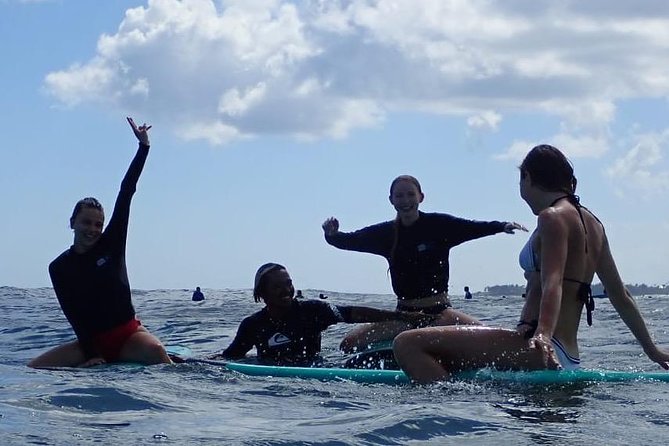
The lesson provides equipment, but you still need to show up prepared. Here’s the practical checklist I’d use:
- Swimsuit + a rash guard or swim shirt if you have one
- Sunscreen (reef-safe if possible)
- Water bottle
- Flip-flops or sandals for moving between beach and changing area
- Towel and a dry bag if you don’t want wet chaos in your backpack
What you can ignore: surfing gear. They provide it. If you’re the type who wants to bring everything just in case, you can—but don’t overpack. Your job is to learn, not manage a gear parade.
Price and value: why $25 can be a good deal in Bali (if you use it right)
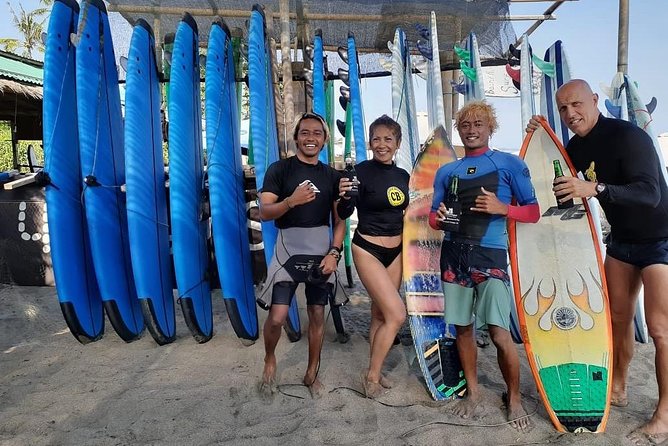
At $25 per person for about 2 hours, this lesson is priced like a straightforward beginner package. The value comes from what’s included: instruction, equipment, and a lesson structure that tries to get you standing in your time block.
Where the value really shows up for me is in the coaching time. A surf lesson isn’t cheap because the ocean is expensive; it’s priced for the skill of the instructor and the coaching attention you receive. Here, you’re getting land drills plus in-water guidance, and that usually means less wasted time flailing.
You’re also not locked into one spot only. If you’re placed in a group where the instructor can adjust for conditions, they’ll choose waves suitable for your skill level. That’s not a luxury detail. It’s what keeps your lesson safe and productive.
One note on group discounts: if you’re booking with friends, you may be able to lower your total cost. Just remember it’s described as private for your group, so you won’t be stuck in a crowded cattle-car situation with strangers.
Comfort and realism: what to expect your first time surfing
Here’s the honest expectation-setting: your arms will feel it. Surfing is a workout. Paddling alone is enough to wake up muscles you forgot you owned, and beginners often get tired faster than their optimism wants to admit.
Also, the water can be deep and waves can be rough depending on conditions. That’s why safety guidance before going in matters so much, and why you should only go if you’re comfortable swimming. Even if you’re new, if you can swim and you listen to instruction, you’ll likely have a safer and more enjoyable time.
And yes—getting up can happen quickly for many people. One theme that keeps coming up is that first-timers manage to catch waves and stand in the session when the instruction is clear and patient. If you’ve been worried you’ll never “get it,” this is the kind of lesson designed to change that feeling.
Should you book this Canggu surf lesson?
Book it if:
- You want a beginner-focused lesson with clear steps and close coaching
- You like the idea of starting with beach drills before entering the waves
- You want a simple, cost-effective way to try real surfing in Bali’s Canggu/Batu Bolong area
- You’d enjoy a named instructor experience (Yahya or Ari)
Skip it or think twice if:
- You strongly need frequent breaks and a more flexible stop-start style during the session
- You’re going into it without the ability to swim confidently (the ocean can be deep and wave conditions can be strong)
- You’re coming in expecting the lesson to handle big beginners-day obstacles without any effort on your part—this still requires listening, paddling, and trying again
If you do book, my best advice is to show up early enough to get your head right: absorb the safety instructions, ask any question before you go out, and focus on one goal at a time—paddle, set up, stand. The instructors are there to help you nail the sequence, not just watch you struggle.
FAQ
How long is the surfing lesson?
The lesson runs for about 2 hours.
Where does the lesson start?
The meeting point is Batu Bolong Beach (Pantai Batu Bolong) in Canggu, and the activity ends back at the meeting point.
Do I need to bring a surfboard or equipment?
No. Surfing equipment is provided, along with instruction.
Is pickup available in Canggu?
Pickup is offered from Canggu (by scooter) for some bookings, though you can also meet at the beach.
Who is the instructor?
The instructor will be Yahya or Ari, and you’ll be informed upfront which instructor you’ll have.
Is this lesson private or shared?
It’s listed as private for your group, so only your group participates.
Do I need to know how to swim?
Most travelers can participate, and some guidance from past participants suggests you should be able to swim since the water can be deep and waves can be rough.
What if weather is bad?
The experience requires good weather. If it’s canceled due to poor weather, you’ll be offered a different date or a full refund.