REVIEW · KUTA
PADI Open Water Course
Book on Viator →Operated by Neptune Scuba Diving · Bookable on Viator
Your first swim starts with calm coaching.
The PADI Open Water course in Bali is a structured on-ramp to scuba skills, with theory, pool sessions, and open-water training over three focused days. It’s a popular choice because you learn the fundamentals you’ll reuse for life: equipment habits, safety checks, and how to stay relaxed when conditions change.
I especially liked two things. First, it runs as a small group (maximum 3 travelers), so you don’t get lost in the crowd. Second, the instruction style is patient and practical, with instructors and guides named in past experiences like Gede Ariawan and Muli, plus support from people such as Agus, who help make tricky skills feel doable.
One drawback to plan for: the course requires a health questionnaire and you shouldn’t scuba within 18 hours of flying. If you’re dealing with asthma, heart issues, congestion, or any other medical restrictions, this may rule you out or mean you’ll need a doctor’s sign-off first.
In This Review
- Key things to know before you go
- PADI Open Water in Bali: why this 3-day format works
- Neptune’s small-group setup: the attention you actually need
- Day-by-day: what you’ll do across knowledge, pool practice, and open water
- Day 1: Knowledge Development
- Day 2: Pool Training
- Day 3: Open-water training in Padang Bai and Tulamben
- Padang Bai and Tulamben: where the skills transfer
- Price and what you’re really paying for ($530)
- Logistics that make or break first-time scuba
- Health rules you should treat seriously
- What to expect in your learning curve (and how to make it easier)
- Who this course is a good match for
- Should you book this PADI Open Water course in Kuta/Bali?
- FAQ
- How long is the PADI Open Water course?
- Where does the course training take place?
- What’s the maximum depth you train for?
- What does the price include?
- Is there a minimum age requirement?
- Can I cancel for a full refund?
Key things to know before you go
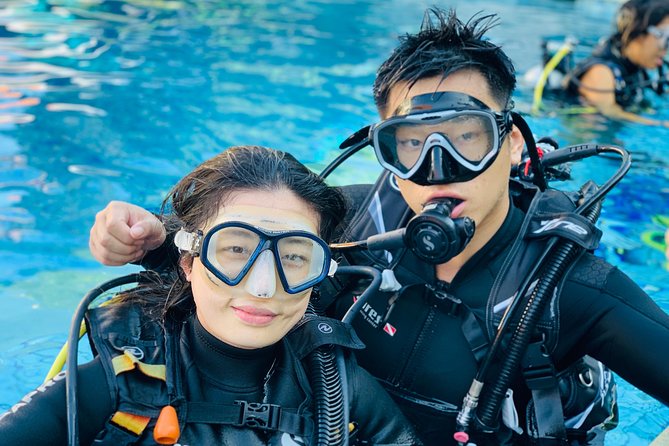
- Three-day flow: knowledge first, then pool practice, then open-water training sessions.
- Max 3 travelers: more attention and faster corrections when your buoyancy or breathing needs work.
- Sanur meeting point with pickup: hotel pickup and drop-off are included, with transport by air-conditioned minivan.
- Real training locations: Padang Bai and Tulamben are used for your open-water practice.
- You’ll work within a safety limit: certification training aims for a maximum depth of 18m.
- Photos cost extra: souvenir photos are available, but not included in the price.
PADI Open Water in Bali: why this 3-day format works
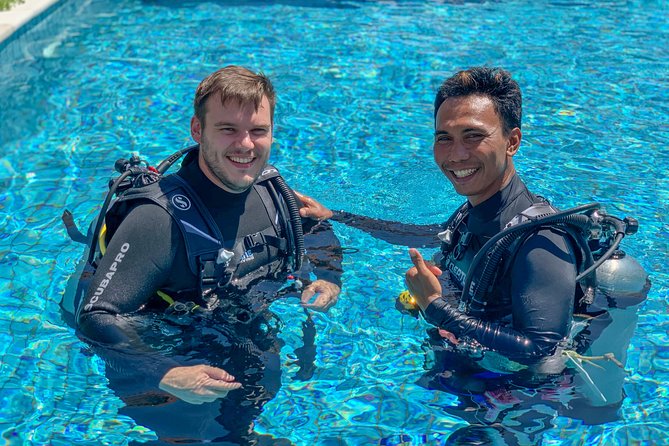
The PADI Open Water certification is the entry point that most people build their scuba life on. That sounds big, but in practice it means you’re not just getting time in the water. You’re learning a repeatable method: what to check, what to feel for, and how to act when something changes.
In Bali, the value here is the pace and structure. Over about three days, you move from classroom-style knowledge development to controlled pool training, then you apply everything outdoors in open-water sessions. That sequence matters. You want your body to understand buoyancy and breathing before you’re dealing with real-world waves, light shifts, and a bigger space to swim.
Neptune’s setup also feels built for nervous first-timers. People get support from the instructor and the team, and you’re not just handed gear and hoped for the best. In past experiences, instructors like Gede Ariawan and Muli came up for being patient and hands-on, and guides like Agus were mentioned for smooth on-water support.
You can also read our reviews of more tours and experiences in Kuta.

Neptune’s small-group setup: the attention you actually need
A maximum of 3 travelers changes the entire experience. In most activities, you can be “in a group” and still feel ignored. Here, you’re more likely to get direct feedback because there’s less to manage at once.
That shows up in the kind of help people describe:
- instructors who correct technique early, rather than waiting until you’re stressed
- guidance that focuses on fundamentals like buoyancy control and staying calm
- a team that keeps logistics moving so the course doesn’t feel chaotic
If you’re a cautious swimmer, this matters. You don’t have to be fast. You need to be comfortable following instructions and practicing slowly. A smaller group makes it easier for your instructor to notice where you’re getting tense and adjust the coaching.
Day-by-day: what you’ll do across knowledge, pool practice, and open water
This course runs through three main phases over three days. Even if you’ve never worn scuba gear before, you’ll have a clear order of operations. That reduces stress because you’re not constantly guessing what comes next.
Day 1: Knowledge Development
This is where you learn the rules behind the fun. Expect knowledge development that covers core scuba concepts and safety thinking, not just definitions.
The practical goal is simple: you should understand what you’re doing underwater and why. When you’re calm, you follow instructions better. When you know the logic, you stop panicking if something feels different.
Day 2: Pool Training
Next comes pool training, which is often the make-or-break day for first-timers. The pool gives you a safe place to practice breathing rhythm, buoyancy, mask and regulator comfort, and basic movements without the uncertainty of open water.
If you struggle with buoyancy, this is where that gets corrected. One common theme from people who trained there is how much time instructors spend fixing the fundamentals, like buoyancy control and comfort with gear.


Day 3: Open-water training in Padang Bai and Tulamben
The final step is open-water practice, split between Padang Bai and Tulamben. These are real training environments, not just a “go jump in” moment.
You’ll use what you learned in the pool and apply it while adapting to outdoor conditions. Since the course targets a maximum depth of 18m, you’re not chasing extreme thrills. You’re learning how to stay safe, controlled, and steady at the depth range that matters for certification.
One more detail that’s easy to overlook: the course includes practical support from the team and guide staff. In past experiences, people called out how patient and professional the instructor and guide were, especially during moments where a student needed extra reassurance.
Padang Bai and Tulamben: where the skills transfer
The locations matter because they change the feel of the water. That’s a good thing. Certification isn’t only about performing tasks in one perfect setting. It’s about learning transferable skills.
Padang Bai and Tulamben give you that transfer. You go from pool control to ocean reality, then you repeat and refine the same core behaviors in a different spot. It helps lock in confidence.
Also, because the course lasts only about three days, you don’t waste time traveling from one far-away place to another every day. You’re training with a tight schedule, with the team coordinating the flow.
Price and what you’re really paying for ($530)
At $530 per person for a three-day PADI Open Water course, this is not a “cheap and cheerful” activity. But it also isn’t just a ticket to water time.
Your price includes a lot of the costs that usually add up:
- all taxes, fees, and handling charges
- bottled water plus lunch, coffee or tea, and snacks
- driver/guide and a professional guide
- hotel pickup and drop-off
- air-conditioned minivan transport
The practical value is that you’re paying for structure and support, not only for time underwater. And with the maximum group size of 3 travelers, that support doesn’t get diluted.
What’s not included: souvenir photos. If you want those, budget extra. If you don’t care about photos, the price is straightforward.
Logistics that make or break first-time scuba
You’ll start at Neptune Scuba in Sanur Kauh (near Denpasar), with the address on Jl. Suka Merta. The course is open daily, with hours listed from 7:00 AM to 6:00 PM.
Since hotel pickup and drop-off are included, you can focus on arriving ready instead of trying to figure out timing and meeting points. Transport is by air-conditioned minivan, which is a small comfort but helpful when you’ve got early starts and a full gear day.
You also get a mobile ticket, which tends to reduce hassle on arrival. It doesn’t mean you can be late, but it usually makes check-in smoother.
Health rules you should treat seriously
This course has clear health guidance. You’ll complete a health questionnaire prior to diving, and some medical conditions may prevent you from scuba training. If you have asthma, heart conditions, or any severe medical issue, check with a doctor and be honest in the questionnaire.
A few additional flags from the requirements:
- you need good respiratory and circulatory health
- all body air spaces must be normal and healthy
- avoid if you have a current cold or congestion
- avoid if you’ve had epilepsy or other severe medical problems
- don’t scuba if under the influence of alcohol or drugs
- avoid scuba within 18 hours of flying
That last one matters if you’re routing through Bali by air. Plan your arrival day with breathing room. If you land and rush straight into the course, you risk complications and a less comfortable first day.
If you’re unsure, contact the operator before booking so you don’t get surprised later.
What to expect in your learning curve (and how to make it easier)
Your brain may feel busy at first. That’s normal. You’re learning new gear habits and new body sensations all at once.
Here’s how to set yourself up for progress:
- Show up rested. The course is only three days, so fatigue slows learning fast.
- Be ready to practice slowly. Precision beats speed.
- Tell your instructor if something feels off. Mask comfort, breathing rhythm, and buoyancy issues are fixable when you say so early.
- Don’t try to out-stubborn the basics. If you’re asked to repeat a drill, do it. That repetition is how you turn gear handling into muscle memory.
If you need extra reassurance, you’ll likely appreciate the teaching style described by past students. People highlighted that instructors like Gede Ariawan and Muli were patient, encouraging, and thorough, especially for students who weren’t strong swimmers at the start.
Who this course is a good match for
This PADI Open Water certification is best if you want a real skill base, not just a scenic water activity. It suits:
- first-timers who want structured learning with a safety focus
- people who prefer small-group attention
- swimmers who want coaching on buoyancy and breathing fundamentals
- travelers staying in the Kuta/Sanur area who want pickup and transport handled
Minimum age is 10 years, so families may consider it if the child meets health requirements and is ready for the training style.
Should you book this PADI Open Water course in Kuta/Bali?
I’d book it if you want a clean, organized on-ramp with a small maximum group size, included transport and meals, and instructors who are known for patient coaching. The structure from knowledge to pool to open water is exactly what first-timers need to build confidence the right way.
I’d think twice if you’re dealing with health concerns, congestion, or you have a flight landing close to your start date. In that case, the health questionnaire and the 18-hour flying guidance could cause problems, delays, or outright refusal.
If you’re ready to learn slowly, ask questions, and practice fundamentals, this is a strong way to earn your PADI Open Water certification in Bali.
FAQ
How long is the PADI Open Water course?
It runs for about 3 days.
Where does the course training take place?
Training happens at a pool for pool practice, then open-water sessions take place in Padang Bai and Tulamben.
What’s the maximum depth you train for?
The course is designed for a maximum depth of 18m.
What does the price include?
The price includes taxes and fees, bottled water, lunch, coffee and/or tea, snacks, a driver/guide and professional guide, hotel pickup and drop-off, and transport by air-conditioned minivan.
Is there a minimum age requirement?
Yes. The minimum age is 10 years.
Can I cancel for a full refund?
Yes, free cancellation is available if you cancel up to 24 hours in advance of the experience start time for a full refund.